Spring weddings carry a quiet magic. The light softens. The air warms. And flowers — the real, seasonal kind — bloom with a beauty no hothouse import can replicate. When you choose blooms that are genuinely in season, you get richer color, stronger fragrance, and that unmistakable freshness that makes guests lean in closer to the centerpieces.
This is not a generic flower list. These are 27 curated floral ideas built around what actually grows in spring, styled by designers who understand proportion, texture, and mood. Whether you want romantic English garden softness or bold architectural drama, there is something here worth stealing for your day. Let the season do the heavy lifting.
1. Peony Garden Romance
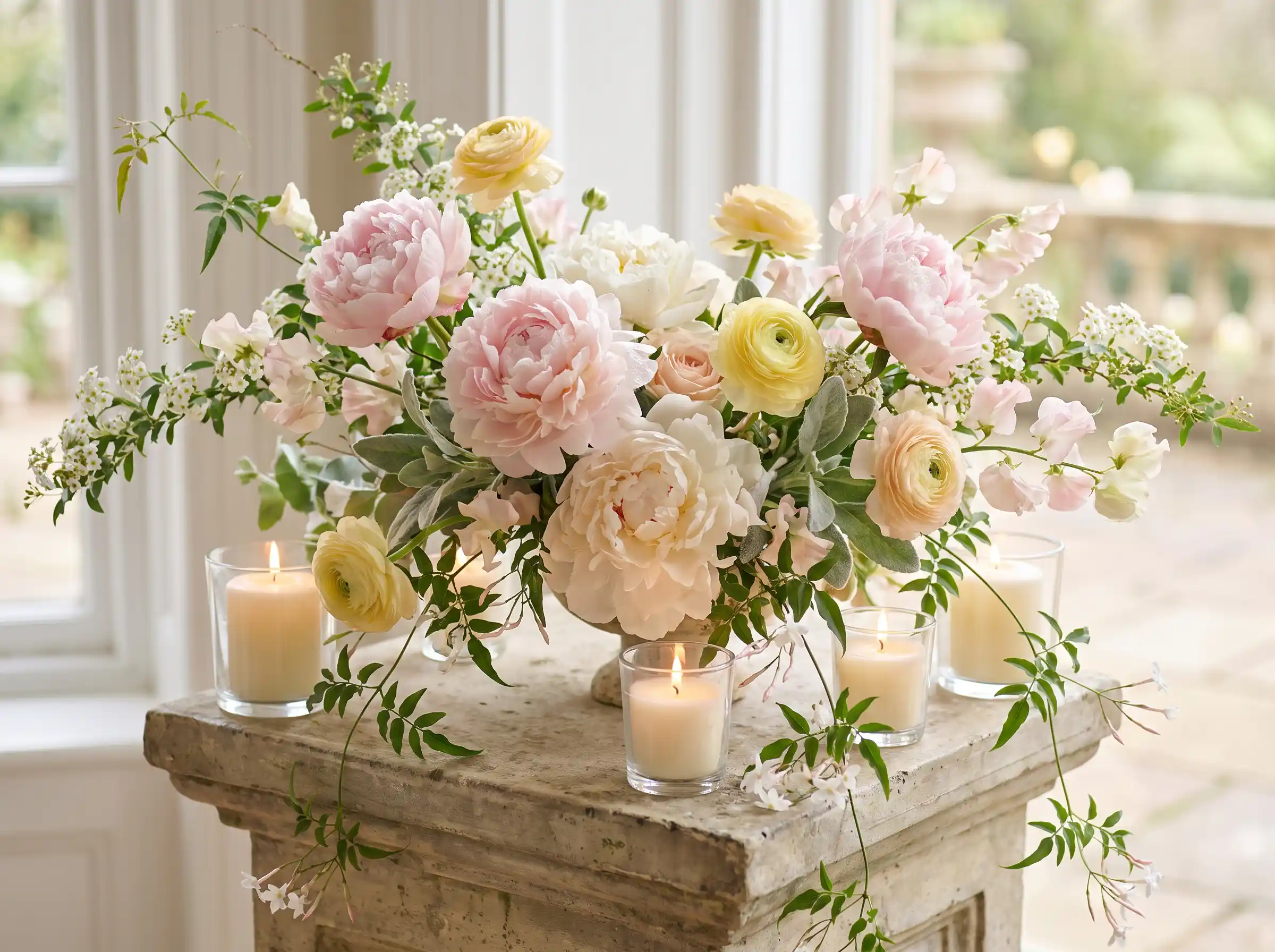
This is the arrangement that makes people fall in love with peonies all over again. Ivory, blush pink, butter yellow, and fresh sage blooms tumble together in a loose English garden style that feels both generous and effortless. The peonies anchor the design, but the supporting cast steals quiet moments of attention.
Airy ranunculus, sweet peas, jasmine vine, and flowering spirea weave through the composition. The effect is cloud-like. Edges are intentionally loose, as if the arrangement grew on its own and someone simply placed candles around it. Warm candlelight deepens every petal’s shadow and gives the whole scene a golden intimacy.
The meadow feeling here is deliberate. Nothing is rigid or over-designed. Each stem appears to lean naturally, creating a composition that rewards closer inspection. This is the kind of arrangement that photographs beautifully from every angle.
Style tip: Ask your florist to leave the peony buds at different stages of opening. Tight buds, half-open blooms, and fully unfurled flowers create visual rhythm. Add jasmine vine for fragrance that carries across the table.
2. Tulip Symphony in Bloom
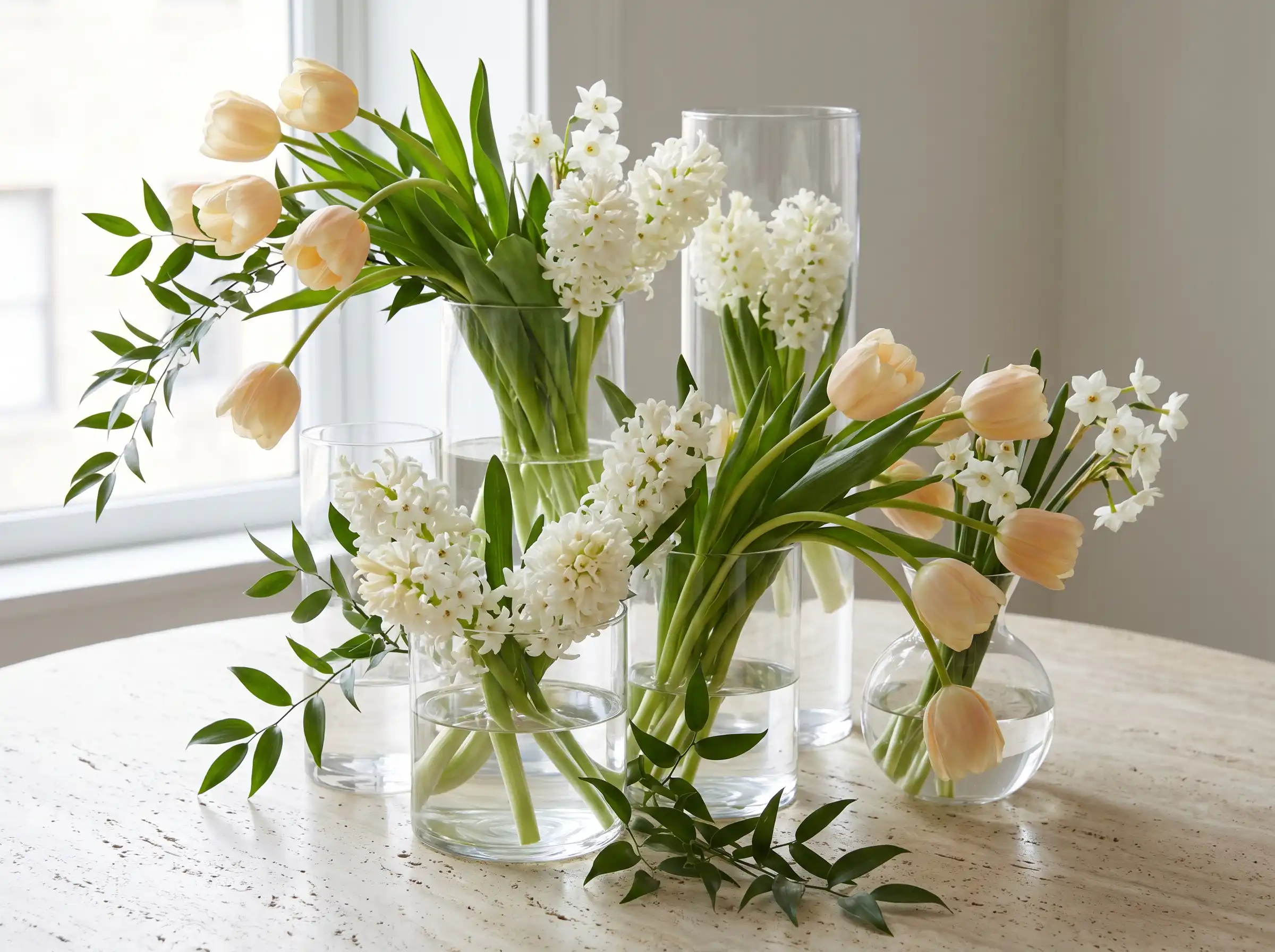
French tulips do something no other flower can. They bend. They curve. Here, cream, pale apricot, and dusty peach tulips are grouped in glass vessels of varying heights.
Hyacinths and white narcissus add fragrance and texture. Trailing Italian ruscus softens the base and connects the vessels visually. The naturally bending tulip stems create a cascading motion that feels organic. It is elegant without being fussy.
The glass vessels are key to this design. They let stems become part of the visual story. You see the water, the green stems, the way each tulip finds its own angle. Transparency keeps the whole arrangement feeling light and modern.
Style tip: Use tulips that have been conditioned for a day so they begin their natural curve. Group three to five vessels at different heights rather than one large arrangement. The clustered effect creates more visual interest on a long table.
3. Lilac Estate Elegance
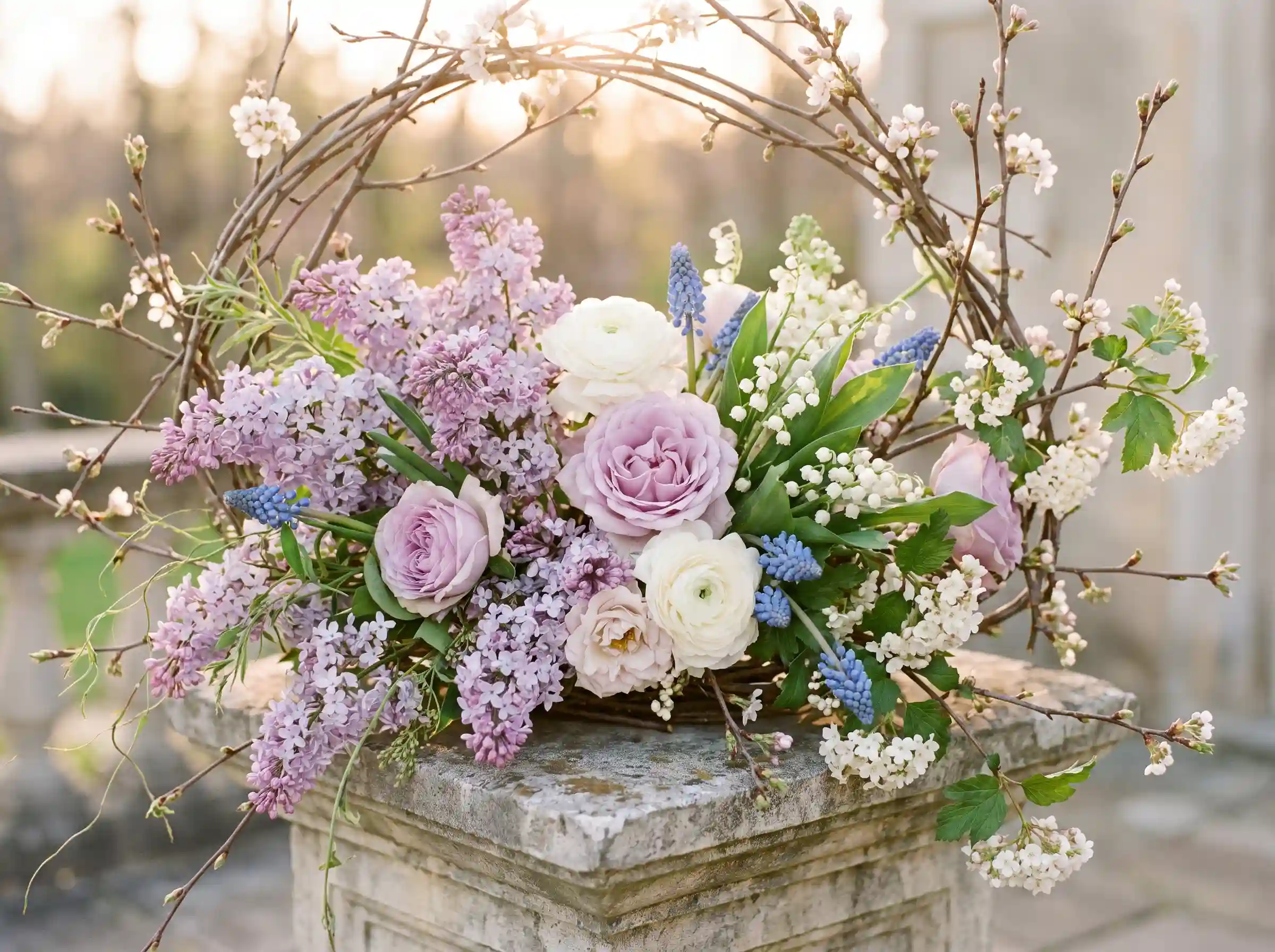
Lilacs carry nostalgia in their scent. One breath and you are standing in a grandmother’s garden. This arrangement harnesses that emotional power and wraps it in refined, estate-worthy design. Soft lavender lilacs pair with ivory garden roses and delicate lily of the valley.
Blue muscari adds unexpected depth of color near the base. Flowering viburnum fills the middle zone with gentle texture. The real magic is the flowering branch framework. Branches grow organically through the arrangement, giving it architectural height without stiffness.
Golden natural light washes over everything, warming the lavender tones and making the ivory glow. This is the kind of arrangement that belongs in a stone-walled reception hall or under a pergola draped in linen.
Style tip: Lilacs wilt fast in warm rooms. Keep arrangements in cool spaces until the last moment. Mist them lightly and crush the woody stem ends before placing them in water to extend their life through your reception.
4. Butter Yellow Ranunculus Bliss
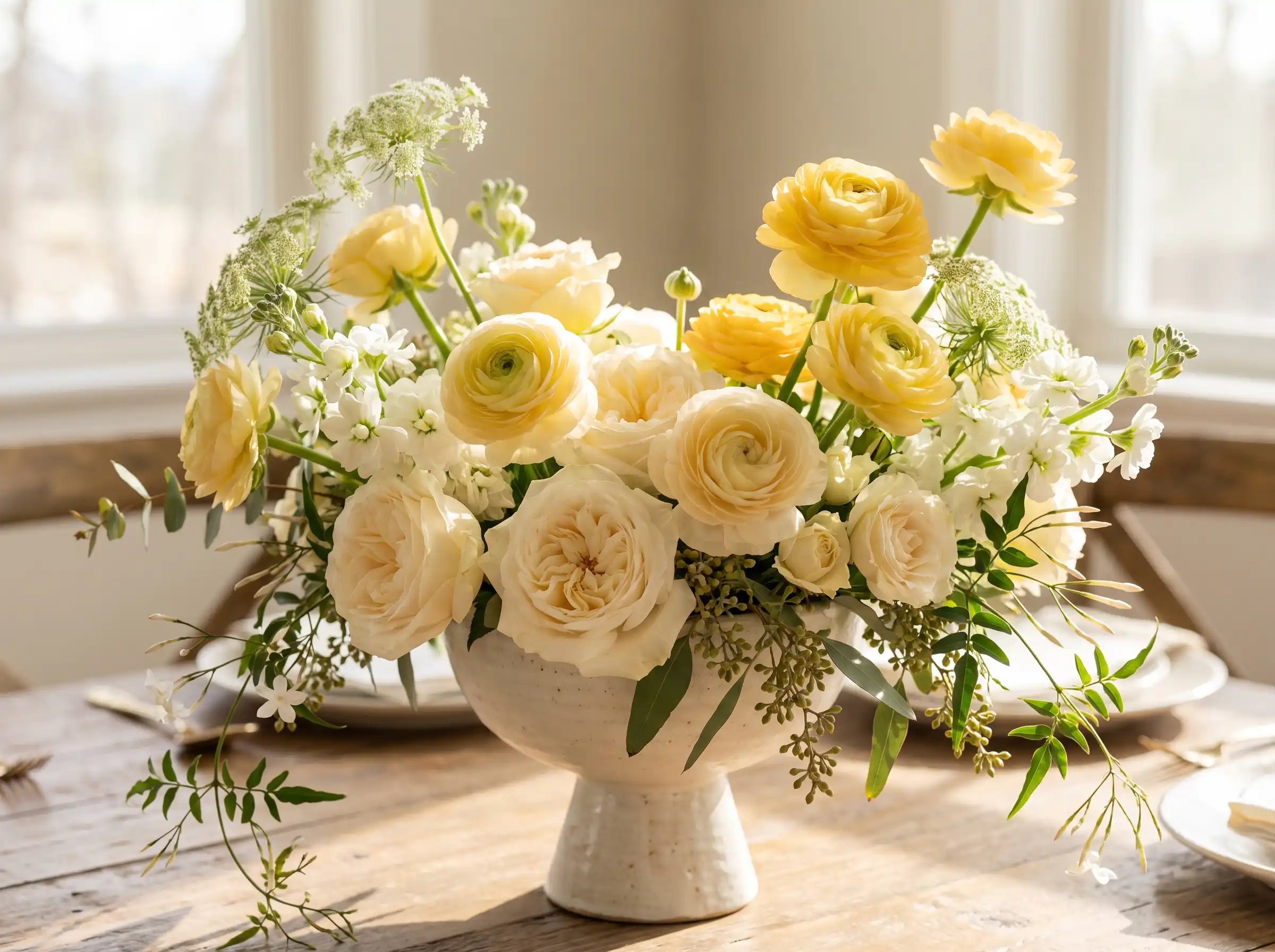
Yellow gets overlooked in wedding design. That is a mistake. This arrangement proves that butter yellow ranunculus — layered with cream garden roses, white stock, and Queen Anne’s lace — creates warmth without overwhelming. The color feels sunny, optimistic, and distinctly spring.
The ranunculus appear at multiple bloom stages. Tight spirals sit beside fully open blooms, creating natural depth. Jasmine vine and seeded eucalyptus trail softly, while an ombré transition from cream to butter yellow gives the arrangement a painterly quality.
A sculptural ceramic vessel grounds the design. Its clean lines and matte finish let the flowers take center stage. This is modern garden style at its best — controlled enough to feel intentional, loose enough to feel real.
Style tip: Pair butter yellow flowers with warm-toned linens like champagne or soft gold. Avoid stark white tablecloths, which can make yellow look washed out. A natural linen runner is the perfect middle ground.
5. Cherry Blossom Cloud
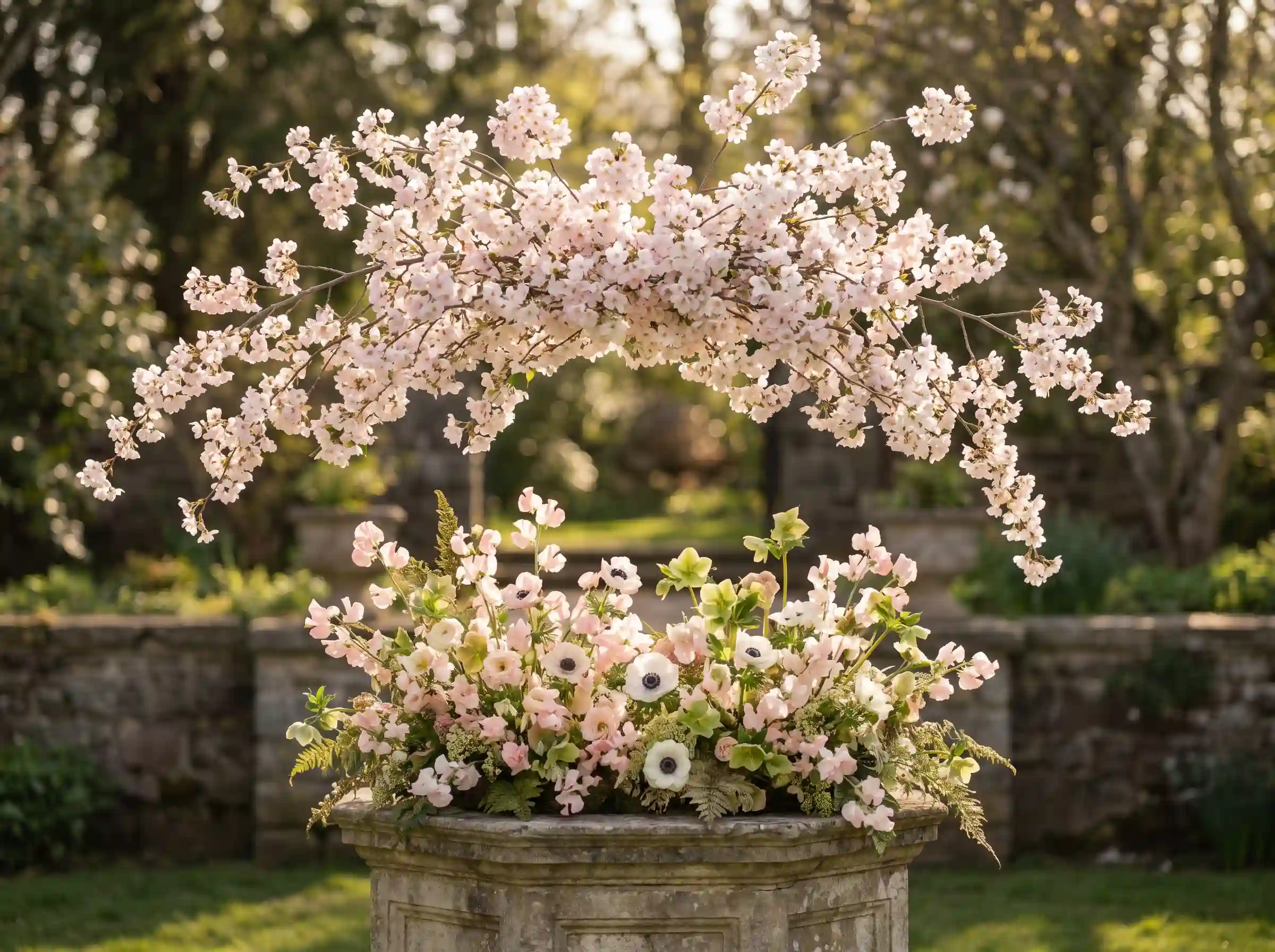
Some arrangements sit on tables. This one floats above them. Flowering cherry blossom branches form an airy canopy overhead, creating the sensation of standing beneath a blooming tree. It is theatrical in the best possible way.
Below the canopy, blush sweet peas and white anemones provide delicate counterpoints. Hellebores add a subtle woodland note. The branches are spaced to let light filter through, and warm afternoon sun turns each petal translucent. The whole installation feels temporary and precious — spring captured in a single moment.
This is a statement piece. It transforms a room. Guests look up and feel something shift. The overhead placement also frees table surfaces for place settings and conversation.
Style tip: Cherry blossoms have a very short season. Book your florist early and confirm branch availability two weeks before the wedding. Have a backup plan using dogwood or quince branches, which create a similar effect.
6. Wild Meadow Elegance
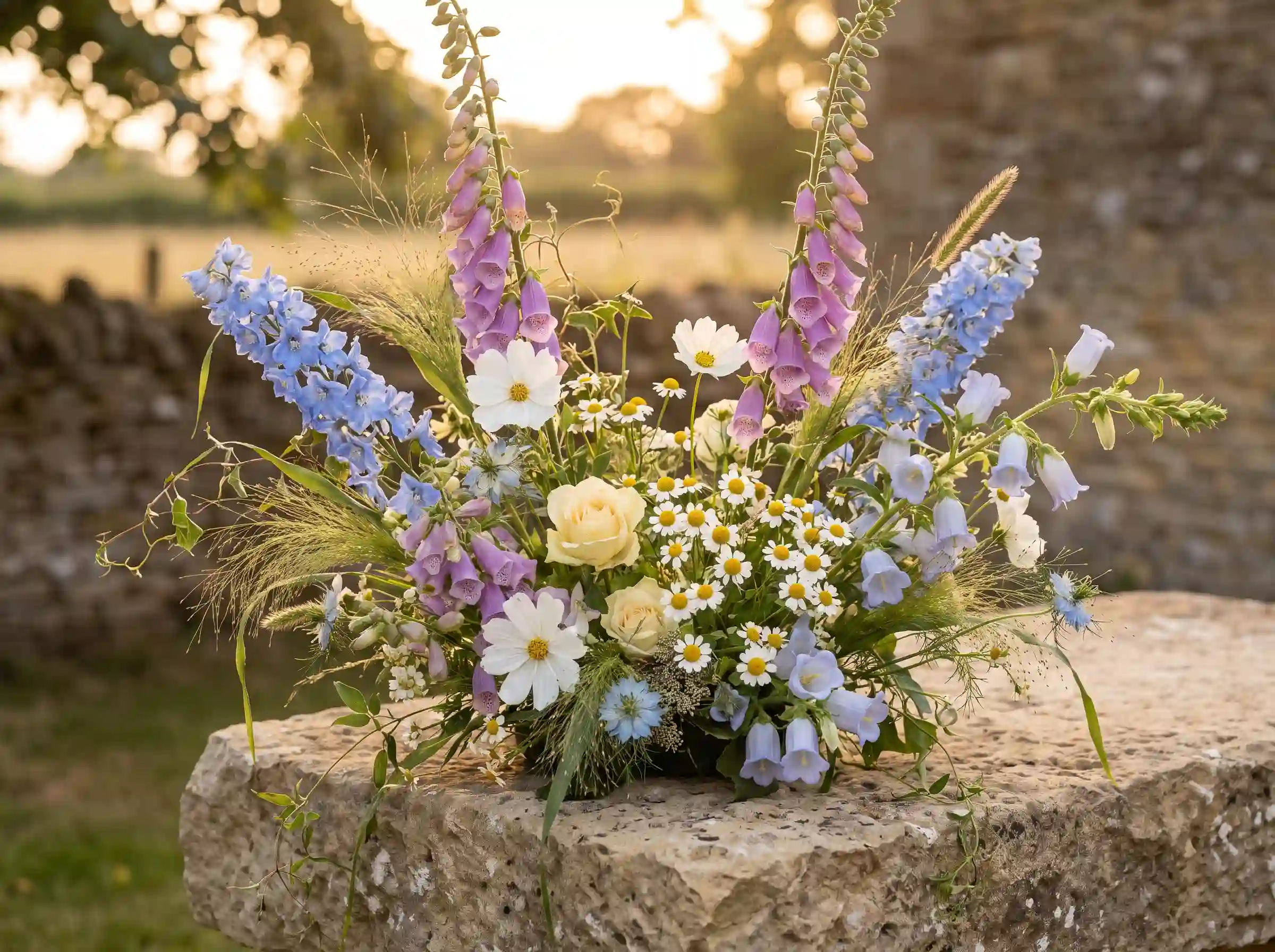
This arrangement looks like someone walked through a meadow at golden hour and gathered everything beautiful. Foxglove reaches upward. Blue delphinium adds vertical drama. White cosmos and chamomile daisies bring an easy, familiar sweetness.
Campanula and meadow grasses fill the gaps with texture and movement. The intentional asymmetry is what makes this work. Nothing is centered. Nothing is perfectly balanced. It leans and reaches the way wildflowers actually grow.
Sunset lighting bathes the arrangement in warm amber tones. The blue delphiniums glow against the warm light. It is the kind of contrast that makes photographers reach for their cameras before anyone asks.
Style tip: Recreate this look affordably by sourcing local wildflowers and supplementing with a few premium stems like delphinium and foxglove. The meadow grasses and chamomile are often available from local farms at a fraction of wholesale flower prices.
7. Anemone Modern Romance
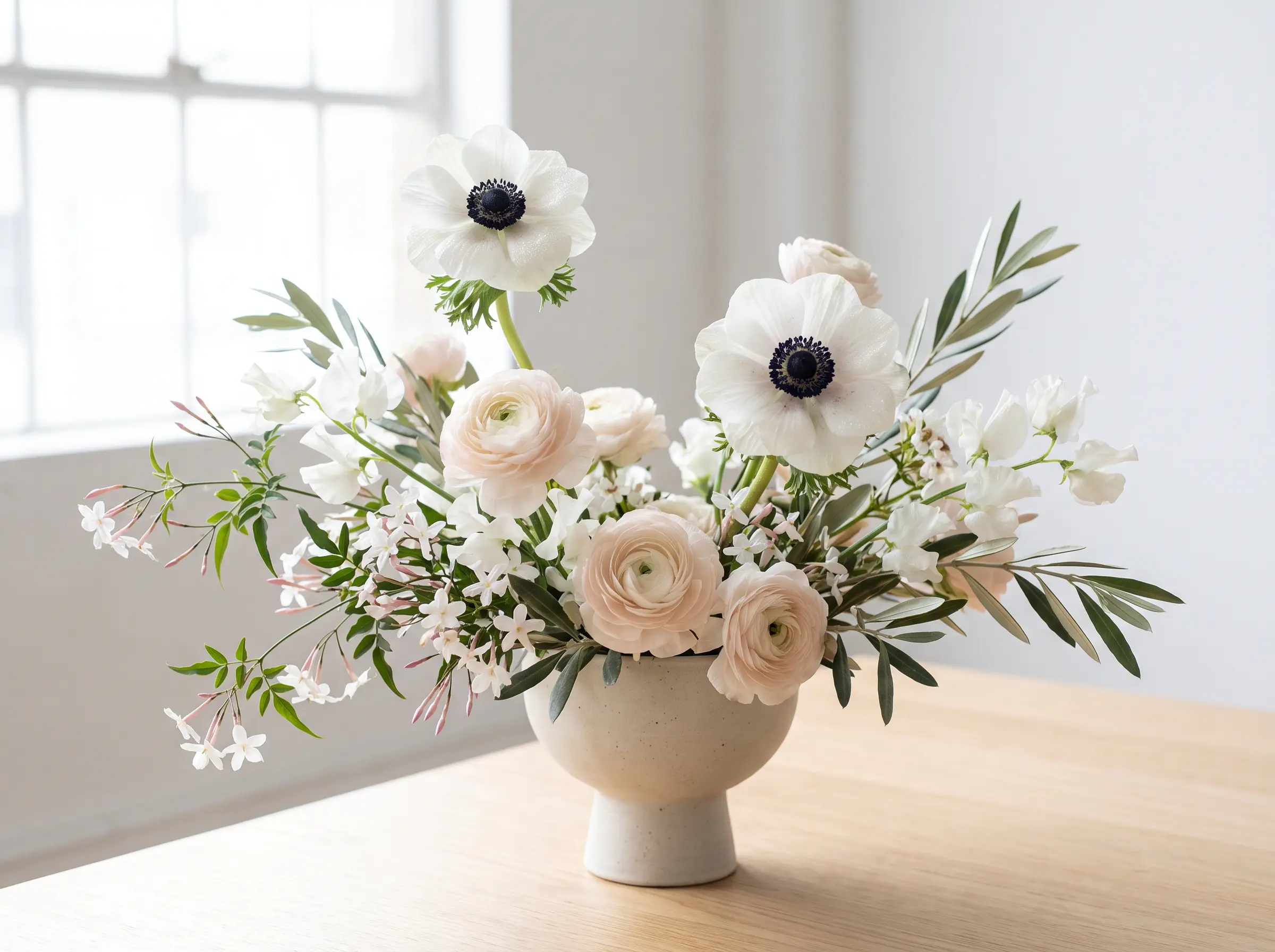
White anemones with their striking black centers are nature’s graphic design. They create instant contrast and visual focus wherever they appear. In this arrangement, they float above a bed of blush ranunculus and white sweet peas like bold punctuation marks.
Flowering jasmine and olive foliage add Mediterranean warmth. The matte ceramic vessels keep things grounded and modern. There is no fussiness here. The design relies on restraint. Each bloom has space to breathe.
The black centers of the anemones create a rhythmic pattern across the arrangement. Your eye bounces from one to the next. It is a small detail that gives the whole composition energy and edge.
Style tip: Anemones close at night and reopen in light. Plan for this natural behavior. If your reception is an evening event, choose anemones that have been open for at least a day so they stay wide and dramatic through dinner.
8. Sweet Pea Cottage Garden

Sweet peas are the secret weapon of spring floristry. Their ruffled petals, trailing tendrils, and intoxicating fragrance create romance that heavier blooms simply cannot achieve. This cottage garden arrangement lets them take the lead.
Fragrant lavender and blush sweet peas cascade over ivory garden roses. Campanula, Queen Anne’s lace, and flowering oregano add herbal, textural layers. Clematis vines weave through the composition, giving it a wild, just-picked quality.
Golden afternoon light catches the translucent sweet pea petals, making them glow from within. The cascading tendrils soften the vessel’s edge and create a waterfall of color. This arrangement smells as good as it looks.
Style tip: Sweet peas are fragile. Keep them in cool water and out of direct sun until the ceremony. For maximum fragrance impact, place sweet pea arrangements near seating areas rather than buffet tables where food aromas compete.
9. Orchard Blossom Symphony
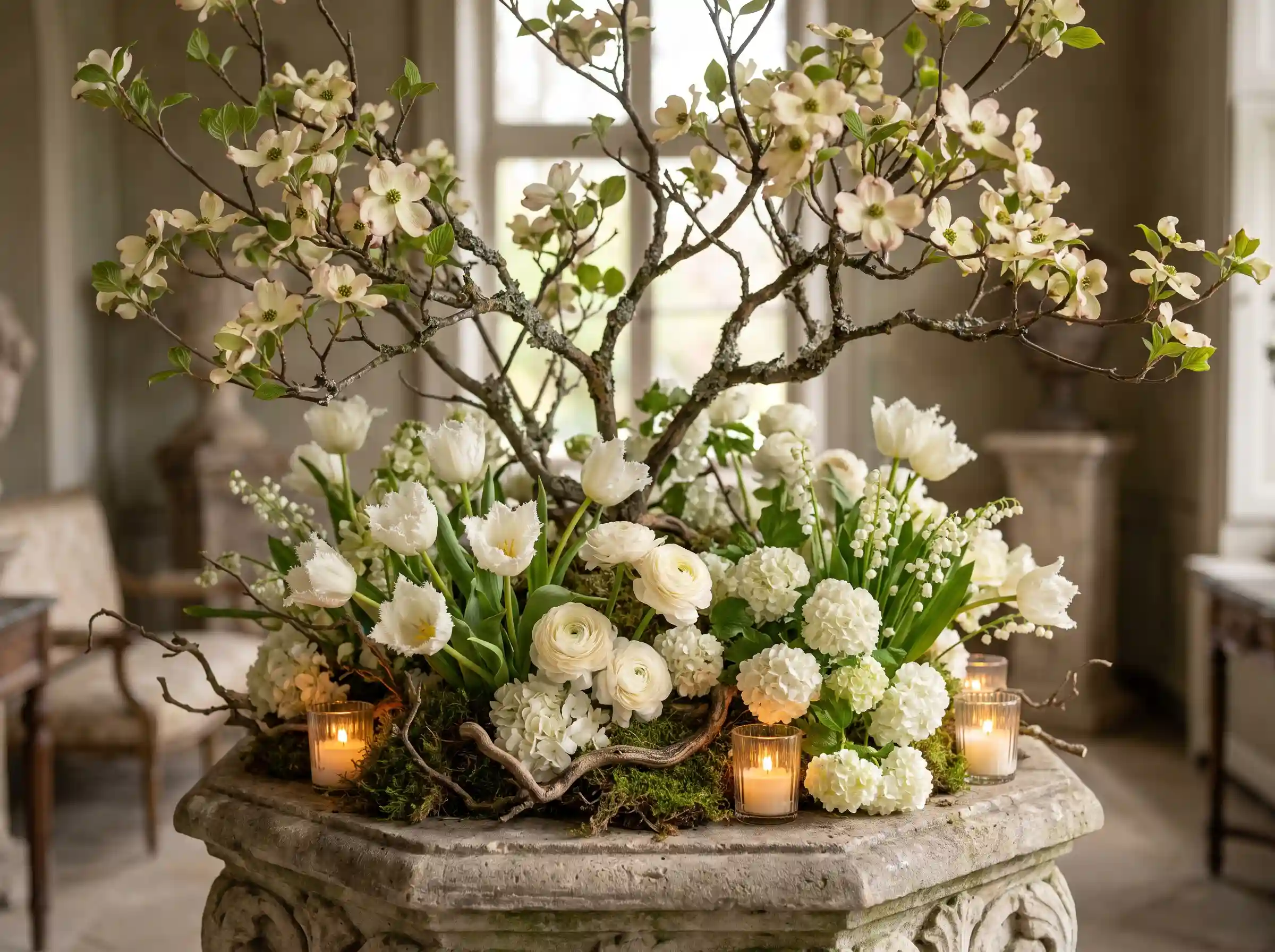
Dogwood branches form the architectural spine of this arrangement. They reach upward and outward, creating a natural framework that smaller blooms nestle into. It feels like a miniature orchard has taken root on the table.
White tulips, creamy ranunculus, and viburnum snowball blooms provide softness at the center. Lily of the valley adds delicate detail and fragrance. Fresh moss covers the base, grounding the design in an earthy woodland aesthetic.
Candlelit illumination is essential here. The warm glow catches the dogwood petals and creates dancing shadows from the branches. Natural materials — moss, bark, branches — give this arrangement a story. It feels alive.
Style tip: Source dogwood branches from a local tree service or garden. Florist-supplied branches can be expensive. If you know someone with a dogwood tree, ask permission to cut a few branches. They are incredibly photogenic and cost nothing.
10. Hellebore Woodland Grace
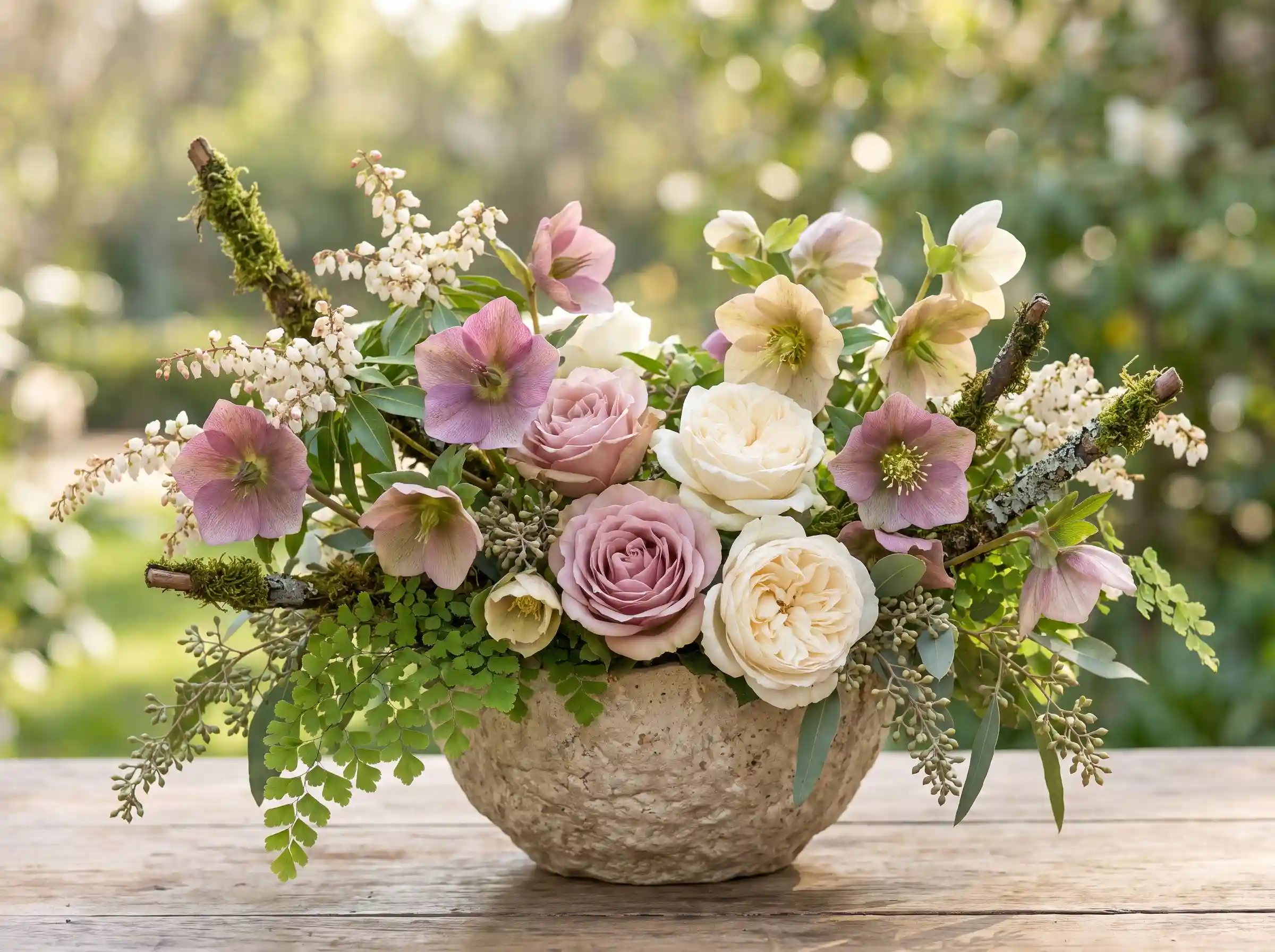
Hellebores are the thinking person’s flower. Their nodding heads and muted, complex colors appeal to couples who want something unexpected. This woodland-inspired arrangement pairs mauve hellebores with cream garden roses and flowering pieris.
Ferns and seeded eucalyptus create a forest floor effect. Moss-covered branching accents add texture and earthiness. The natural stone vessel reinforces the woodland mood. Everything here feels gathered rather than arranged.
Filtered morning light is the ideal companion for hellebores. Harsh sunlight washes out their subtle coloring. In soft, diffused light, the mauve petals reveal hidden layers of plum, sage, and cream that reward a closer look.
Style tip: Hellebores can wilt quickly when cut. Ask your florist to sear the stem ends in boiling water for 30 seconds before arranging. Alternatively, float hellebore heads in shallow bowls of water for a striking, longer-lasting display.
11. Blue Delphinium Heights
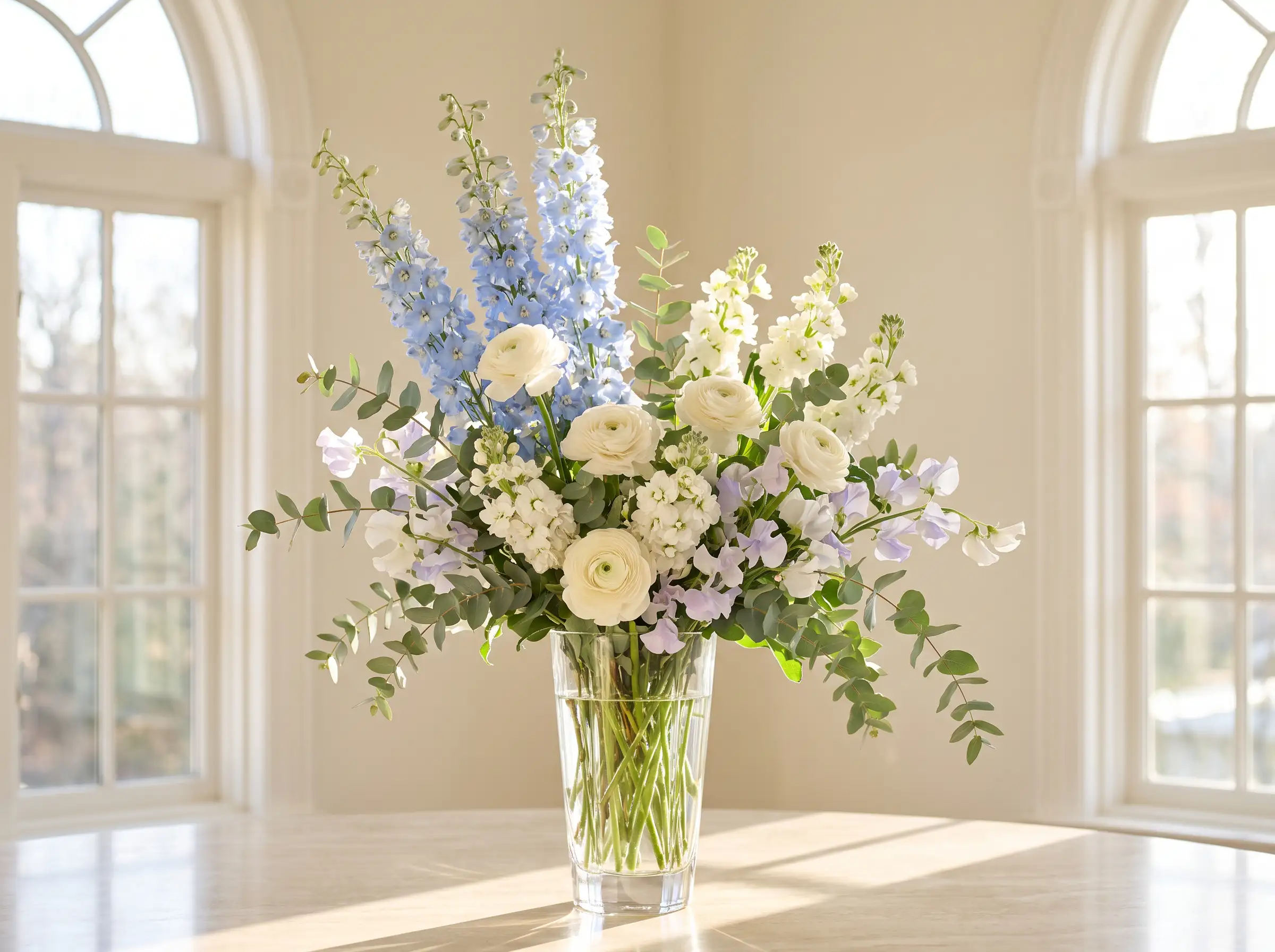
Vertical drama changes the energy of a room. Tall powder blue delphiniums shoot upward like botanical spires, commanding attention and drawing the eye to the ceiling. This arrangement uses height as its primary design tool.
Below the delphiniums, ivory ranunculus and white stock provide a lush, rounded base. Sweet peas add softness and movement. Eucalyptus trails at the edges. Crystal vessels catch and refract light, adding sparkle without competing with the flowers.
The balance here is masterful. The dramatic vertical spires could feel aggressive, but the cascading garden florals at the base soften everything. It is bold and gentle at the same time. The blue reads as fresh and confident against white table linens.
Style tip: Use delphiniums at varying heights across your tables to create a landscape effect. Alternate tall and low arrangements to keep sightlines open for conversation while maintaining visual impact across the room.
12. Fragrant Hyacinth Elegance
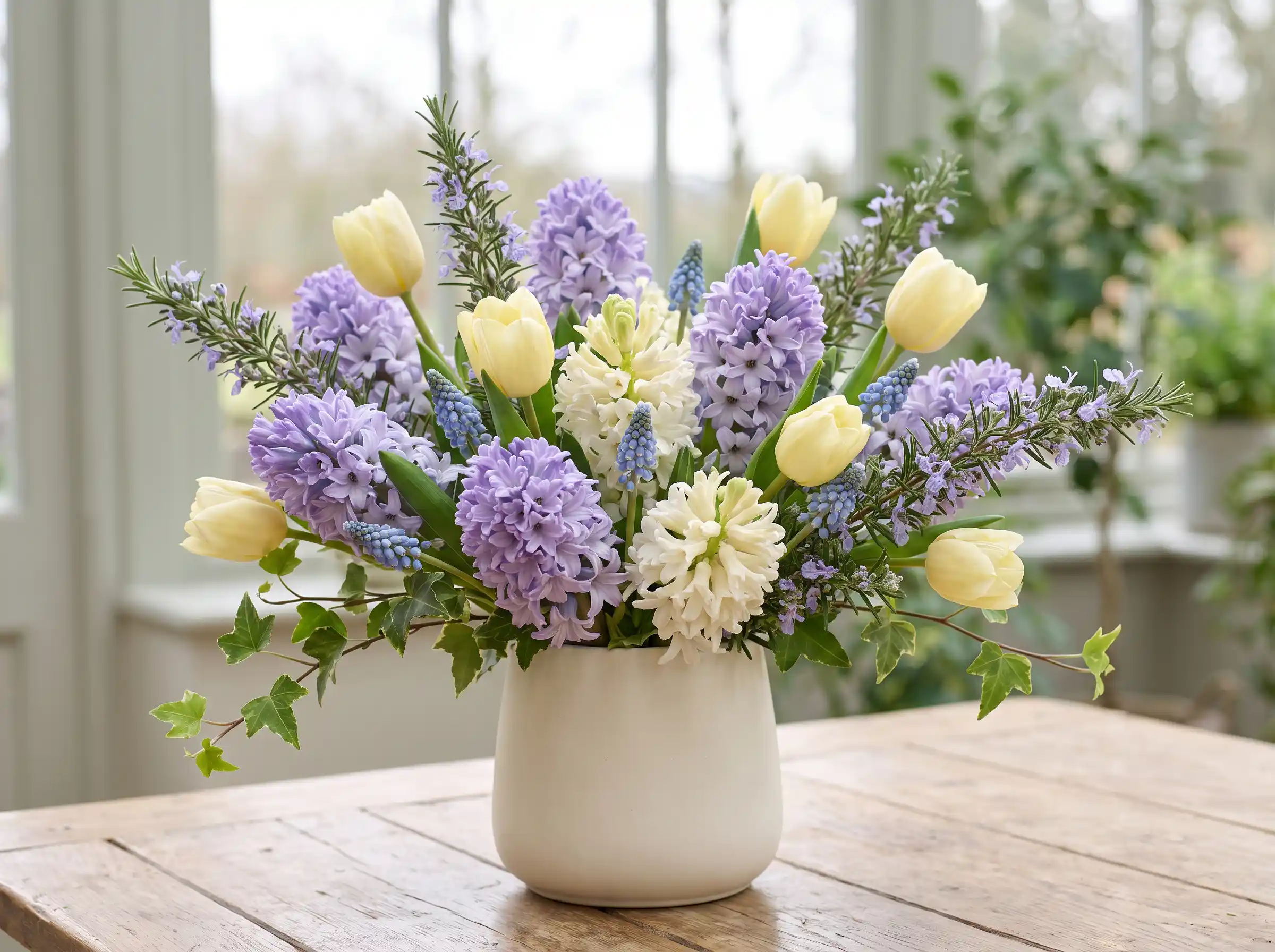
Hyacinths are the most fragrant spring flower. One stem can perfume an entire table. This arrangement groups lavender and white hyacinths with creamy tulips, creating clusters of scent and color that feel abundant and welcoming.
Blue muscari adds darker accents near the base. Flowering rosemary brings an herbal note that complements the hyacinth’s sweetness. Trailing ivy softens the edges of matte ivory ceramics. Diffused daylight brings out every shade of lavender.
The texture contrast here is worth noting. Hyacinth florets are dense and clustered. Tulips are smooth and clean. Muscari is beaded. Rosemary is needle-fine. Together, they create a rich tactile experience that feels layered and considered.
Style tip: Hyacinths can be overpowering in enclosed spaces. Use them for outdoor ceremonies or well-ventilated reception areas. For indoor events, limit to two or three stems per arrangement and let companion flowers fill the volume.
13. Coral Charm Tulip Collection

Coral Charm tulips are a florist favorite for good reason. They open from deep coral and fade to soft peach over the course of a day. This color evolution means your arrangements actually change during the reception. Guests at cocktail hour see a different palette than those at the last dance.
Peach ranunculus and apricot garden roses expand the warm color story. White sweet peas and astilbe add lightness. Silver dollar eucalyptus provides a cool, silvery contrast. The handcrafted limestone vessel has the perfect weight to anchor these warm-toned blooms.
Naturally curved tulip stems give the arrangement personality. No two arrangements will look identical, and that is the point. The coral-to-peach gradient creates a sunset feeling on the table.
Style tip: Order Coral Charm tulips to arrive two days before the wedding. They need time to open and begin their color shift. By the wedding day, you will have a beautiful mix of coral, peach, and apricot tones within each stem.
14. Lily of the Valley Heirloom
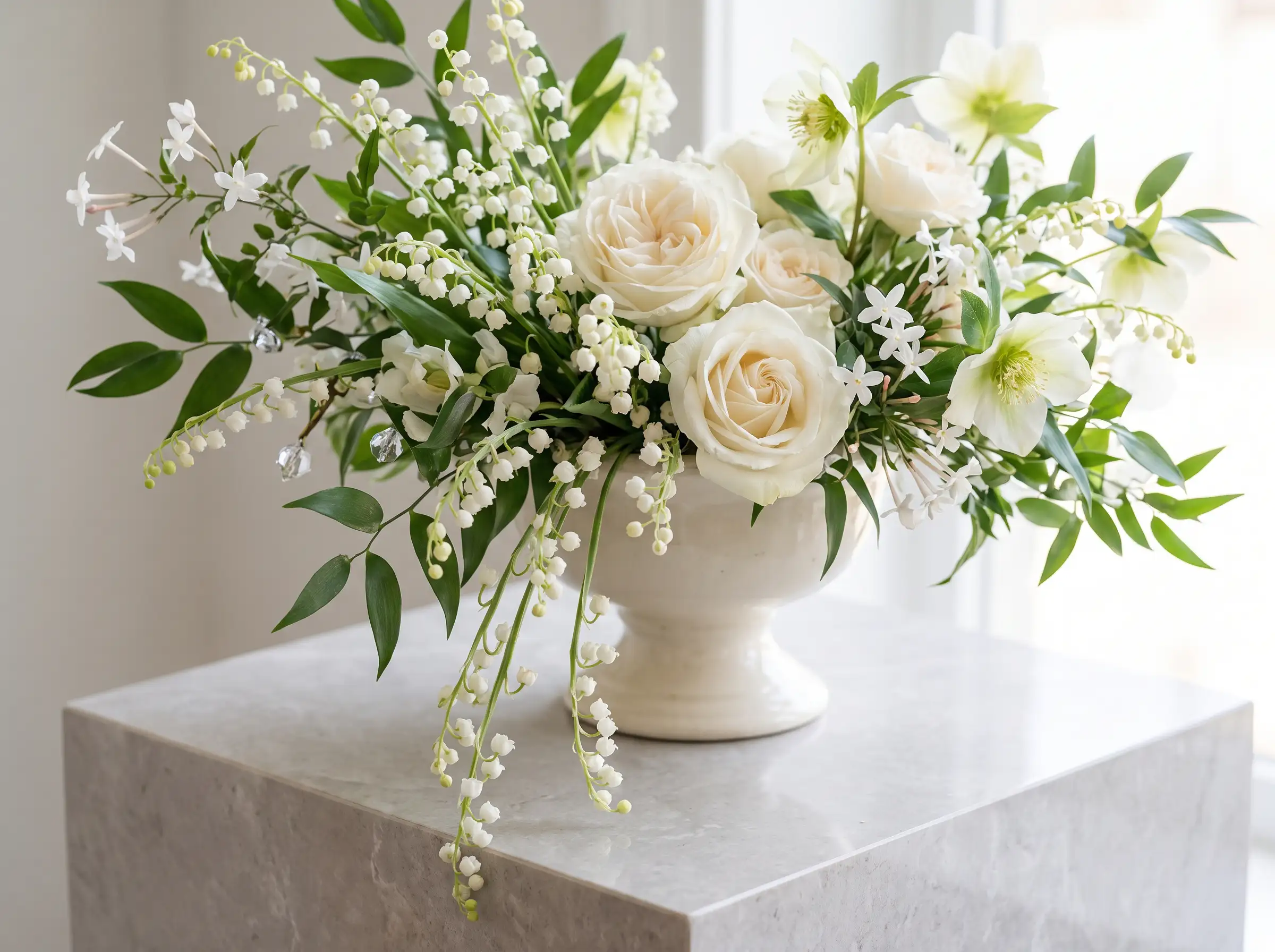
Lily of the valley is royalty’s flower. Its association with elegance is centuries deep. This arrangement treats it with the reverence it deserves, letting tiny bell-shaped blooms cascade from crystal vessels in a pure ivory monochromatic palette.
Ivory garden roses provide scale and fullness. Flowering jasmine echoes the trailing habit of the lily of the valley. White hellebores add nodding grace notes. Italian ruscus provides the only green, keeping the palette almost entirely white.
Crystal accents catch the light and add a formal, heirloom quality. This arrangement belongs at a black-tie wedding. It whispers rather than shouts. Every detail is refined and intentional.
Style tip: Lily of the valley is expensive due to its short season and labor-intensive harvesting. Use it strategically — in the bridal bouquet and one or two key centerpieces. Supplement other tables with white sweet peas and jasmine for a similar delicate effect at lower cost.
15. Pastel Spring Symphony
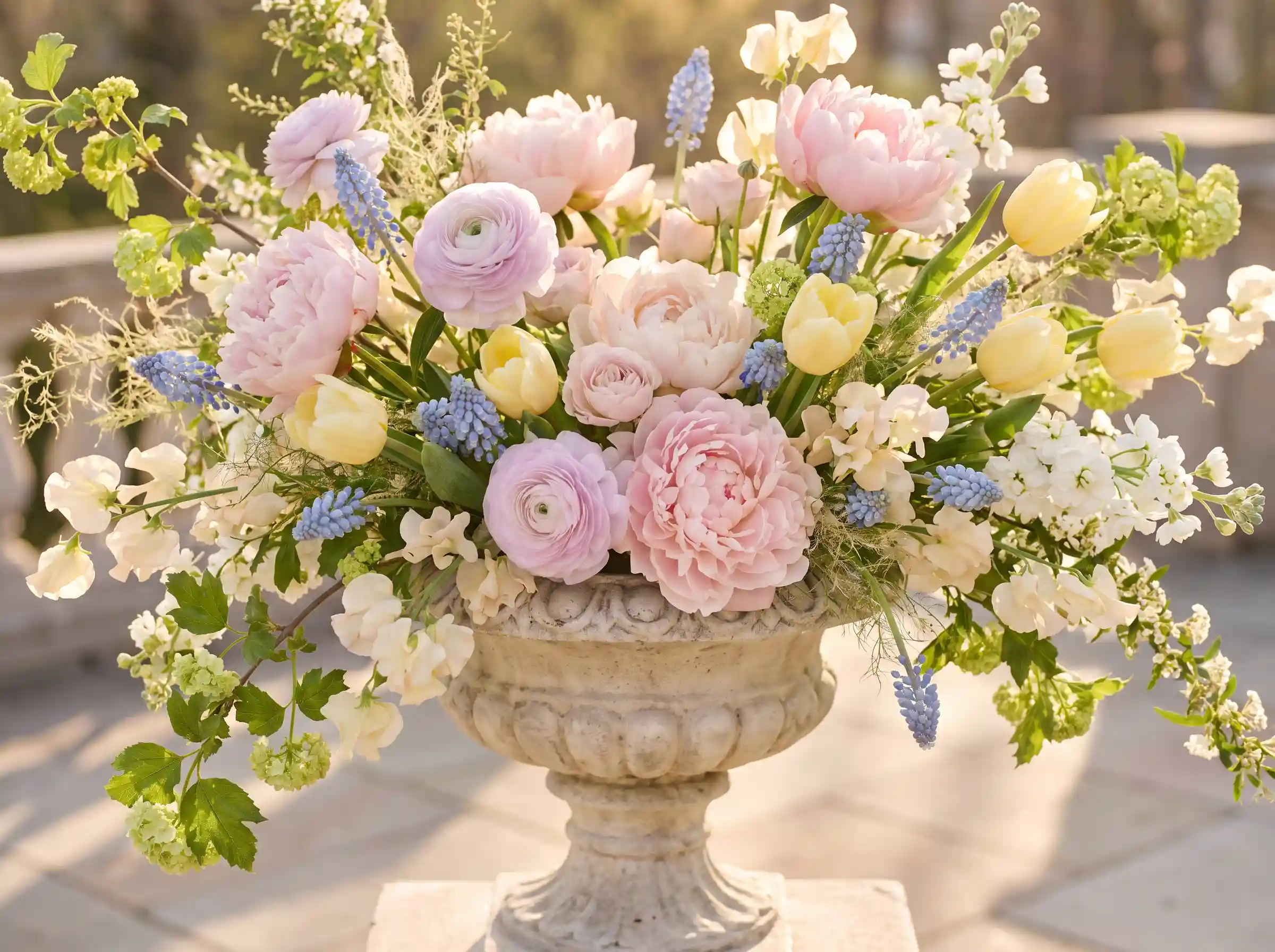
This is the arrangement that captures spring in a single design. Blush peonies, pastel ranunculus, sweet peas, tulips, blue muscari, white stock, and viburnum all come together in a seamless pastel gradient. It is abundant without being chaotic.
The color transitions are invisible. Blush melts into peach. Peach drifts into cream. Cream meets pale blue. The effect is like looking at a watercolor painting where the pigments bleed softly into one another.
Golden-hour lighting transforms this arrangement into something almost otherworldly. Warm light intensifies the peach tones and makes the blue muscari pop. This is the sweet spot between romantic and modern.
Style tip: Achieve this gradient effect by providing your florist with a paint chip progression rather than flower names. Show them the colors you want and let them choose the best seasonal blooms to match. This gives them creative freedom while ensuring your vision.
16. Ivory Ranunculus Luxe
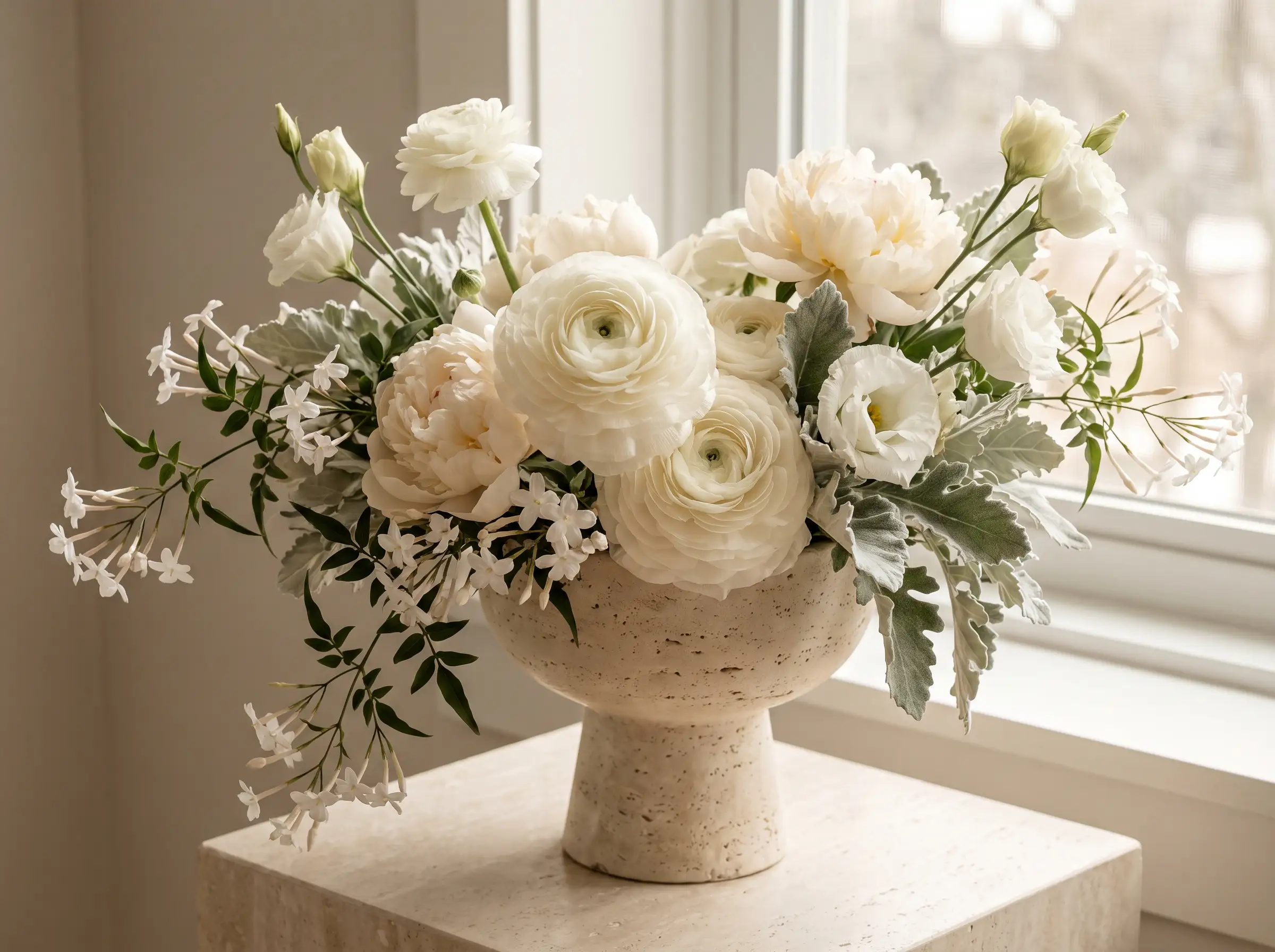
Monochromatic ivory is the hardest palette to execute well. Get it wrong and everything looks flat. Get it right and it looks like liquid luxury. This arrangement gets it spectacularly right.
Ivory ranunculus, cream peonies, and white lisianthus are layered in tonal graduations so subtle they are nearly invisible. The variation comes from texture rather than color. Petal shapes differ. Light catches each bloom differently. Flowering jasmine vine and dusty miller add silvery-green whispers at the edges.
The sculptural travertine vessel is a design decision that elevates everything. Its warm stone tone and natural texture give the ivory blooms something to contrast against. Soft window light from one direction creates shadows that reveal the arrangement’s depth.
Style tip: For all-white arrangements, texture variety is essential. Mix ruffled ranunculus, full peonies, and layered lisianthus. Add at least one trailing element like jasmine or clematis to break up the rounded shapes and create visual flow.
17. French Garden Roses & Spring Blooms
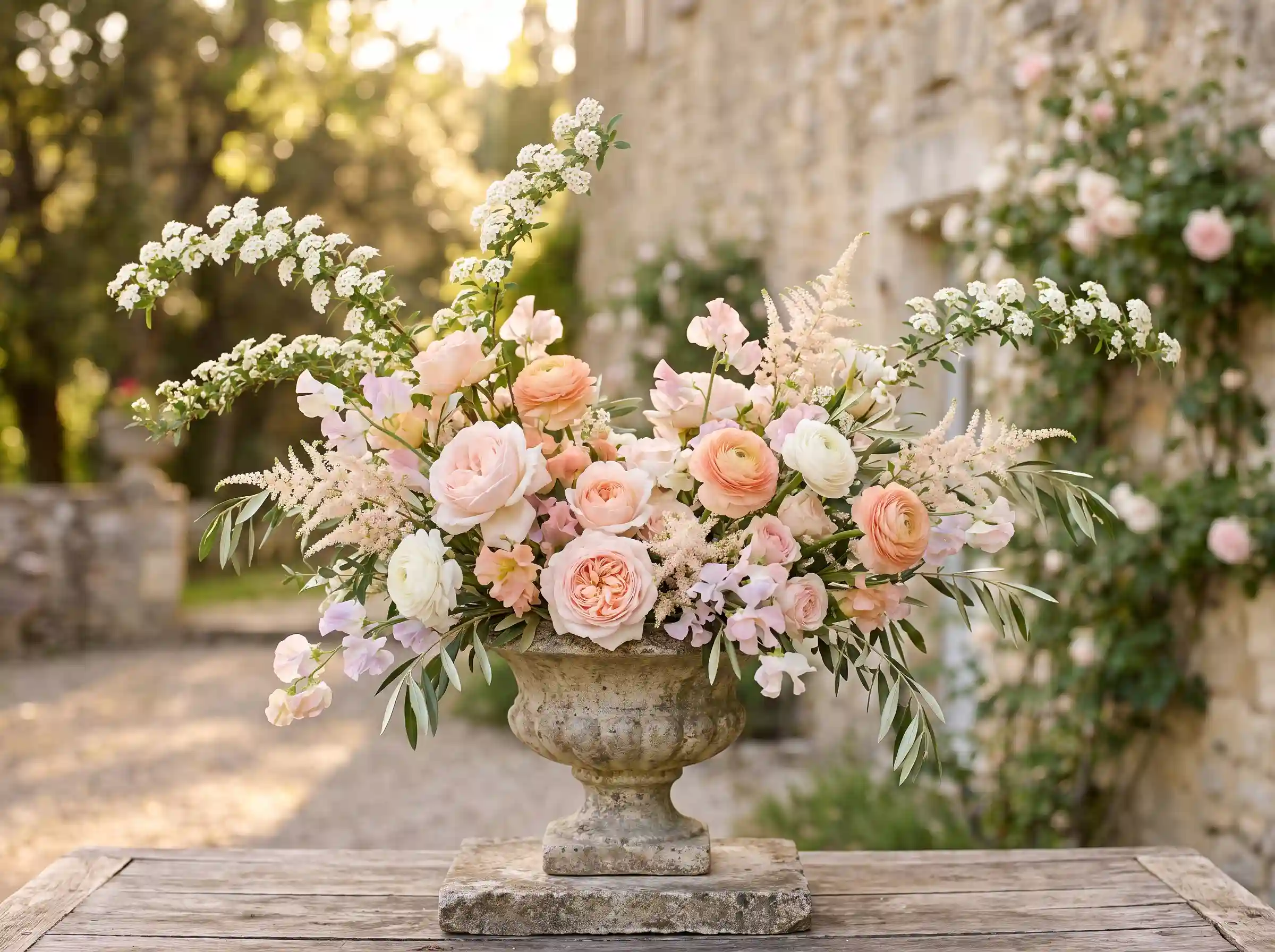
There is a reason French garden style endures. It balances abundance with restraint. This arrangement captures that spirit with blush garden roses at the center, surrounded by peach ranunculus, sweet peas, and flowering spirea.
Astilbe adds feathery plumes that soften the composition. Olive branches introduce a silvery-green Mediterranean note. The antique stone urn is perfectly imperfect — weathered, warm, and full of character. It tells the flowers they belong somewhere with history.
Warm afternoon sunlight is this arrangement’s best friend. It deepens the blush tones and makes the peach ranunculus glow. The French garden aesthetic here is authentic, not costume. It feels lived-in and loved.
Style tip: Source antique stone urns from salvage yards or garden shops. Even one authentic vessel elevates a head table arrangement from pretty to unforgettable. Pair with simple glass bud vases on guest tables to keep the look cohesive without matching exactly.
18. Blooming Orchard Whites
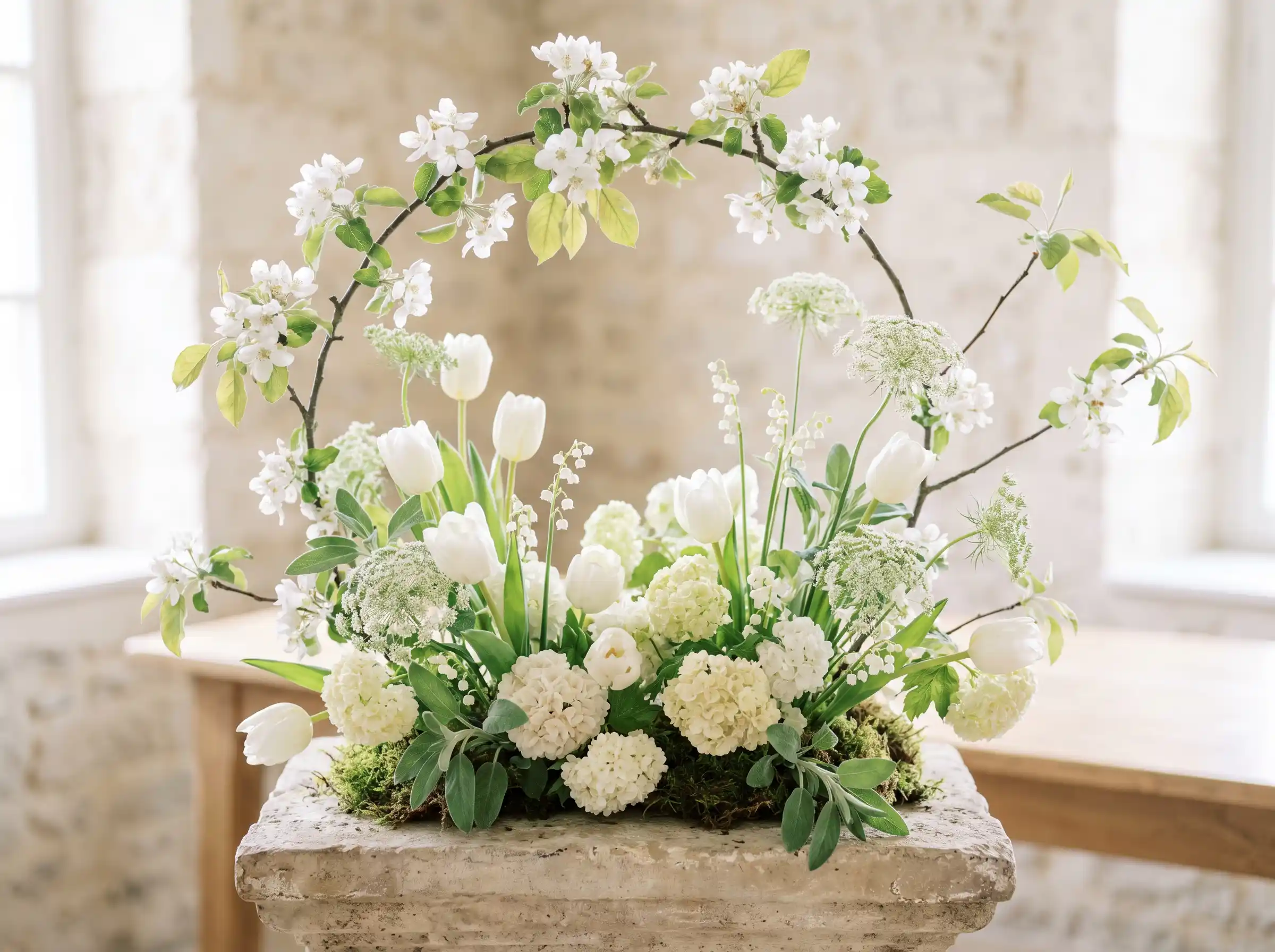
Step inside an apple orchard in May and look up. That is what this arrangement captures. Flowering apple branches create a canopy above white tulips, viburnum snowballs, and lily of the valley. The effect is immersive.
Queen Anne’s lace adds fine, lacy detail between the larger blooms. Moss and sage foliage ground the arrangement in green, preventing the all-white palette from feeling sterile. Morning sunlight filters through the branches and petals, creating dappled light patterns on the table below.
This is nature-led design at its finest. The branches set the structure. The flowers fill in organically. Nothing fights for attention. Everything cooperates to create a single, unified mood of fresh orchard morning.
Style tip: Flowering fruit branches — apple, pear, quince — are available from orchards and tree farms in early spring. Order them a week before the wedding and keep them in cool water. They will bloom on schedule and bring authentic spring atmosphere.
19. Lilac & Wisteria Waterfall
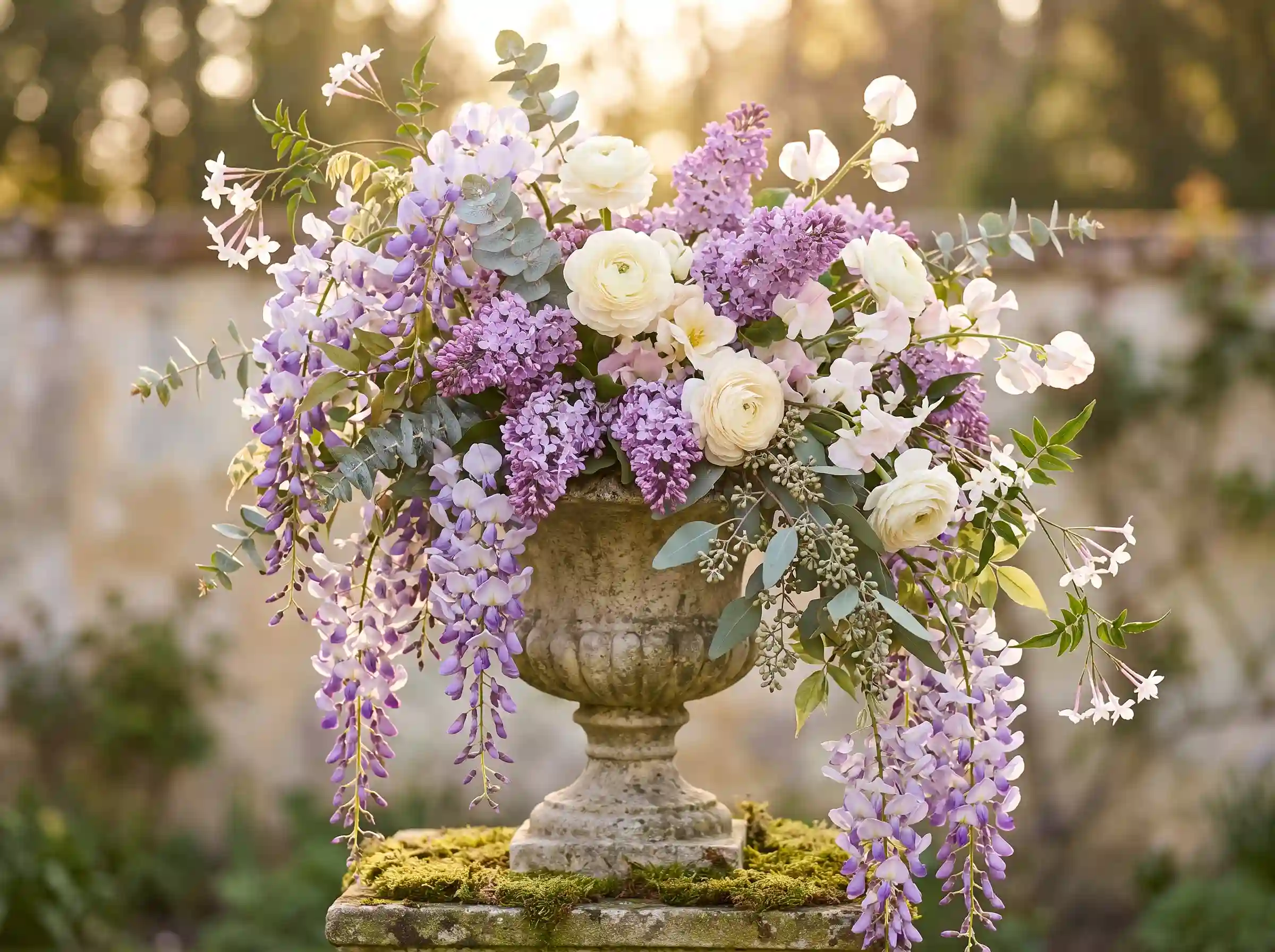
Wisteria does one thing better than any other flower. It cascades. This arrangement leverages that gift to create a dramatic waterfall of lavender, pouring over the edge of an antique stone urn and pooling on the table below.
Fragrant lilacs share the spotlight, adding their own clusters of purple. Ivory ranunculus and sweet peas brighten the arrangement from within. Flowering jasmine and seeded eucalyptus provide greenery and texture. The layered purple tones — from deep wisteria to soft lilac — create a rich, painterly palette.
Golden-hour light is the finishing touch. It warms the lavender tones toward mauve and makes the ivory blooms glow like small lanterns. The waterfall effect creates a sense of abundance and generosity that few other arrangements can match.
Style tip: Wisteria is available fresh for only a few weeks in spring. If your wedding falls outside that window, high-quality silk wisteria can substitute effectively for the trailing elements. Mix silk trailing pieces with fresh flowers for a practical, beautiful hybrid approach.
20. Spring Wildflower Meadow
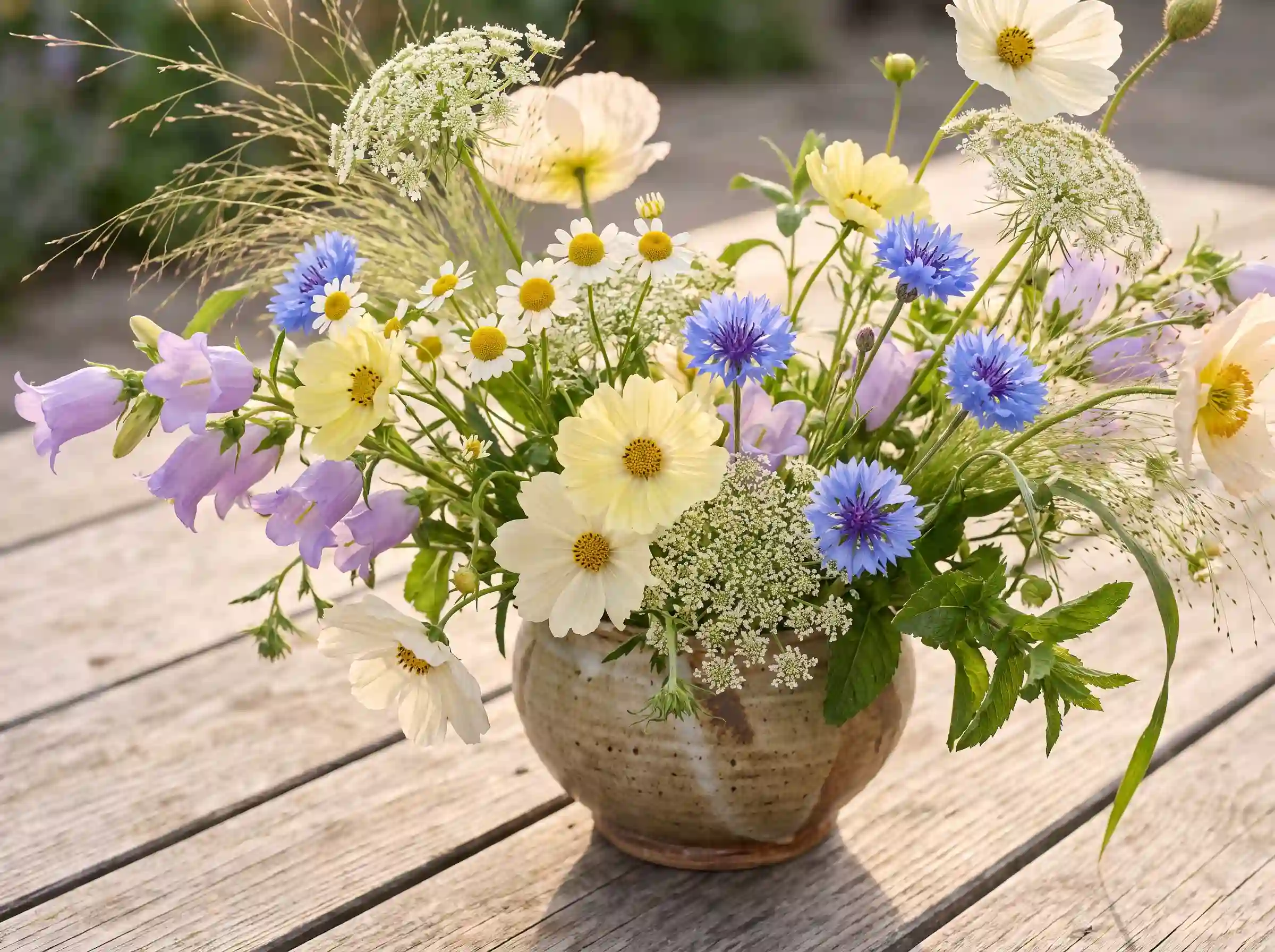
This is for the couple who wants their wedding to feel like a picnic in a field of wildflowers. Chamomile, blue cornflowers, ivory cosmos, campanula, Queen Anne’s lace, and poppies mingle with ornamental meadow grasses. It looks effortless. It is not.
Creating a convincing wildflower arrangement requires understanding how meadow plants actually grow. They cluster in uneven groups. They lean toward light. This arrangement nails every detail.
Sunrise light gives the arrangement a dewy, just-woken quality. The handcrafted ceramic vessel grounds the wild composition without taming it. Blue cornflowers pop against the neutral tones, creating focal points that move your eye through the design.
Style tip: Wildflower arrangements work best in multiples. Create five to ten small-to-medium arrangements scattered across the table rather than one large centerpiece. The scattered effect reinforces the meadow feeling and improves conversation sightlines.
21. Peach Blossom Elegance
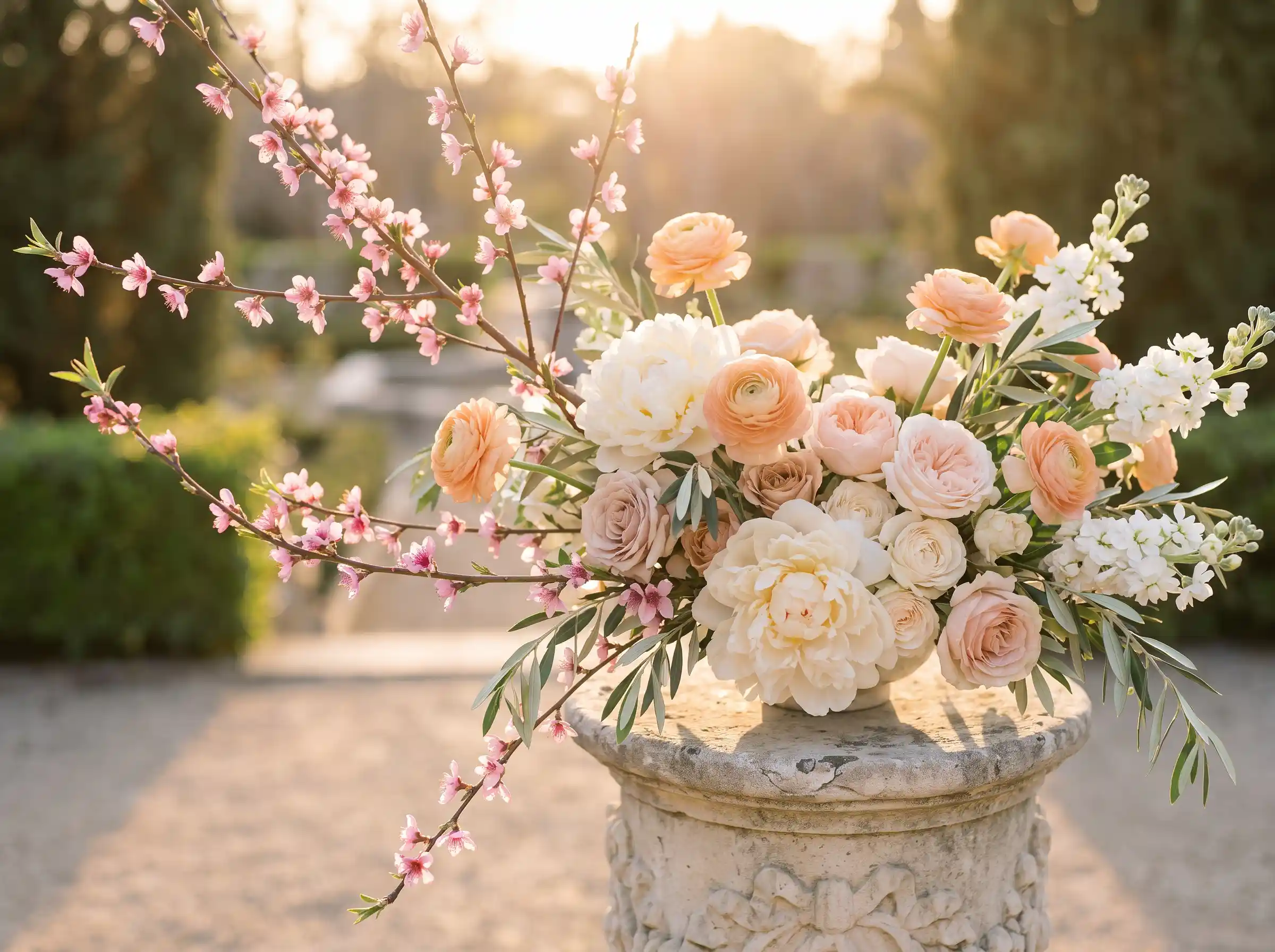
Flowering peach branches bring an orchard-fresh quality that cultivated flowers alone cannot achieve. Here, they arch gracefully above cream peonies, peach ranunculus, and blush garden roses. The branches set the mood before a single flower registers.
White stock adds vertical accents and a soft, spicy fragrance. Olive foliage introduces silvery-green tones that cool the warm palette just enough. The carved limestone pedestal raises the arrangement to eye level, giving it presence and importance.
Warm afternoon sunlight is this arrangement’s intended lighting. The peach tones deepen. The blush roses warm toward coral. The limestone glows golden. Every element has been chosen to peak at the hour most weddings reach their emotional crescendo.
Style tip: Peach branches are available from local orchards in early spring. Contact farms directly. Many are happy to sell pruned branches that would otherwise be discarded. You get authentic spring beauty at a fraction of florist-sourced prices.
22. Dogwood Blossom Serenity
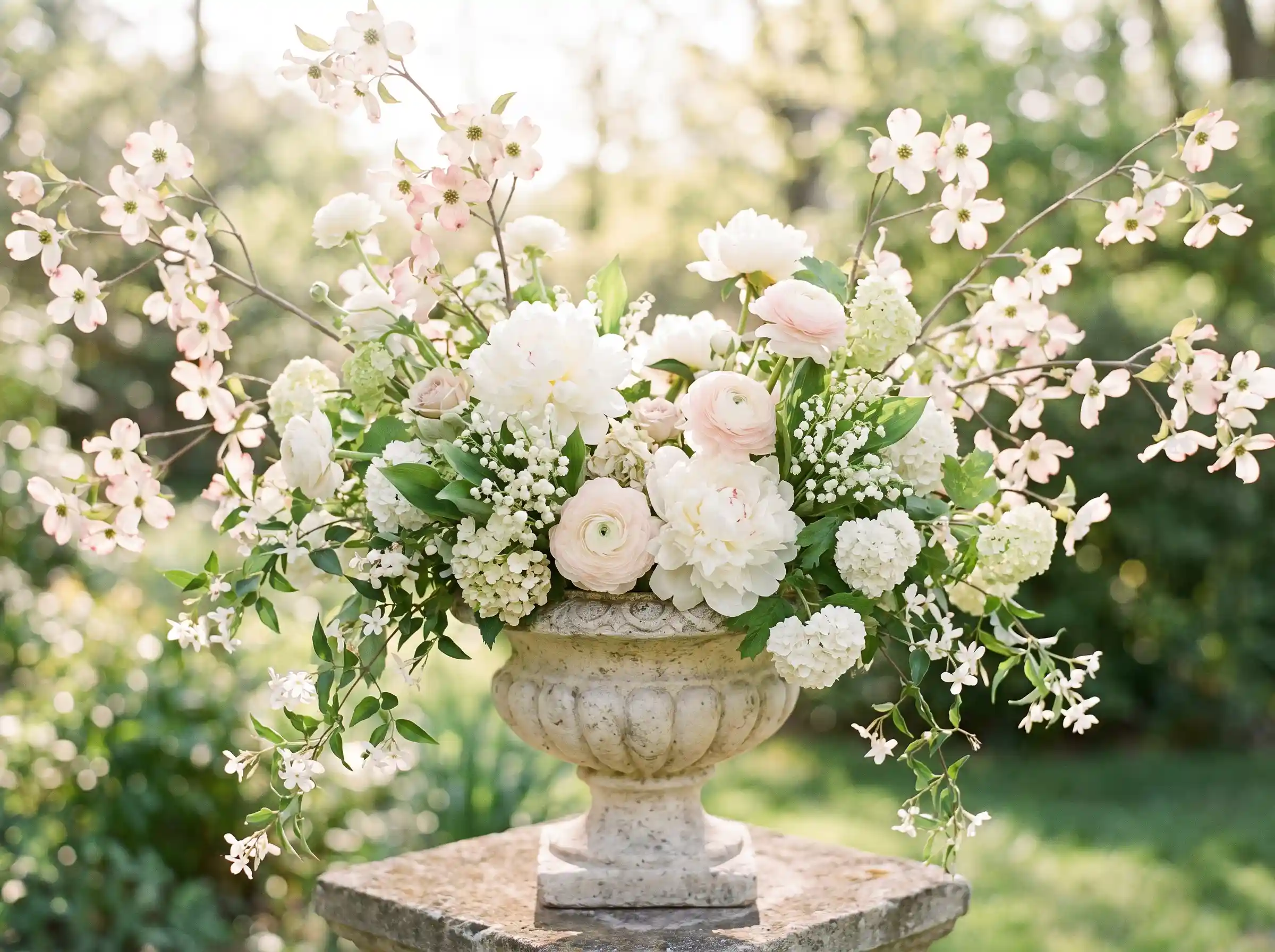
Dogwood blossoms create living canopies. Their horizontal branching pattern is naturally architectural. In this arrangement, flowering dogwood branches extend outward, forming a canopy over white peonies and blush ranunculus below.
Lily of the valley and viburnum snowballs add delicate detail at the base. Jasmine vine threads through the branches, connecting the upper canopy to the lower blooms. A carved limestone urn provides a substantial, elegant foundation.
Morning light is perfect for dogwood. The four-petaled blossoms are translucent, and backlight makes them glow. The living canopy effect transforms a table centerpiece into a miniature garden experience. Guests feel sheltered and intimate.
Style tip: Dogwood branches are sturdy and long-lasting when cut. Arrange them first to create your framework, then tuck flowers into the structure. This method is faster and creates more natural-looking results than building the arrangement from the center out.
23. Fritillaria Botanical Luxe
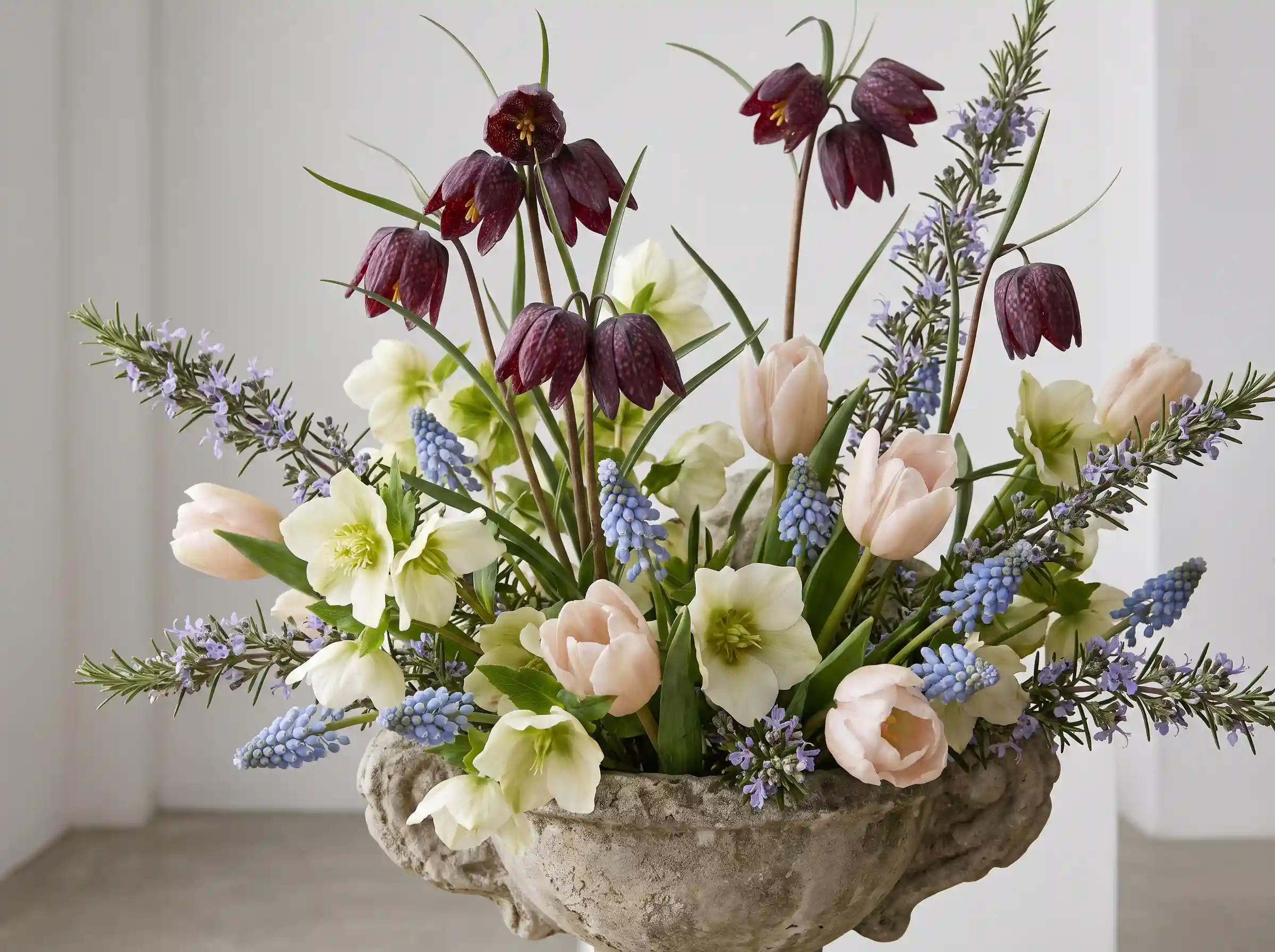
Fritillaria is the rare flower that makes people stop and ask what it is. Its checkered plum petals look almost hand-painted. This arrangement treats it as a collector’s specimen, presenting it with the care of a museum display.
White hellebores and pale tulips provide a clean backdrop that makes the fritillaria pattern pop. Muscari adds dark accents. Flowering rosemary introduces an herbal, aromatic element. The sculptural stone vessel has gallery-worthy presence.
Gallery-style lighting — directional and dramatic — is the ideal companion. It highlights the checkered pattern on each petal and casts deep shadows that add dimension. This arrangement is for the couple who values the rare and the unexpected.
Style tip: Fritillaria is a specialty flower. Discuss availability with your florist at least three months in advance. It blooms for a narrow window in mid-spring. If unavailable, consider using it in the bridal bouquet only and choosing a different centerpiece flower.
24. Forget-Me-Not Romance
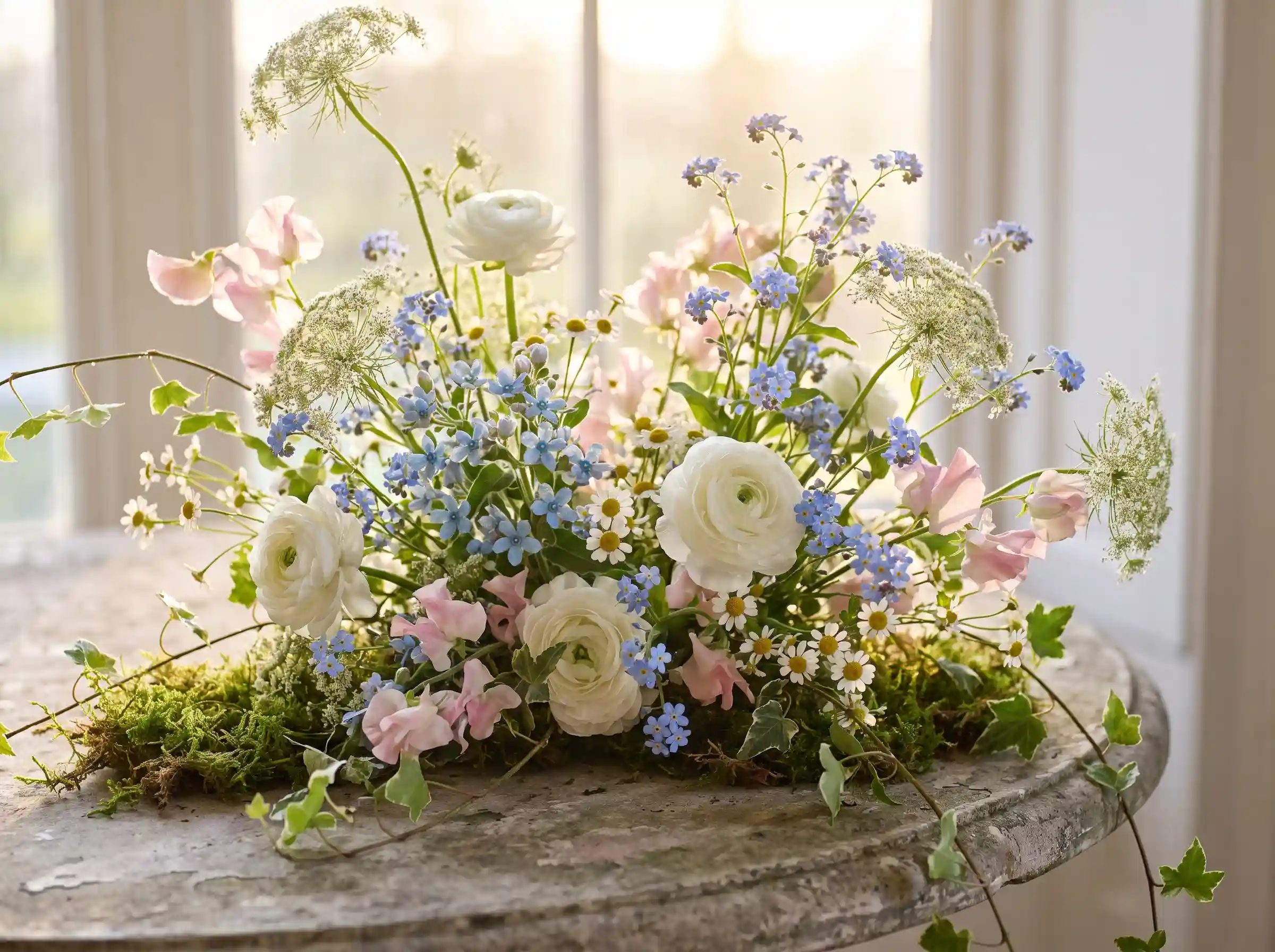
Forget-me-nots in abundance create something truly special. Their tiny blue flowers, massed together, produce a misty, almost impressionistic effect. It is like looking at a pointillist painting. Up close, individual flowers. From a distance, a blue cloud.
White ranunculus and blush sweet peas rise above the blue mist. Chamomile daisies add cheerful, sunny accents. Queen Anne’s lace provides delicate structure. Moss and trailing vines ground the arrangement in a garden-floor aesthetic.
Sunrise light gives these blue flowers their most ethereal quality. The cool blue tones contrast beautifully with warm golden light. It creates a visual tension that makes the arrangement feel alive and dynamic.
Style tip: Forget-me-nots are delicate and short-lived once cut. Use potted forget-me-not plants in decorative containers for a longer-lasting alternative. After the wedding, guests can take them home as living favors.
25. Clematis Garden Cascade
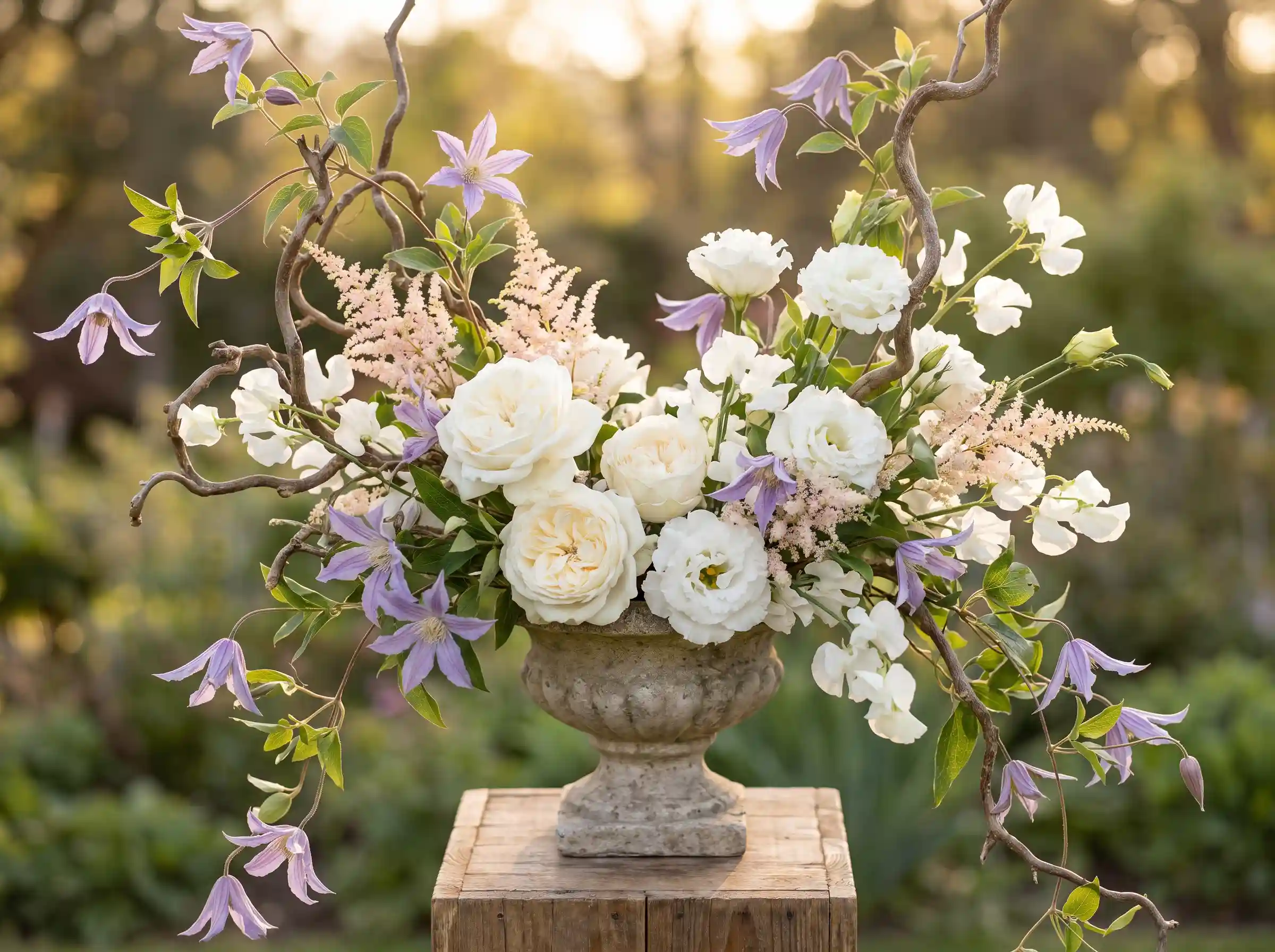
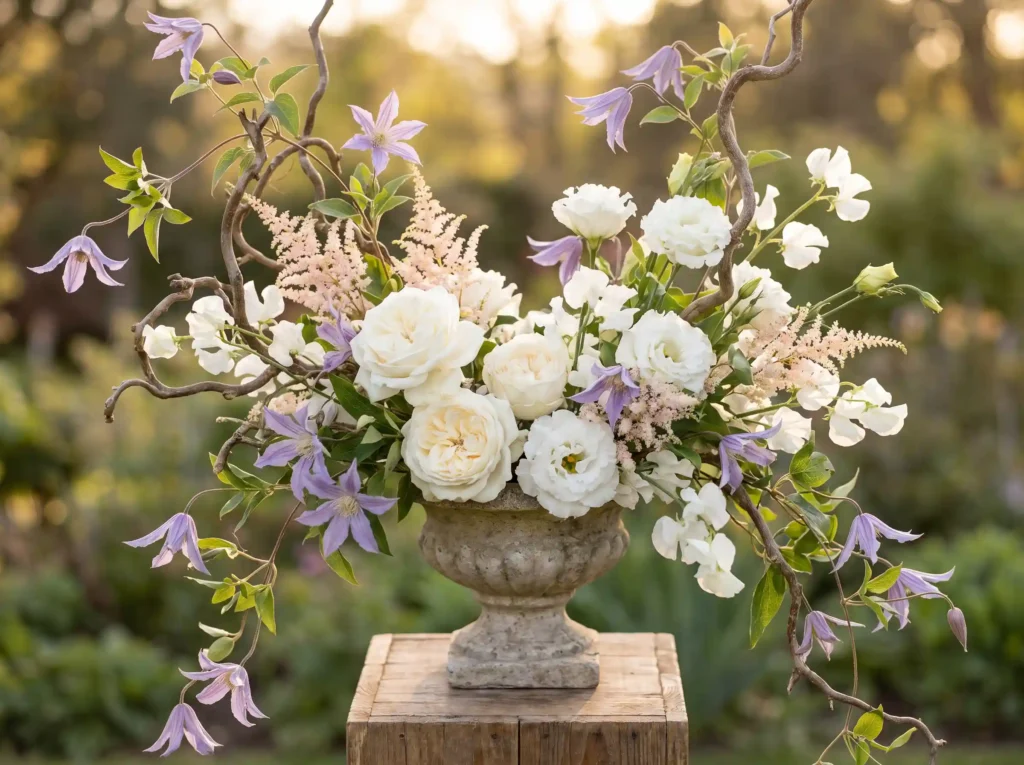
Clematis vines have a natural climbing, spiraling habit that brings movement to any arrangement. Here, lavender clematis spirals through ivory garden roses and sweet peas, creating a living vertical garden in miniature.
White lisianthus adds fullness. Astilbe provides feathery texture. Natural branching supports guide the clematis upward, mimicking the way it climbs in a garden. The weathered stone urn has perfect patina — aged, warm, and dignified.
Golden-hour light catches the translucent clematis petals and makes them glow purple. The spiraling climbing effect creates energy and upward motion. Your eye follows the vine from the base to the tip. It is a journey, not just a centerpiece.
Style tip: Clematis needs support to climb. Use thin branches or discreet floral wire to guide the vines upward. Without support, clematis will trail downward instead of spiraling up. Both effects are beautiful, but plan for the one you want.
26. Spring Citrus Bloom Palette
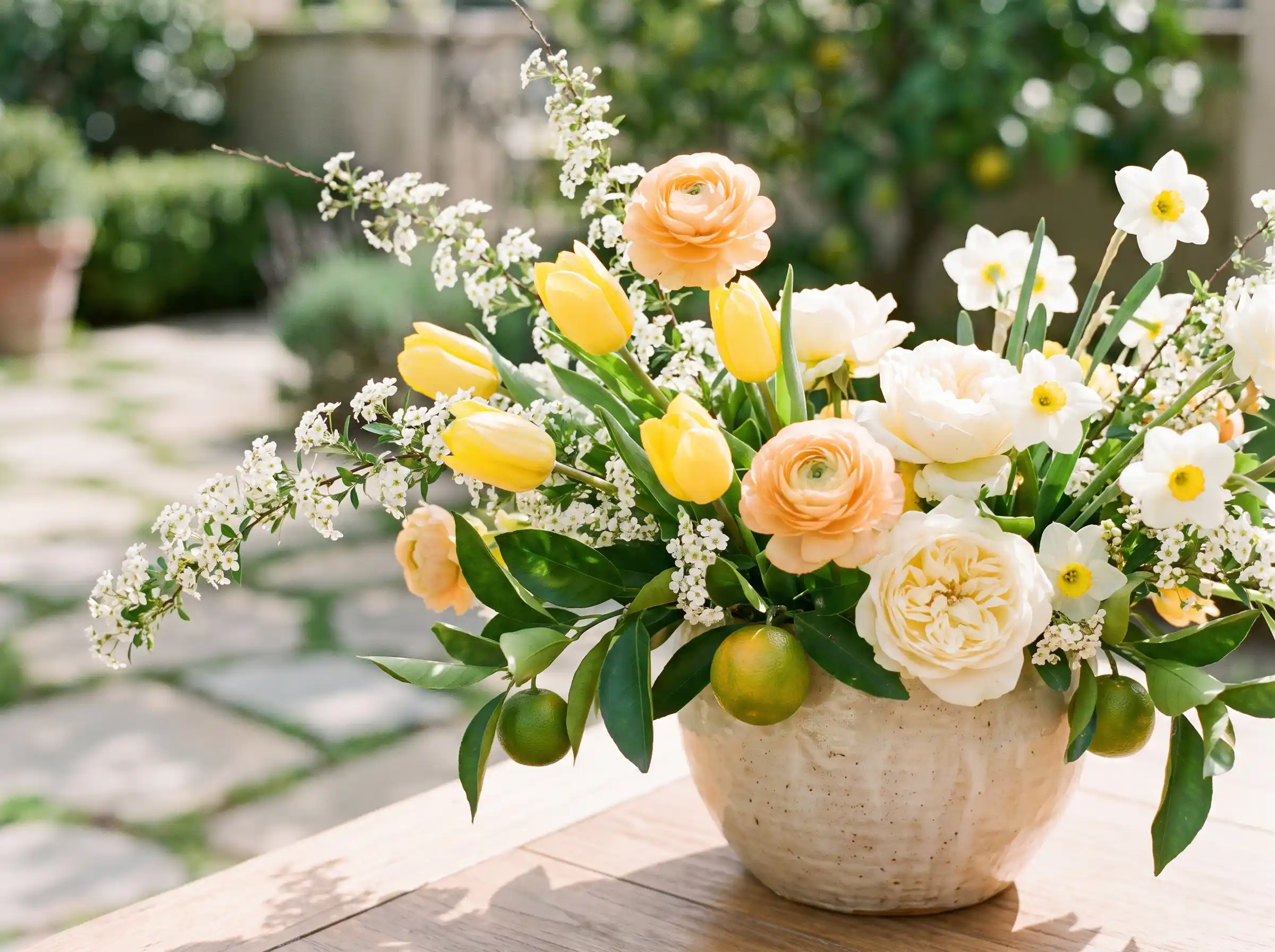
This arrangement radiates warmth and optimism. Yellow tulips, apricot ranunculus, and cream roses create a citrus-inspired palette that feels fresh, joyful, and unapologetically cheerful. It is spring at its sunniest.
Flowering spirea adds airy white accents that keep the warm tones from becoming heavy. White narcissus brings fragrance and bright focal points. Citrus foliage — the unexpected star — adds glossy green leaves and a subtle orchard character that ties everything together.
Bright natural daylight is the only lighting this arrangement needs. Artificial light can make yellows look greenish. In natural light, the yellow tulips practically vibrate with energy. The handcrafted ceramic vessel in a neutral tone lets the color palette take center stage.
Style tip: Tuck a few small kumquats or Meyer lemons into the arrangement for an unexpected pop of texture and color. Citrus fruits among flowers create a charming, European still-life quality. Wire them to floral picks for easy placement.
27. The Grand Spring Garden Collection
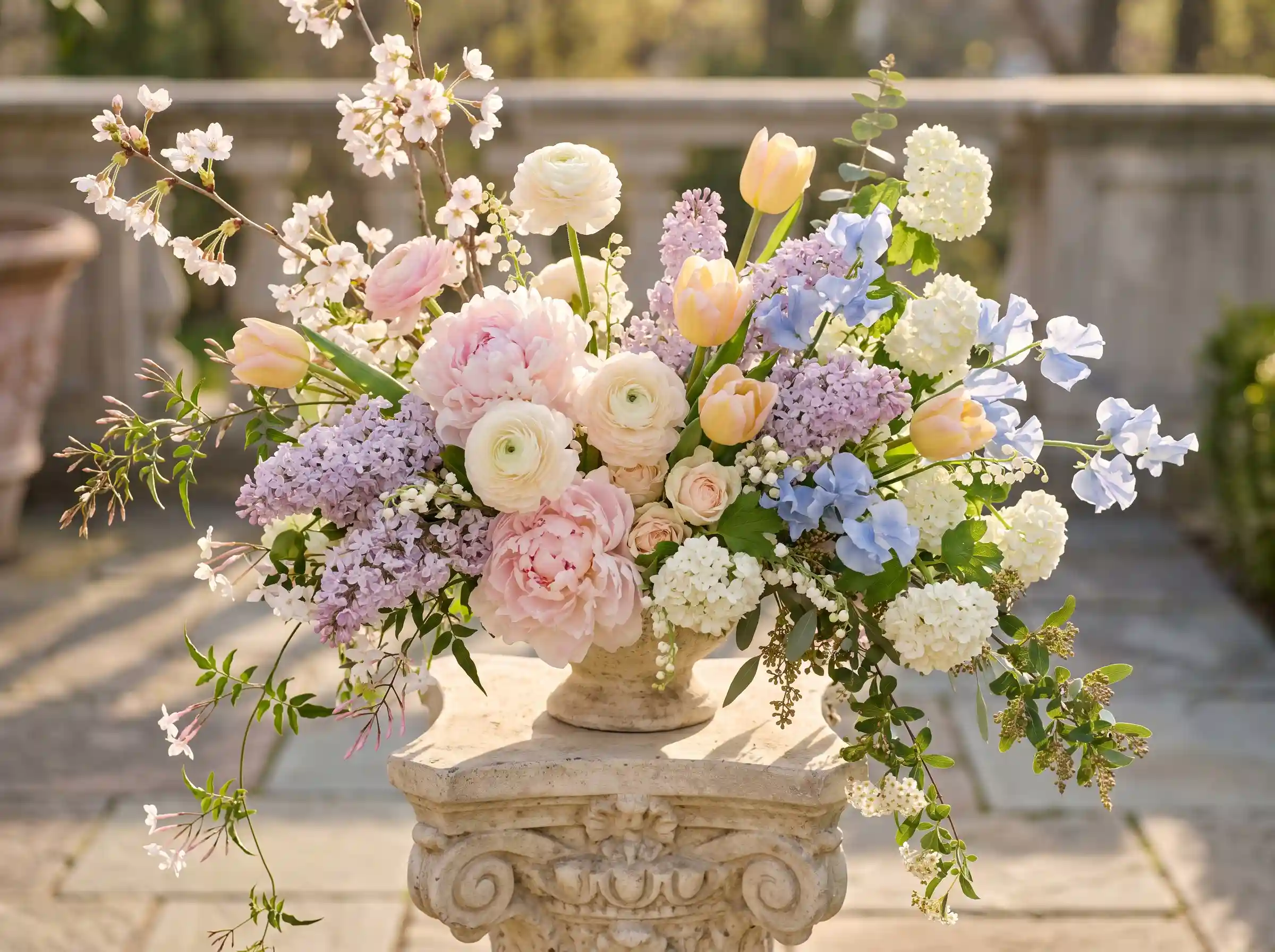
This is the finale. The grand statement. Nearly every iconic spring bloom appears in a single, breathtaking arrangement. Blush peonies, ivory ranunculus, pastel tulips, fragrant lilacs, sweet peas, viburnum, lily of the valley, flowering cherry branches, jasmine vine, and seeded eucalyptus come together in a celebration of the entire season.
The carved limestone pedestal gives this collection the height and prominence it deserves. It is an altar to spring. Each bloom represents a different facet of the season — the fragrance of lilacs, the romance of peonies, the freshness of cherry blossoms, the delicacy of lily of the valley.
Golden afternoon light washes over the arrangement, warming every petal and casting long, soft shadows. The scale is generous. The impact is immediate. This is the arrangement that makes guests gasp when they enter the room.
Style tip: A grand collection like this works best as a single statement piece — at the ceremony altar, reception entrance, or head table. Do not try to replicate this scale at every table. Let it be the hero. Use simpler arrangements featuring one or two of its flowers on guest tables to create a cohesive but varied design story.
Final Thoughts
Spring gives you more to work with than any other season. The palette is wider. The textures are more varied. The fragrances are stronger. The key is choosing flowers that are genuinely in season rather than forcing blooms that belong to another time of year.
Every arrangement in this collection was designed around what spring actually offers. Peonies, tulips, cherry blossoms, lilacs, sweet peas, ranunculus — these are the flowers that peak during the weeks most spring weddings take place. They arrive at their best, and they cost less because nature is already doing the work.
Trust your florist. Share images of the mood you want, not just specific flowers. Talk about light, texture, and feeling. The best wedding flowers are not the most expensive ones. They are the ones that look like they belong — in the season, in the space, and in your story.