Planning a beautiful wedding on a tight budget gets easier when the decor can do more than one job. These 16 DIY ideas use salvaged crates, paper, fabric, thrifted frames, mason jars, and simple greenery to create polished details without expensive rentals or elaborate floral work. From a hanging herb canopy to a paper fan photo spot, each idea is practical enough to make yourself.
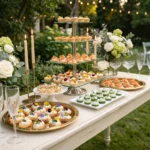
1. Forest Green Dessert Bar
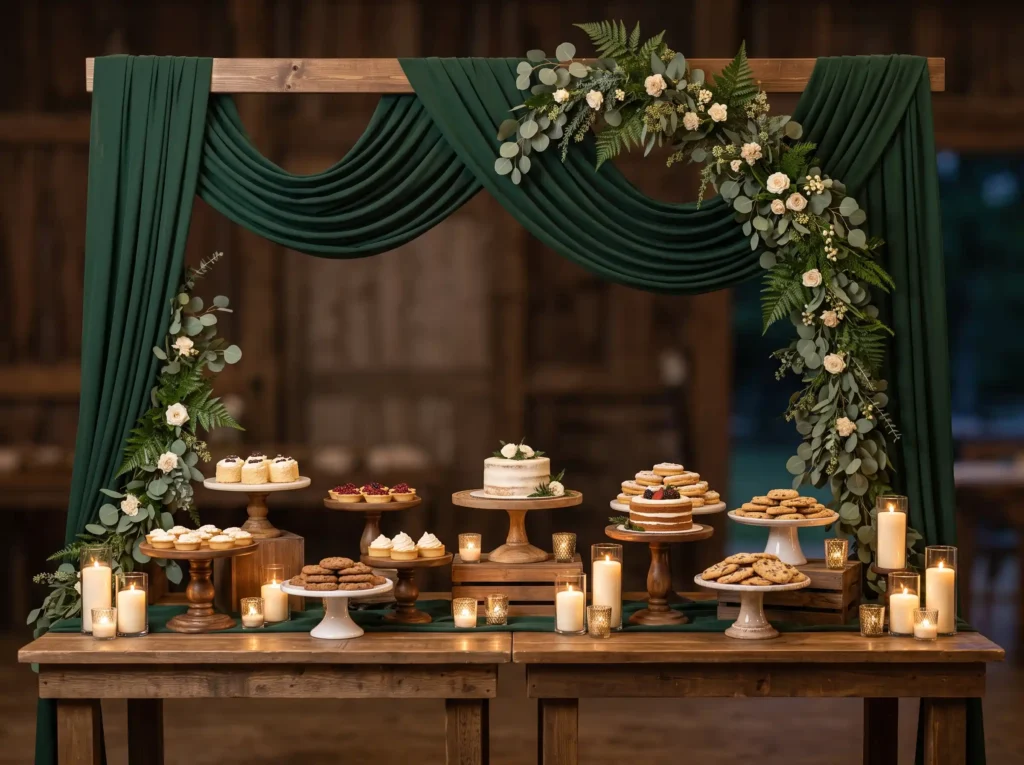
Green here does heavy lifting. One yardage of fabric, swagged across a simple frame, transforms bare rafters into backdrop. No florist markup required. Eucalyptus garlands, fern fronds, and ivory roses cascade at the corners, filling visual gaps that would otherwise need pricier blooms.
Height variation matters most. Mismatched wooden pedestals, crates, and cake stands push desserts into staggered tiers, so a modest naked cake reads as centerpiece rather than afterthought. Cookies, cupcakes, mini pies fill the rest.
Votives and pillar candles scattered along the runner do double duty: ambiance plus practical lighting for evening receptions. Texture over expense — that’s the real lesson.
2. Botanical Crate Welcome Tower
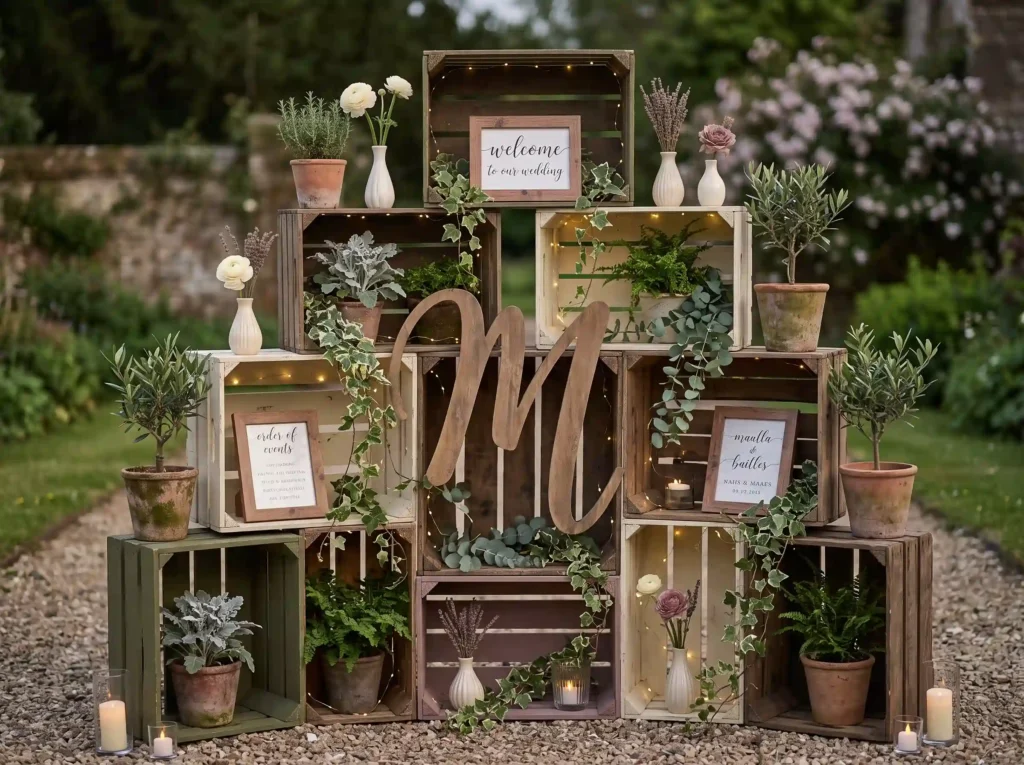
Salvaged fruit crates, stacked pyramid-style, replace what would normally be a purchased welcome arch or signage stand. Genius reuse. Each cubby holds something different — terracotta pots, framed order-of-events cards, a carved wooden monogram anchoring center stage. Fairy lights woven through interiors add glow without electrician costs.
Mismatched paint finishes (sage, whitewash, natural wood) keep uniformity from looking sterile. Trailing ivy and eucalyptus soften hard edges, blurring lines between built structure and garden backdrop.
Function matters here too. Guests read schedules, learn names, orient themselves before ceremony starts. Rustic charm meets practical wayfinding — proof that DIY hardscaping outperforms rented signage, both visually and financially.
3. Autumn Wood Slice Tablescape
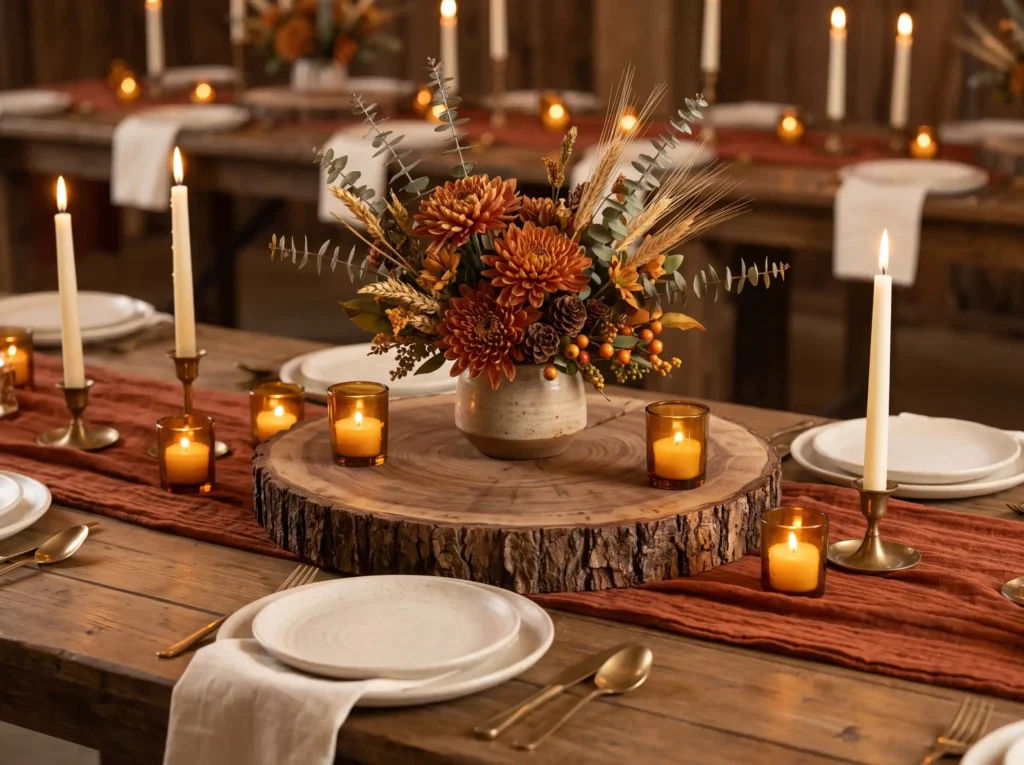
Raw wood slice replaces charger plates and floral foam entirely, letting rust-hued mums, wheat stalks, and dried eucalyptus rest directly on tree cross-section. Seasonal blooms — chrysanthemums, bittersweet berries, pinecones — cost pennies at farmers markets come autumn. Brass candlesticks and amber glass votives multiply light without multiplying budget.
Terracotta runner ties everything together, warm against distressed wood tables. Repetition down the length creates rhythm, guests seeing consistent color story table after table.
Texture does the storytelling here: rough bark, smooth petals, flickering wax. Simple sourcing, seasonal timing, honest materials — autumn weddings practically decorate themselves.
4. Mini Pie Favor Station
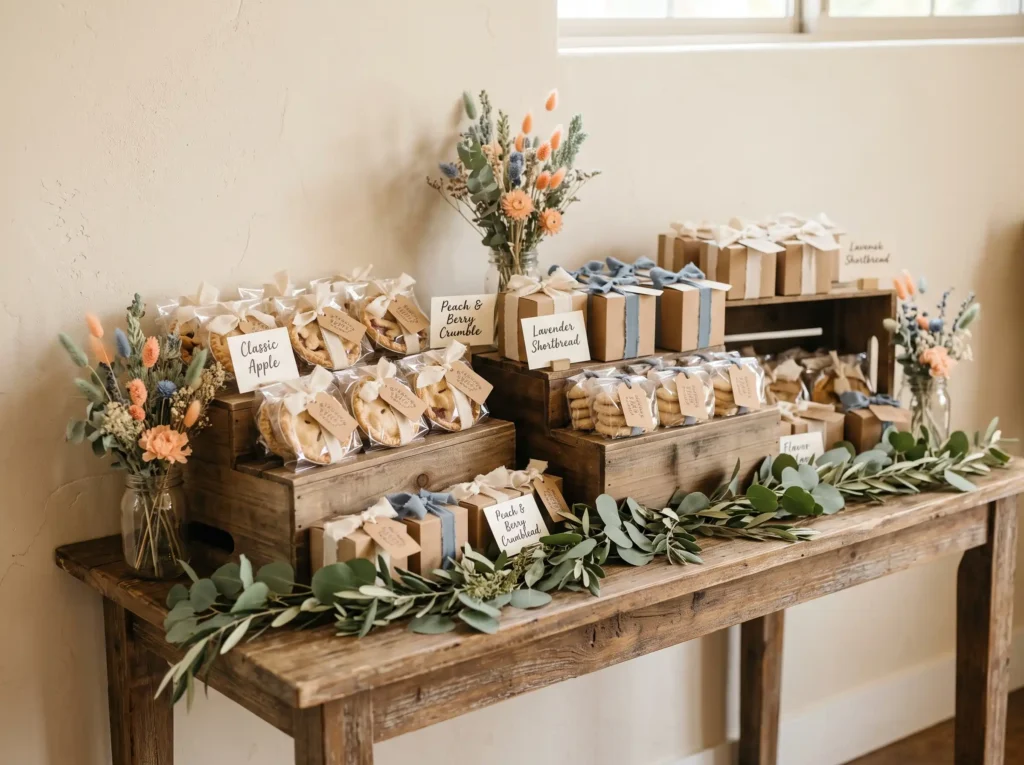
Individually packaged pies — classic apple, peach and berry crumble — replace pricier plated favors, each tied with ribbon and hand-lettered tag. Cost per unit stays low; perceived value stays high. Lavender shortbread boxes stack alongside, offering variety without added labor once base recipe scales.
Tiered wooden crates elevate items, so labels stay visible from a distance. Dried florals in mismatched jars soften an otherwise transactional display. Practical touch: guests self-serve, no staffing required.
Function meets sentiment. A pie eaten weeks later carries memory forward, unlike disposable trinkets. Budget-conscious hosts get double duty — dessert course and parting gift, solved simultaneously.
5. Terracotta Floral Corner
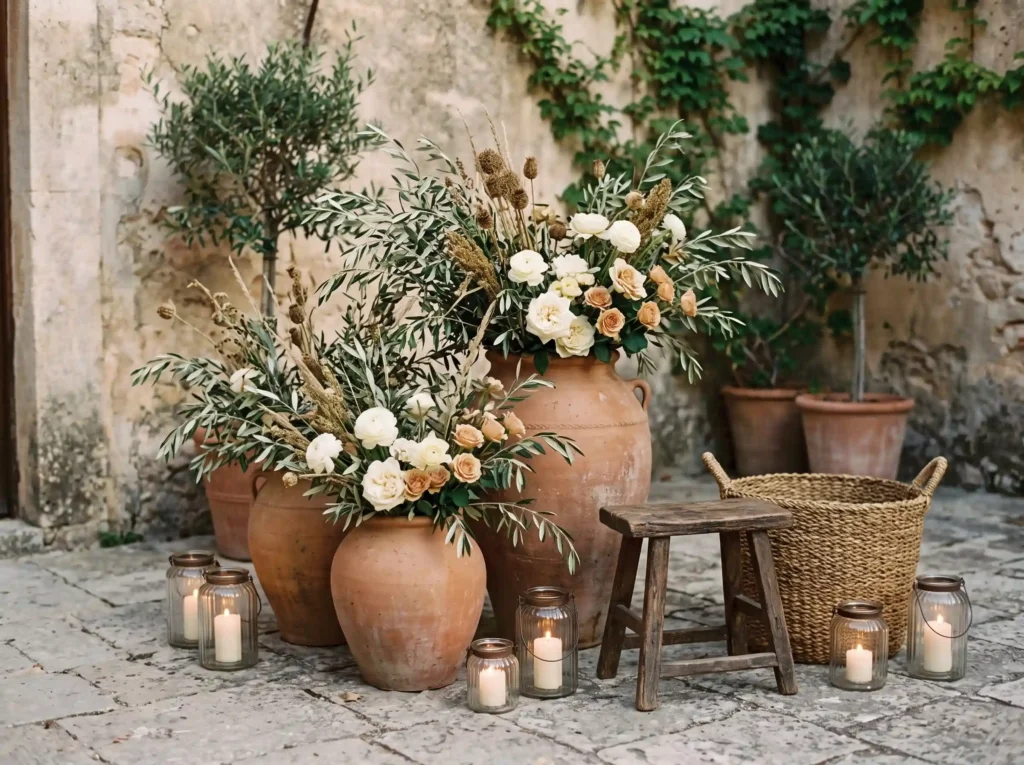
Oversized terracotta urns, the kind found at garden centers for modest sums, hold sprawling arrangements of ranunculus, spray roses, dried grasses. Height and volume come from foraged branches, not exotic stems — olive, wheat, seeded eucalyptus fill space cheap florists’ blooms would otherwise need to cover.
Weathered stucco backdrop needs no additional decor. Existing architecture becomes scenery. Scattered mercury glass lanterns at ground level extend warmth downward, balancing tall arrangements with soft candlelight.
Rustic stool and woven basket, both thrifted-looking, complete vignette without straining budget. Vessel choice matters most: substantial pots make modest florals read expensive, generous, intentional.
6. Hanging Herb Canopy
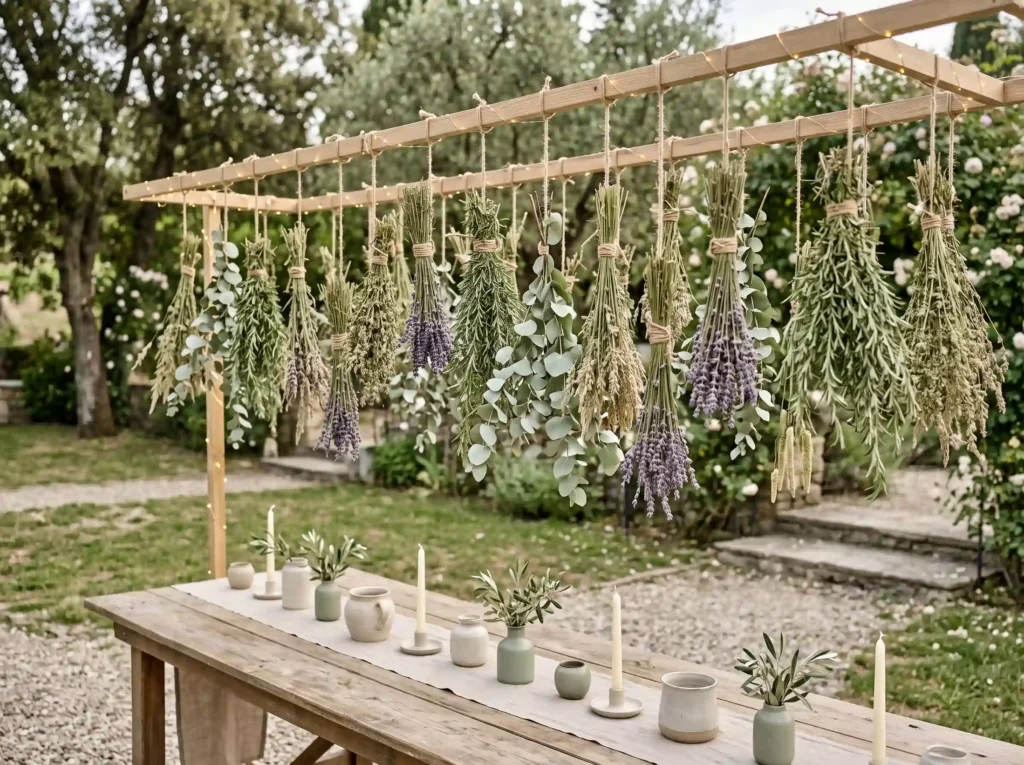
Bundled lavender, rosemary, wheat, and eucalyptus hang inverted from simple wooden frame, drying naturally as reception unfolds. Herbs sourced from garden or bulk market beat cut-flower pricing by wide margin. Twine ties, visible and unfussy, reinforce handmade character rather than hiding it.
Fairy lights woven along crossbeams cast gentle glow through hanging bundles come evening. Beneath canopy, a runway of bud vases and taper candles keeps sightlines low, letting herbal ceiling command attention uninterrupted.
Scent becomes decor too — crushed lavender releases fragrance as guests brush past. Multisensory impact, minimal material cost. Herb gardens double as decor budgets in disguise.
7. Paper Fan Backdrop
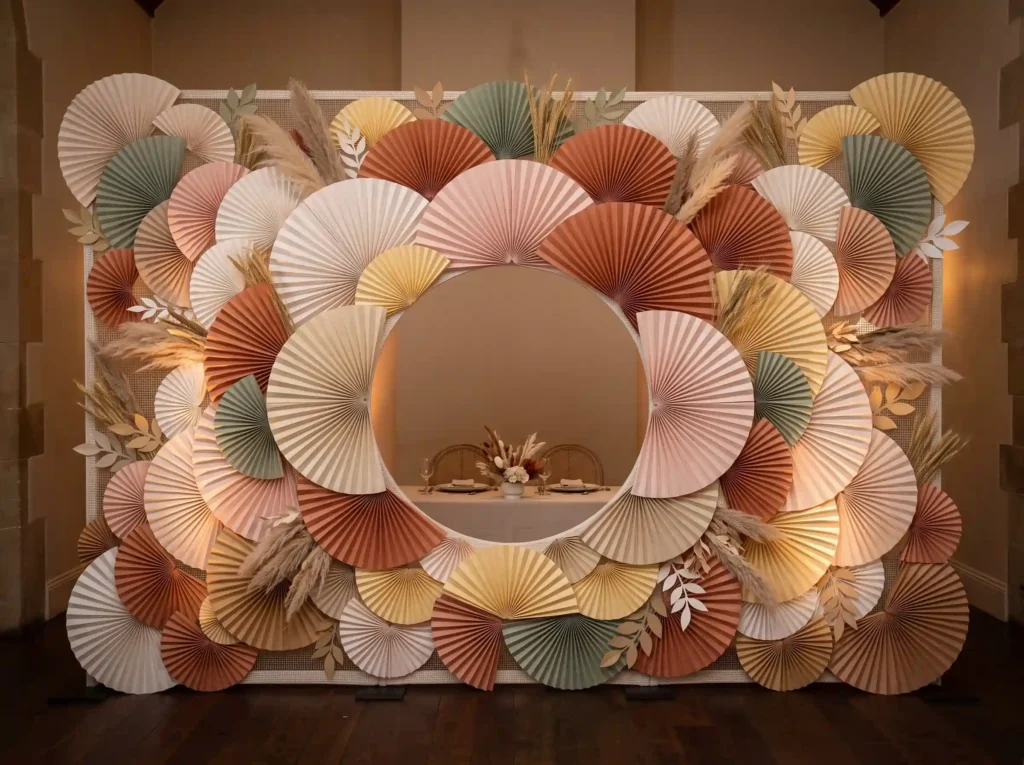
Dozens of pleated fans, layered in terracotta, sage, blush, and cream, radiate outward from central circular cutout — a portal-style photo spot requiring only paper, glue, and patience. Cardstock costs fractions of florals yet delivers comparable visual density.
Pampas grass sprigs tucked between fans add textural contrast, softening geometric repetition. Warm uplighting behind the installation deepens color saturation, making budget paper read as intentional art piece rather than craft-fair project.
Circular void frames tablescape beyond, drawing guests toward seating. Scalable design too — fewer fans, smaller wall, same statement. DIY at its most theatrical, least expensive.
8. Candlelit Crate Dessert Display
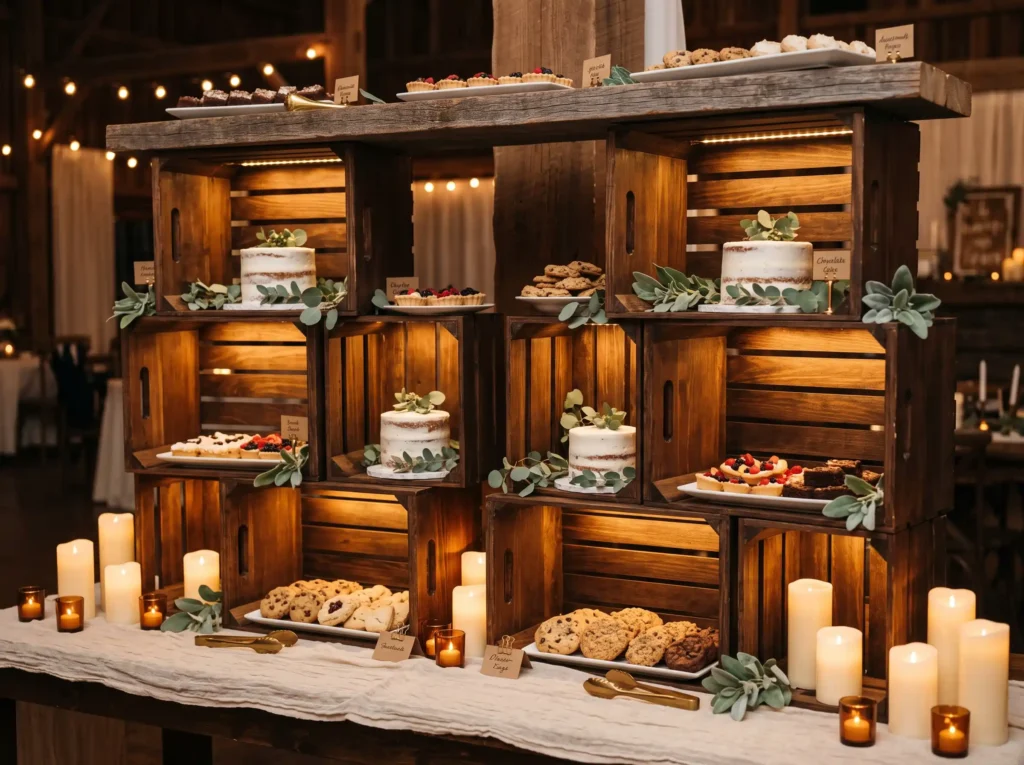
Stacked shipping crates, stained dark and lit from within, hold cakes, tarts, cookies at staggered heights — visual interest built through structure, not extra spending. Small nameplate cards identify each treat, borrowed practice from professional dessert bars, executed here with printer paper and twine.
Naked cakes, unfussy and semi-frosted, cost less than fully iced counterparts while photographing beautifully under string lights. Eucalyptus sprigs tucked between crate edges bridge gaps, unifying uneven surfaces.
Pillar candles along the base multiply glow, hiding table legs in shadow. Crates repurpose easily post-wedding too — storage, shelving, garden planters. Investment outlives single event.
9. Wildflower Menu Jars
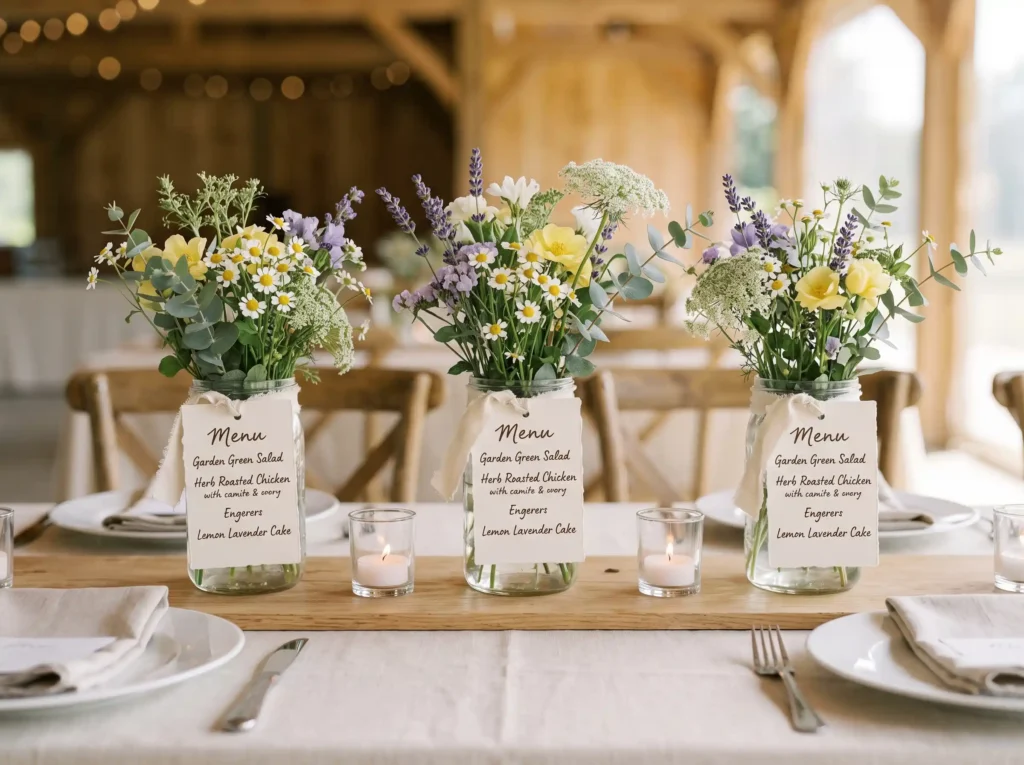
Mason jars, already owned or thrifted, hold loose wildflower gatherings — chamomile, lavender, Queen Anne’s lace — tied with fabric strips carrying handwritten menu cards. Combining centerpiece and signage eliminates need for separate printed menus at each place setting.
Repetition across table length reinforces cohesion; identical jar, identical flower mix, staggered slightly for organic feel. Votive candles nestled between jars raise evening ambiance without competing for table space.
Wildflowers themselves cost little, especially seasonal, locally grown stems. Practical wins here: guests read dinner options while admiring florals, no wasted real estate, no redundant printing costs.
10. Draped Greenery Ceremony Frame
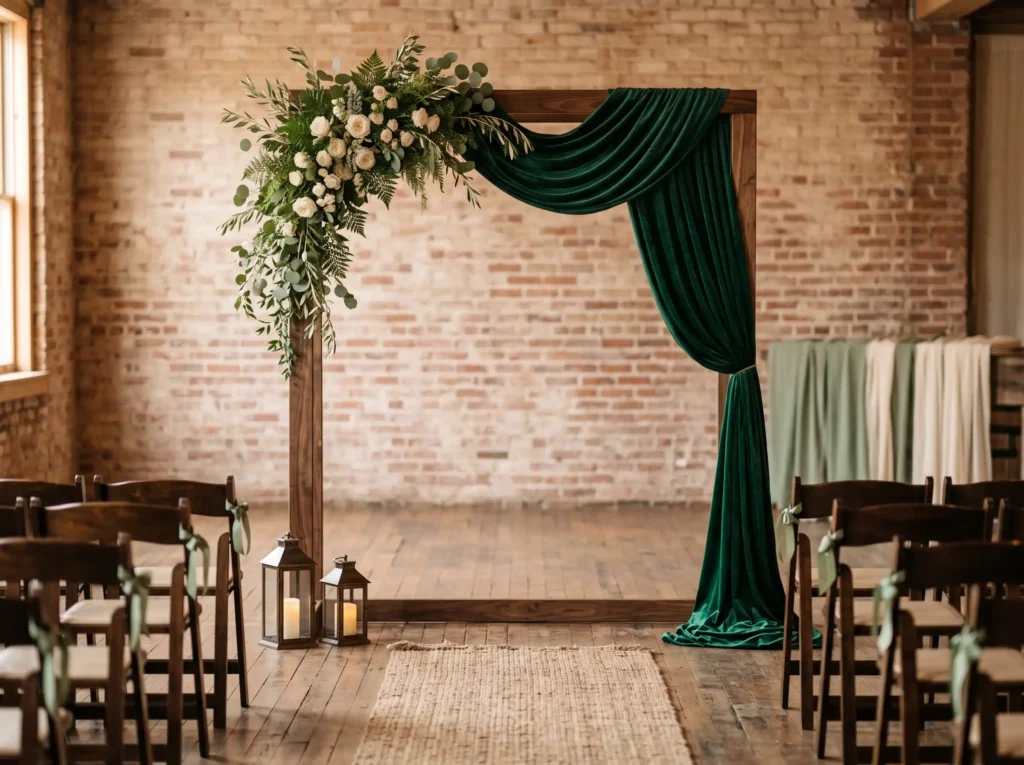
Single wooden frame, minimal by design, becomes ceremony backdrop through one corner’s floral cluster and one panel’s emerald drape. Asymmetry saves money — full coverage isn’t required when one strong focal point anchors composition.
Cascading roses, ferns, and eucalyptus spill downward, echoing drape’s rich green tone. Brick wall behind needs no covering; texture and warmth already present, free of charge.
Lanterns flank base, marking aisle entrance with flickering light. Burlap runner, inexpensive and textural, guides guests forward. Restraint proves the lesson: one deliberate gesture outperforms wall-to-wall decoration, especially in venues already rich with character.
11. Vintage Frame Table Numbers
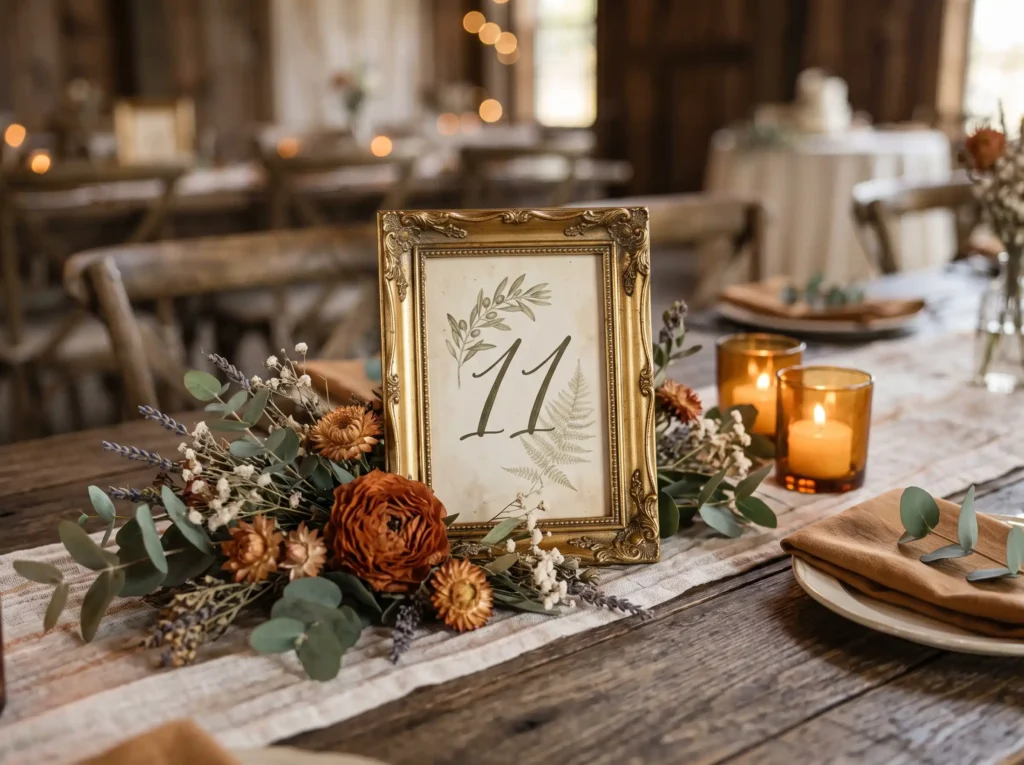
Gilded frame, likely secondhand or estate-sale sourced, elevates simple cardstock number into art-gallery-worthy centerpiece accent. Botanical illustration — fern, olive sprig — printed alongside numeral ties into broader foliage theme without commissioning custom calligraphy.
Dried lavender, strawflower, and eucalyptus rest against frame’s base, echoing color palette found throughout tablescape. Amber glass votives repeat warm tones, unifying disparate elements into cohesive story.
Linen runner, slightly rumpled, adds lived-in texture against reclaimed wood table. Small detail, outsized effect: guests locate seating instantly, while frame itself becomes conversation piece, keepsake, or future home decor.
12. Ladder Floral Display
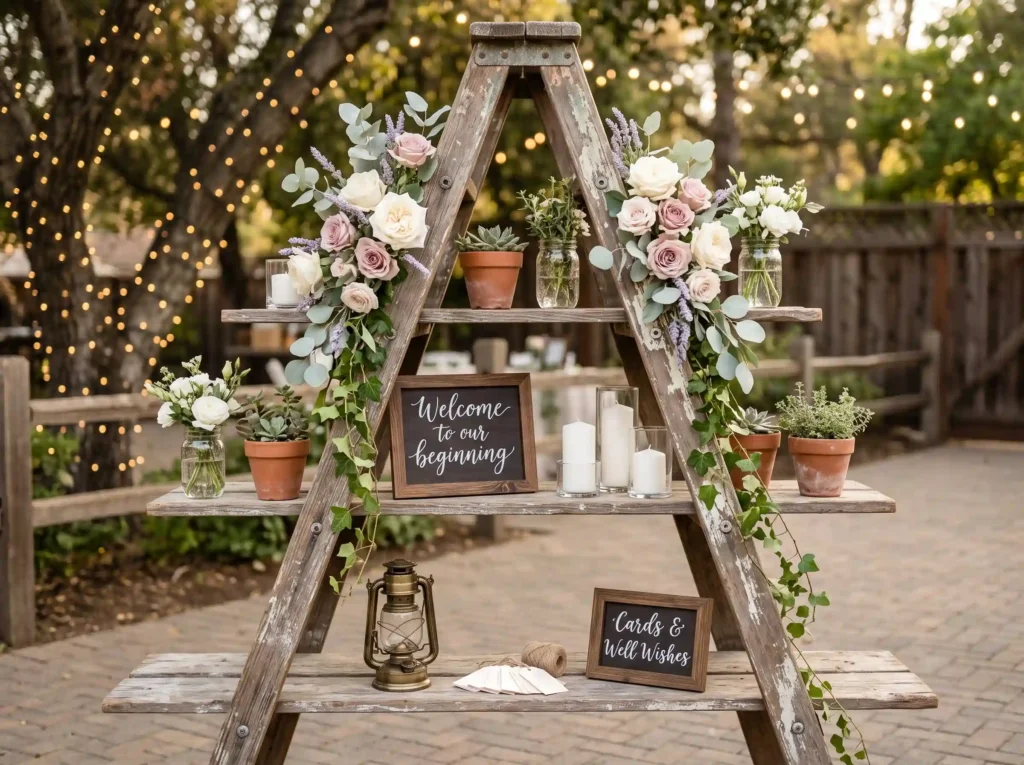
Weathered wooden A-frame, rescued from garage or barn, transforms into tiered display holding welcome sign, well-wishes station, and layered florals simultaneously. Structural investment: zero. Visual payoff: considerable.
Blush and ivory roses cluster at ladder’s peak, trailing ivy softening rungs below. Succulents in terracotta pots add textural variety between floral moments, requiring minimal upkeep before ceremony begins.
Lower rungs hold brass lantern, twine spool, guest cards — practical function nestled among decorative elements. String lights strung behind extend ambiance into evening hours.
Multi-tasking furniture piece, essentially: signage stand, guest book table, and floral display combined into single thrifted structure.
13. Fringe Dessert Table
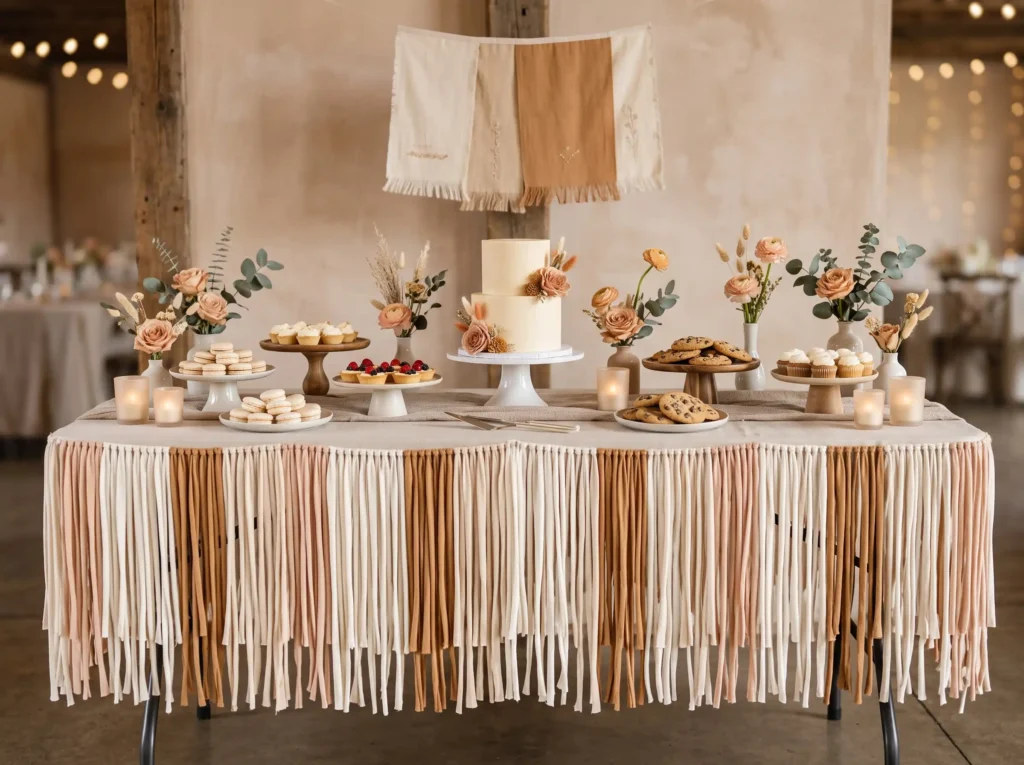
Hand-cut fringe skirt, blush, cream, and camel toned, wraps table’s base in place of costly draped linen. Movement catches eye at floor level, an area often ignored in dessert table planning yet surprisingly cheap to elevate.
Matching fringe wall-hanging above cake echoes skirt’s palette, creating vertical bookend without additional floral spend. Macarons, tarts, cookies arranged at varying heights keep sightlines interesting across generous table length.
Ranunculus and eucalyptus in bud vases punctuate spread modestly — accent, not centerpiece. Fringe itself: affordable fabric, basic cutting, dramatic payoff. Proof texture sometimes outperforms flowers entirely.
14. Mason Jar Lantern Walk
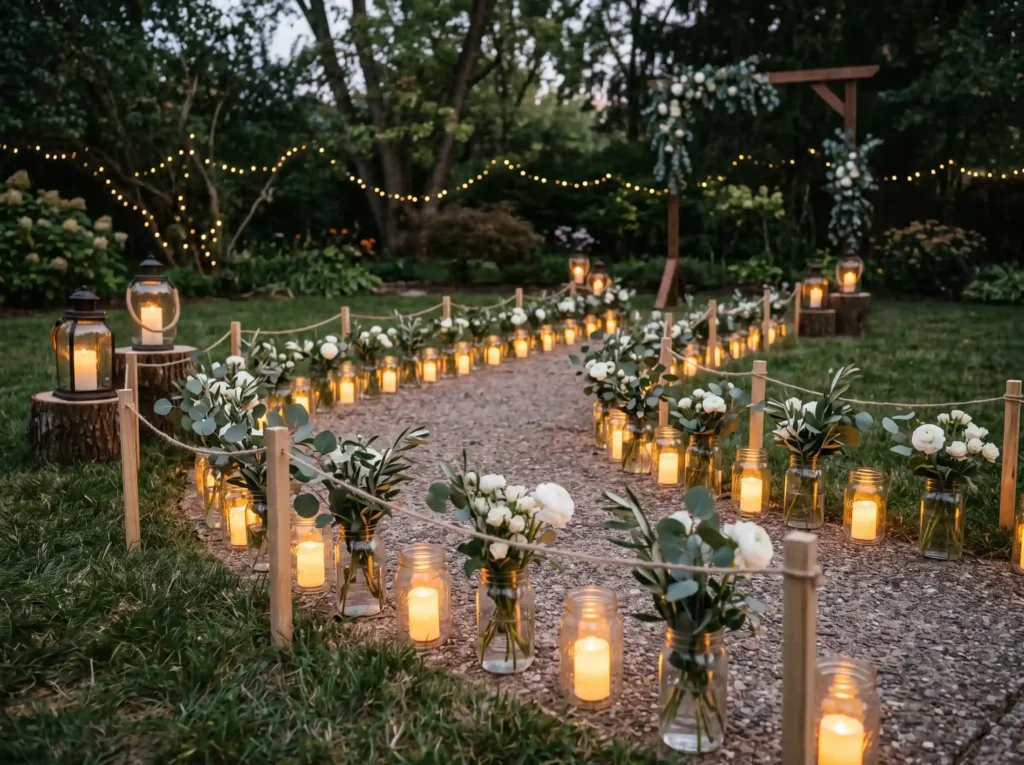
Dozens of mason jars, some holding tea lights, others cradling loose roses and olive sprigs, line a winding gravel path toward ceremony space. Twine-strung rope marks boundary, keeping guests oriented without formal signage.
Repetition builds impact — single jar unremarkable, but dozens lining a curved walkway become immersive installation. String lights overhead extend glow skyward, doubling illumination as dusk deepens.
Tree stump pedestals elevate select lanterns, adding height variation along otherwise flat arrangement. Budget-wise, jars often already owned; candles and stems remain the only real expense. Evening arrivals feel genuinely welcomed, guided, anticipated.
15. Painted Wood Sign Trail
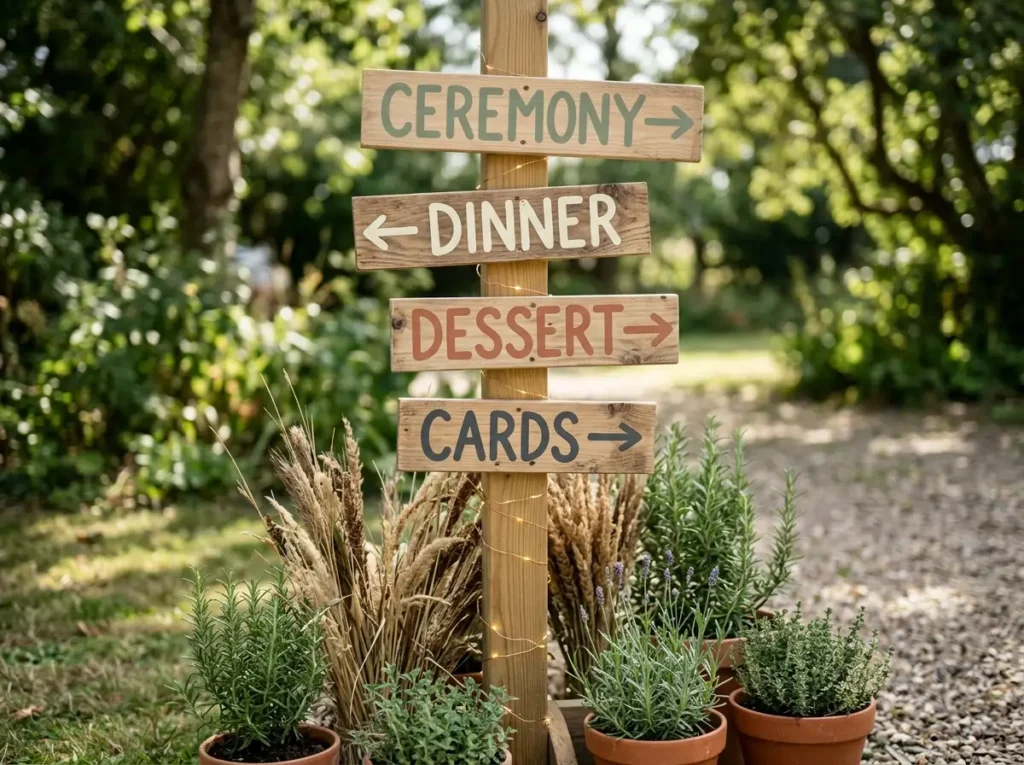
Stacked wooden planks, each hand-lettered in contrasting color, point guests toward ceremony, dinner, dessert, cards — replacing multiple standalone signs with single efficient post. Paint and reclaimed lumber cost little; confusion averted proves priceless at larger venues.
Fairy lights wrapped around post add function post-sunset, ensuring visibility doesn’t fade with daylight. Potted lavender, rosemary, and pampas grass surround base, softening utilitarian structure into something garden-adjacent rather than purely industrial.
Color-coding each arrow (sage, cream, rust) aids quick recognition too. Small, unglamorous detail, yet essential — even beautifully decorated venues fail guests without clear direction.
16. Botanical Fabric Backdrop
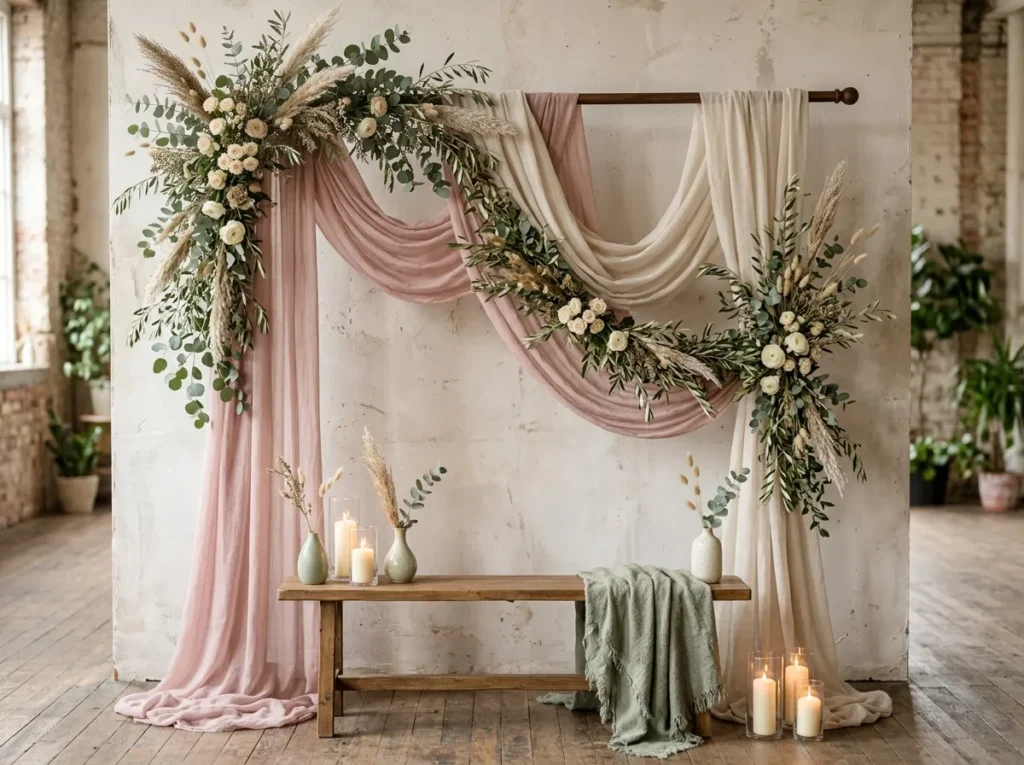
Blush and cream panels drape asymmetrically from single wooden rod, doing majority of visual work before a single stem gets added. Floral clusters — garden roses, pampas plumes, eucalyptus — anchor two corners, letting negative space between drapes breathe rather than overcrowding.
Bench beneath holds candles and bud vases, extending arrangement downward, grounding tall backdrop visually. Sage throw draped casually across seat adds textile layering, echoing drape’s soft movement.
Whitewashed brick behind requires no dressing. Cost logic here: fabric yardage covers vast visual territory far cheaper than equivalent floral volume, reserving blooms for accent, not bulk.
final thoughts
The strongest budget designs in these 16 ideas rely on texture, repetition, and smart reuse. A weathered ladder can become a welcome display and guest-book station, while fabric panels can cover a large backdrop with just a few floral accents. Small touches like handwritten menus, candlelight, and reclaimed wood give the celebration a personal feel while keeping costs controlled.