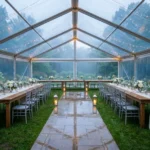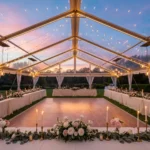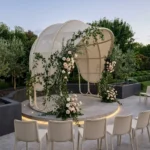
A narrow backyard can still feel like a thoughtfully designed wedding venue. These 22 tiny tent ideas use long tables, vertical lighting, movable planters, clear walls, and clever zoning to make every foot count. From a candlelit garden lane to a glassy greenhouse strip, the layouts turn tight spaces into intimate settings with plenty of character.
1. Candlelit Garden Lane Tent
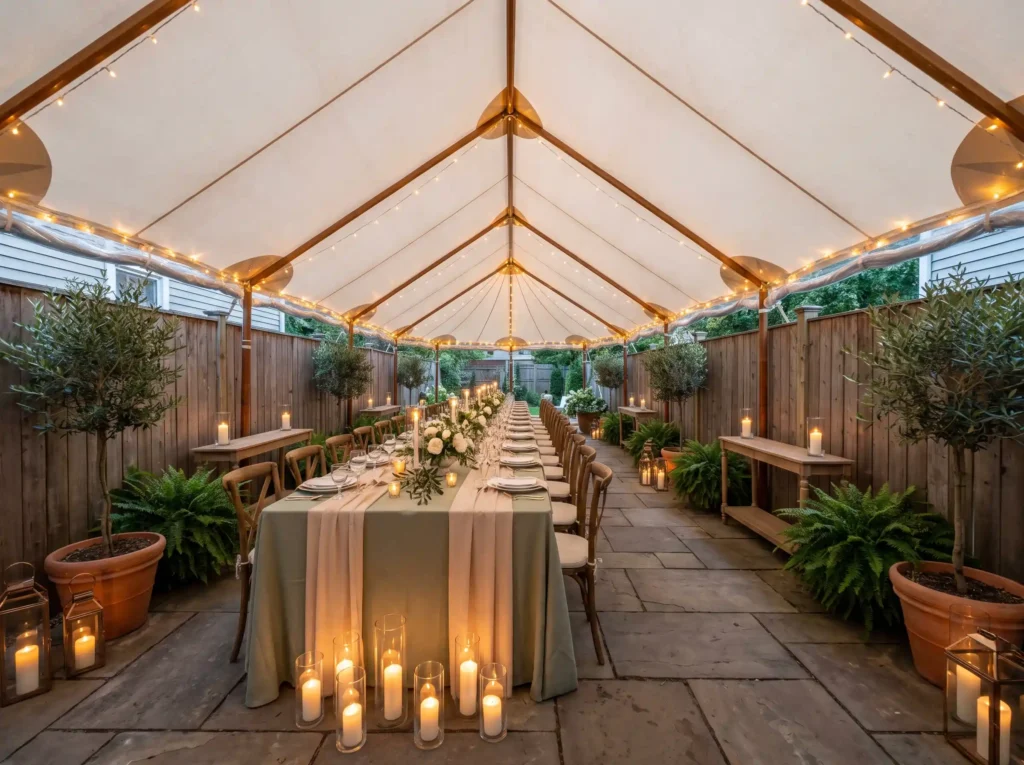
Skinny lot. Big drama. Peaked canvas roof stretches wall to wall, hiding fence lines under warm cedar tone. Single long table replaces rounds — smart move. Narrow yards can’t fit circles without wasted corners; a runner of seats down center solves width problems instantly. String lights trace ridge beams, doubling as architecture and ambiance both.
Potted olive trees and ferns soften hard fencing, blurring property edges into something garden-like. Console tables pushed against walls keep aisle clear for service, lanterns doing double duty as light and decor.
Cluster of hurricane candles at table’s foot draws eye forward, stretching perceived length further. Compression, handled gracefully
2. English Cottage Canopy

Budget-friendly bones. Lavish finish. Basic pop-up canopy frames get transformed entirely by sheer ivory drapery, cinched at each post like curtains pulled back for a show. Cost stays low; impact doesn’t. Row of narrow trestle tables runs single-file down tent’s length, no room wasted on width nobody has.
Hydrangeas, foxgloves, cosmos spill from terracotta pots and wheeled planter boxes lining walkway — movable greenery, a clever trick for rentals or yards without garden beds. Blue and blush runners echo petal tones on tables above.
Neighboring rooftops peek through gaps, hardly noticed. Cottage-garden charm doesn’t need acreage. Just layers, texture, blooms stacked close.
3. Modern Greenhouse Strip Tent
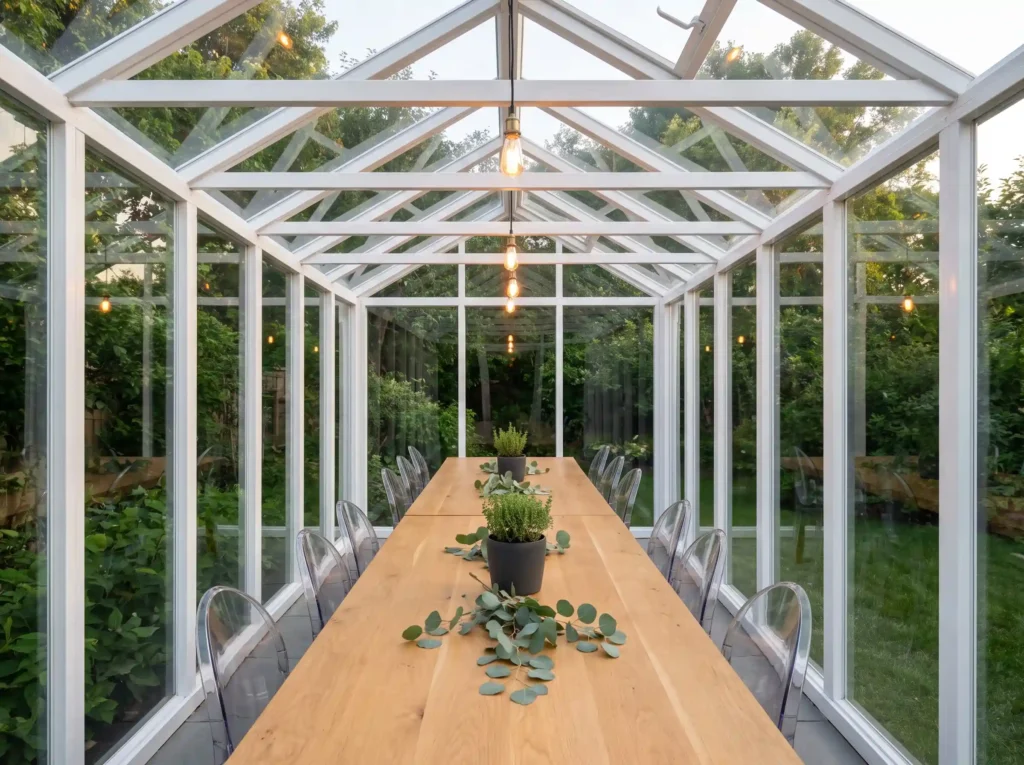
Panes stretch floor to peak. Structure borrows conservatory logic — Victorian glasshouses grown for orchids, repurposed here for vows. Acrylic ghost chairs vanish visually, letting greenery outside read as wallpaper. Genius stroke for narrow plots: walls disappear, garden doubles. Single oak table runs center, eucalyptus trailing loose rather than arranged, herb pots standing in for florals. Pendant bulbs drop low, warm against cool glass. Rain-or-shine security without sacrificing openness — narrow yards rarely afford backup plans. Reflection multiplies foliage, tricking eye into thinking space runs twice as deep. Transparency, not disguise, solves compression here. Smart.
4. Boho Linen Lounge Tent
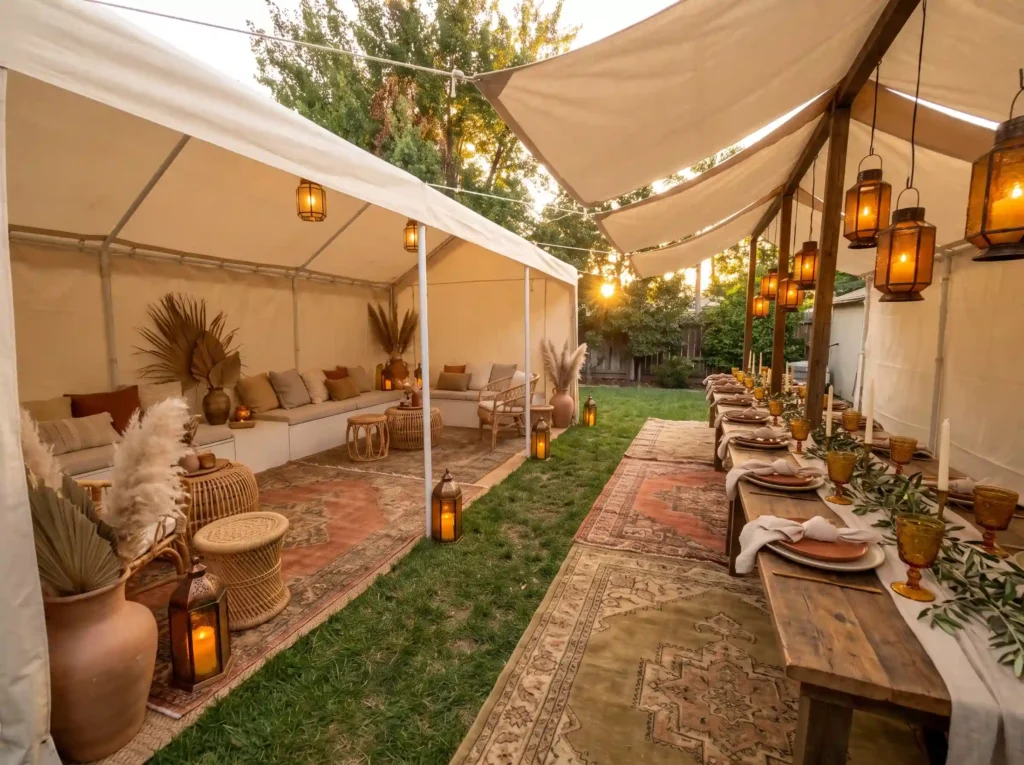
Narrow doesn’t mean single-purpose. Split into zones: lounge first, low cushions and rattan stools scattered on layered vintage rugs; dining beyond, amber goblets catching last light. No walls divide them. Rugs alone signal “different room here,” a trick borrowed from tent-dwelling cultures where textiles, not architecture, define space. Pampas fronds and dried palms lean tall in urns, adding height without bulk. Moroccan-style lanterns cluster overhead, dozens strong, throwing honeyed light across olive linens. Sunset filters sideways through trees, catching dust in the air. Casual doesn’t mean careless — every rug placement, every lantern cluster, earns its spot.
5. French Bistro Garden Tent
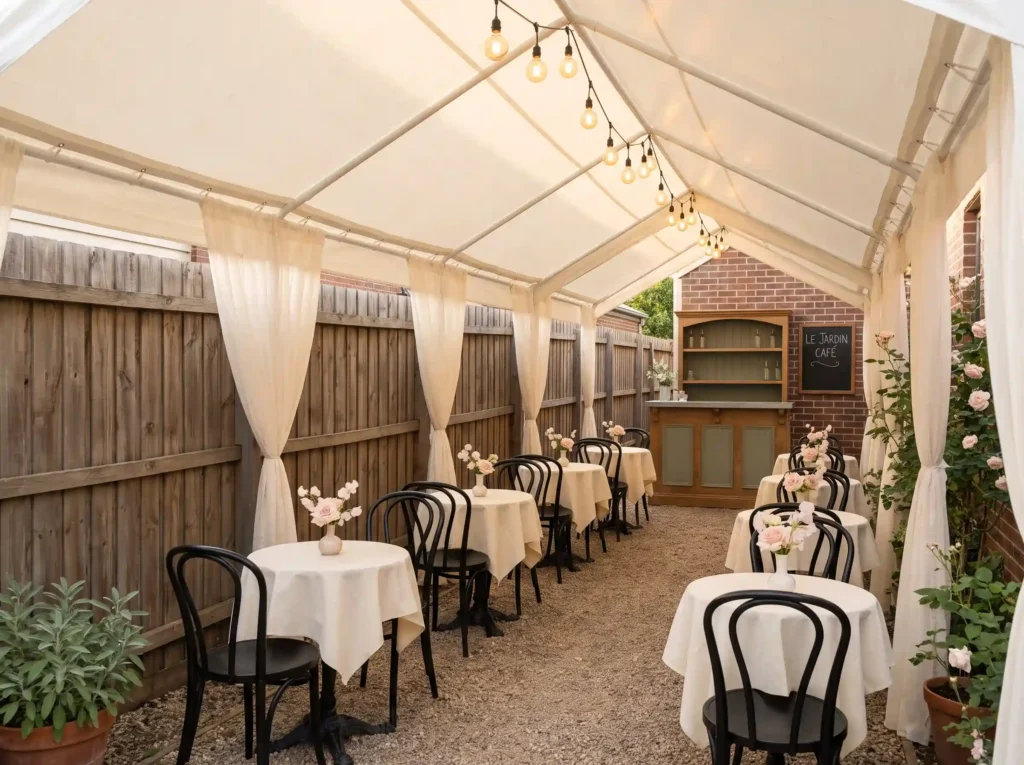
Forget one long table. Split guests instead across many small rounds — bistro logic, borrowed straight from Parisian sidewalks. Black bentwood chairs, Thonet-inspired, stack easily and read instantly “café.” Cream cloths, single roses in bud vases, gravel underfoot crunching like a courtyard somewhere in Provence. Chalkboard reads “Le Jardin Café,” playful signage anchoring theme. Vintage cabinet doubles as bar, glass bottles catching bulb light strung overhead. Clever for narrow yards: round tables tuck against fences where rectangles wouldn’t fit, letting guests mingle cluster to cluster rather than sit locked down a single spine. Climbing roses soften brick backdrop nicely.
6. Twilight Sailcloth Tunnel
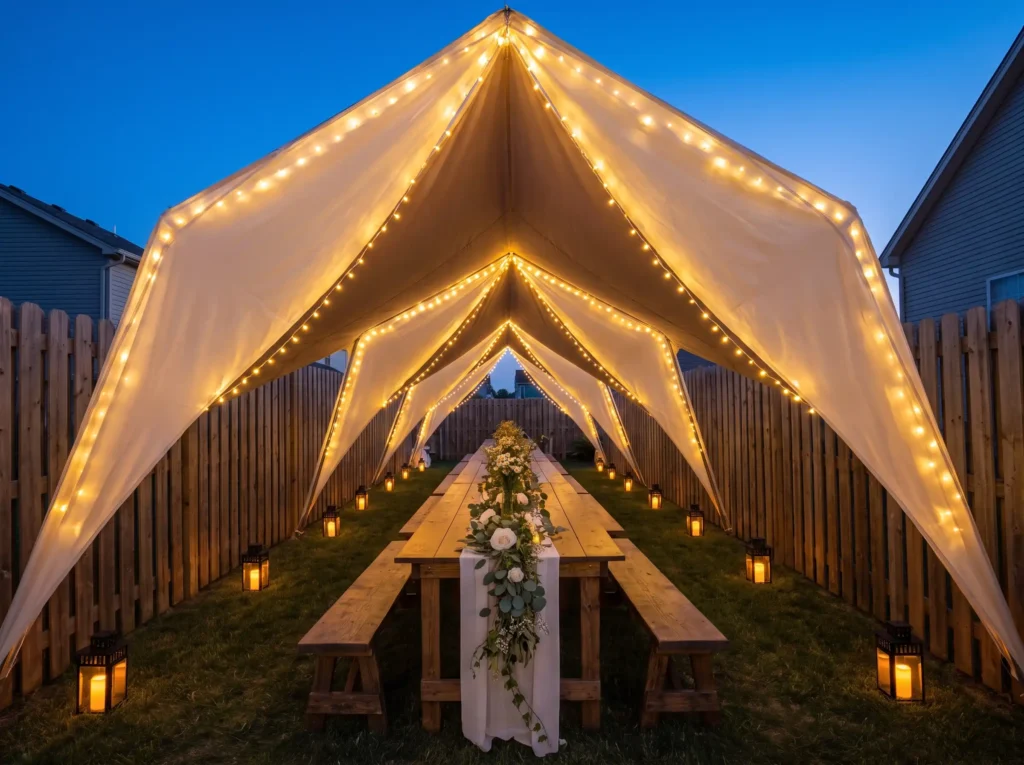
Repetition builds drama. Triangular peaks march one behind another, each outlined in string light, echoing nave arches of old stone churches — sacred geometry, borrowed unconsciously. Twilight blue overhead makes canvas glow gold by contrast. Picnic-style benches run beneath, simple, letting tent architecture carry visual weight instead of ornate seating. Lanterns line grass edges like candlelit pews. Single runner of white blooms threads table’s length, humble against dramatic ceiling above. Fence disappears into shadow; eye pulls upward, forward, toward vanishing point at tent’s far peak. Height compensates for width here — vertical drama solving horizontal limits.
7. Secret Garden Curtain Tent
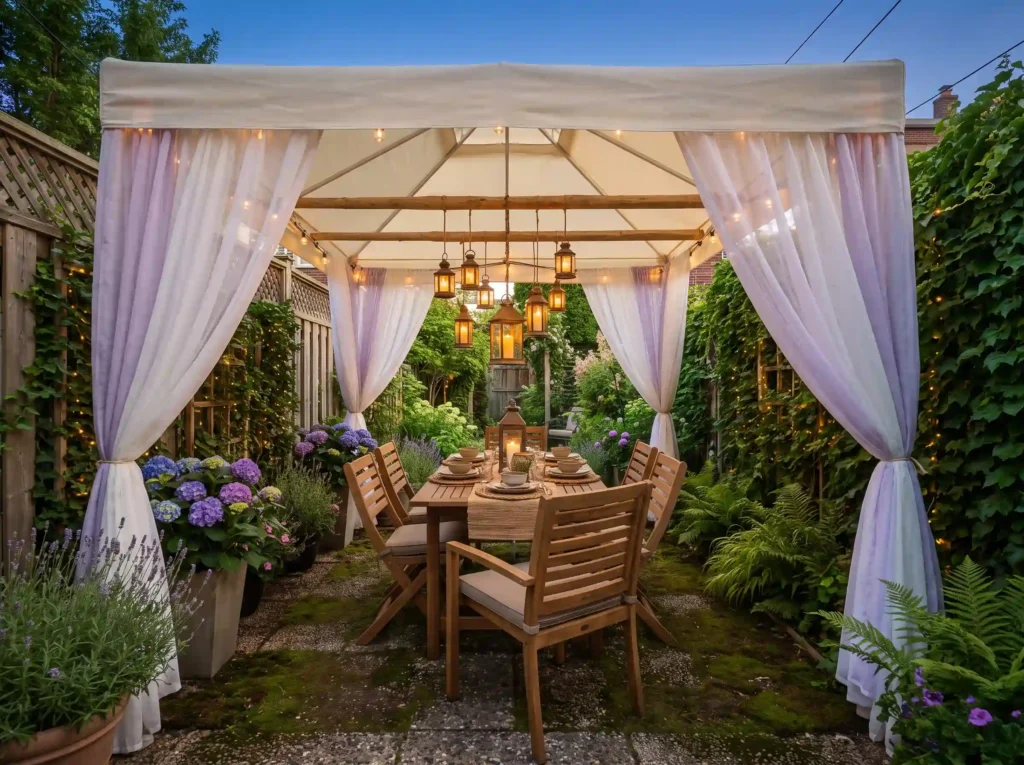
Medieval gardens once walled themselves against wilderness, calling space hortus conclusus — enclosed garden, sanctuary. Ivy-covered fencing plays that role here, ferns and hydrangeas pressing close on all sides. Sheer lavender-and-white drapes pull back like stage curtains, revealing single square table set intimately, six chairs only. Chandelier of hanging lanterns replaces overhead beam lighting entirely — warmer, more candlelit church than tent. Moss floor, unusual choice, adds cushion and scent underfoot. Scale matters: micro-guest-lists suit micro-tents perfectly, and cramming grandeur into narrow yards often fails where quiet intimacy like this succeeds effortlessly. Restraint, done beautifully.
8. Mediterranean Olive Tent
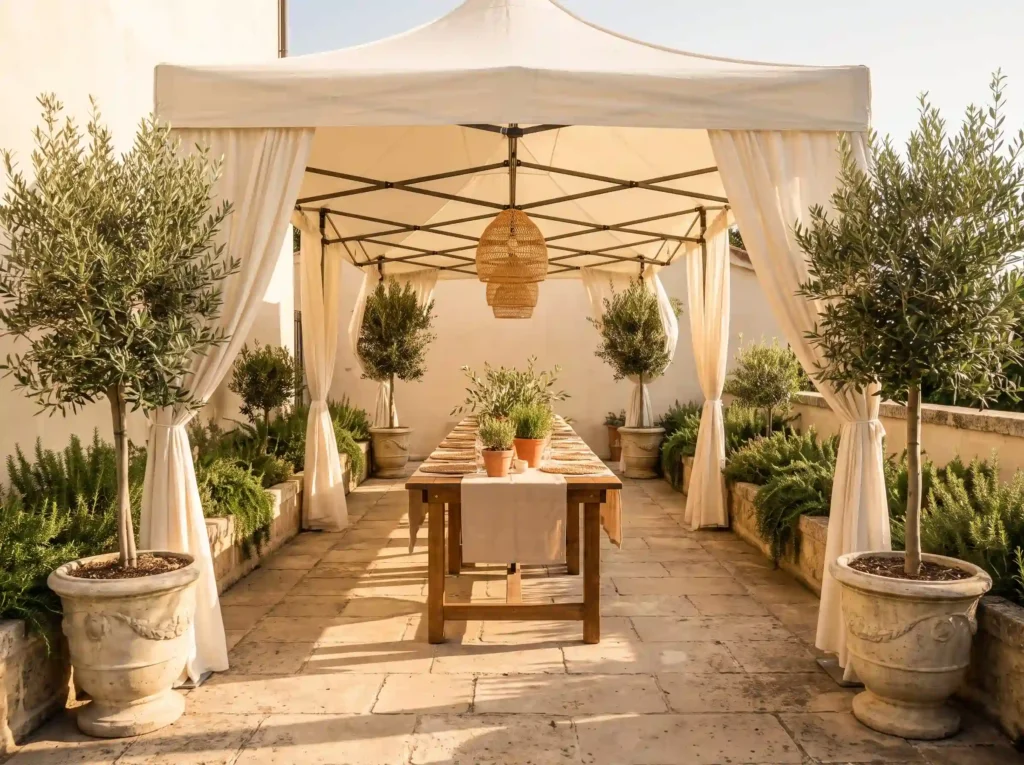
No orchard required. Terracotta urns, Anduze-style, hold young olive trees flanking tent’s every post — instant grove, zero acreage needed. Ivory drapes catch late sun, glowing amber rather than white. Wicker pendant, oversized, hangs where chandelier might in grander venue, humble material doing elegant work. Stone floor, sun-warmed, completes illusion of Provençal courtyard rather than suburban side yard. Rosemary hedges line pathway, releasing scent underfoot with each step — sensory layering budget can’t always buy. Olive branches carry ancient symbolism too: peace, abundance, fertility, apt for beginnings. Narrow space reads Mediterranean, not cramped, purely through planting choice.
9. Blush Sunset Bistro Tent
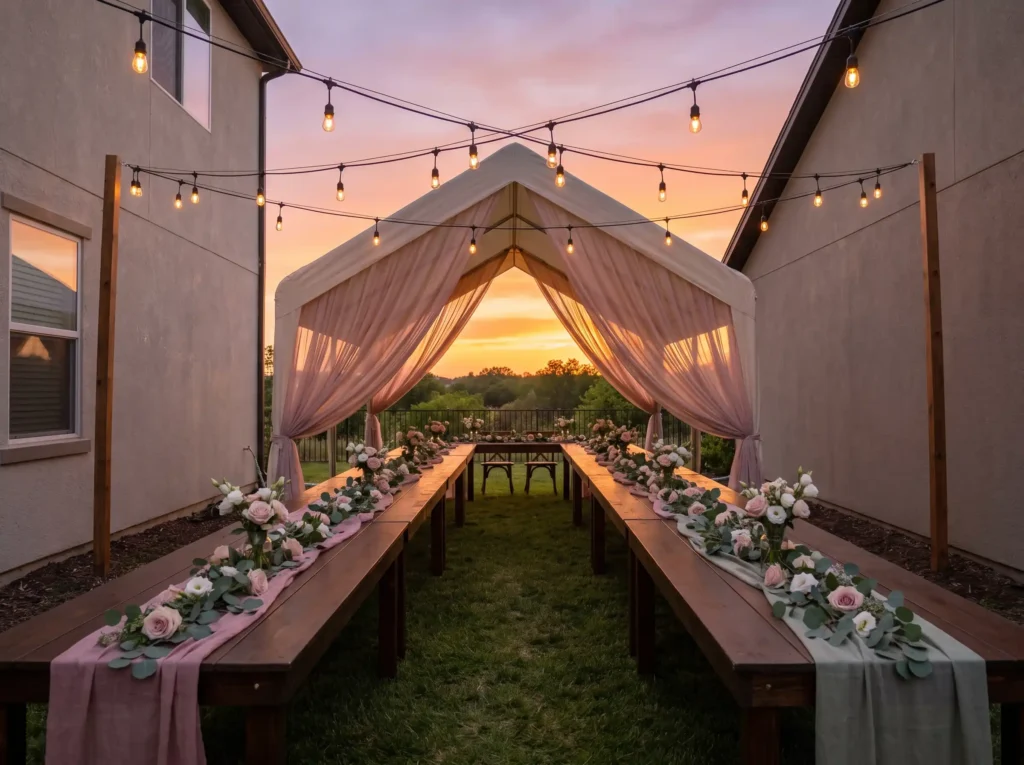
Tight gap. Two stucco walls, barely room to walk. Yet peaked tent claims it fully, blush curtains parting like theater reveal onto burning sky beyond. String lights cross overhead in giant X, pulling gaze upward before it notices how narrow walls truly sit. Two tables run parallel, meeting at head table near tent’s mouth — U-shape solving width problem elegantly. Roses cascade pink and white down table runners, echoing sunset’s exact palette above. Passage between homes, often wasted space, ordinary utility corridor, becomes processional aisle instead. Timing matters most here: golden hour does half the decorating work alone.
10. Woodland Lantern Micro-Tent
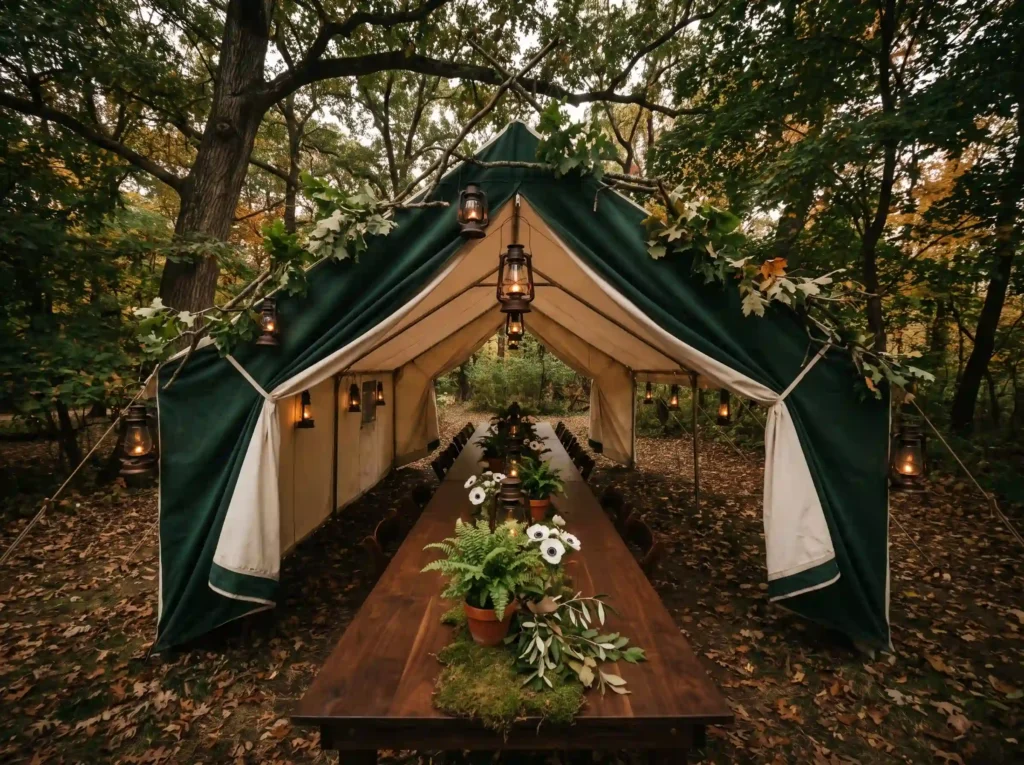
Dark canvas, forest green with cream trim, doesn’t fight surroundings — vanishes into them. Safari-tent heritage shows through structural peaks, hunting-lodge lineage repurposed for romance. Hurricane lanterns swing from branches directly, blurring line between tent lighting and woods itself. Fallen leaves carpet ground; nobody swept them away, embracing season rather than masking it. Anemones, stark white against dark wood table, punctuate long runner of fern and moss. Autumn light filters thin through canopy above. Works precisely because it refuses artifice — woodland weddings succeed by leaning into wildness, not smoothing it into polished lawn-party gloss.
11. Minimalist White Ribbon Tent
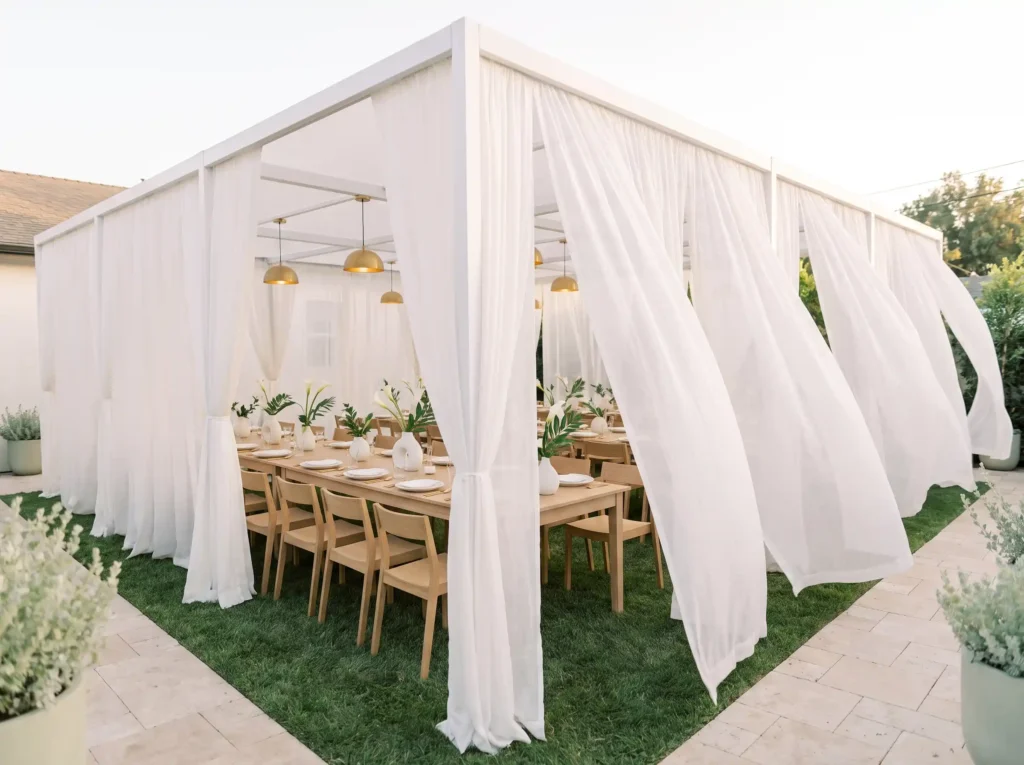
Boxy steel frame, utterly plain, transforms under sheer white fabric draped loose rather than pinned tight. Wind catches panels mid-breeze, fabric billowing like actual ribbon caught in motion — kinetic quality static tents rarely achieve. Gold dome pendants drop low over oak table, warm metal against cool white cloth. Grass floor, no flooring installed, keeps costs down while maintaining barefoot-garden feel. Calla lilies stand tall in ceramic vessels, sculptural rather than fussy. Scandinavian restraint governs entire palette — white, wood, gold, nothing else competing. Movement itself becomes decoration here; stillness would waste fabric’s whole potential completely.
12. Wildflower Market Tent
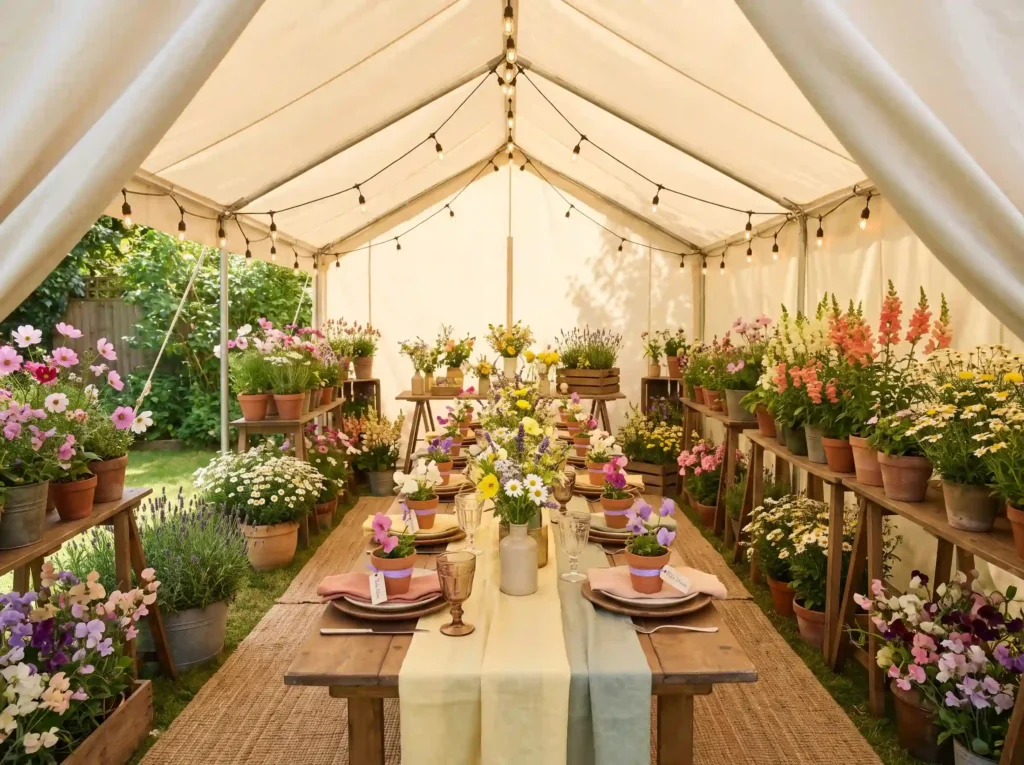
Walk in, smell hits first. Wooden crates and terracotta pots stack tables and shelves both sides, packed with cosmos, snapdragons, daisies, lavender — nursery display more than dinner venue. Single table sits centered, nearly swallowed by surrounding color, place cards tucked beside potted violets guests take home after. Living wallpaper, essentially: no fabric backdrop needed when blooms stack floor to eye level. String lights hang loosely overhead, secondary to floral abundance below. Clever budget logic too — market-bought potted flowers cost less than cut arrangements and last weeks longer. Overwhelming in the best possible sense. Sensory, generous, alive.
13. Romantic Draped Courtyard Tent
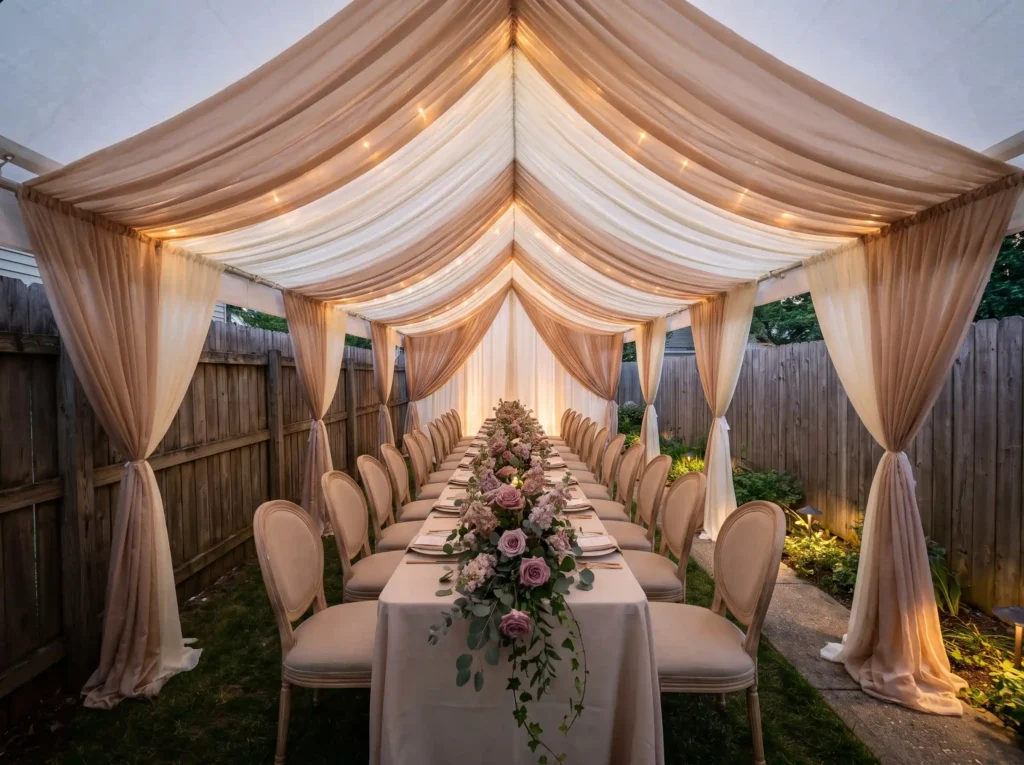
Fabric does structural work most tents leave to poles. Champagne-to-cream drapery pleats meet at central peak, fairy lights woven through folds like veins under skin — glow radiates from within canopy itself rather than hanging separately. Long table runs beneath, rose-and-eucalyptus garland spilling table’s edge onto floor below. High-back chairs, upholstered, elevate seating past standard rental grade. Technique borrows from event-design vocabulary: pole draping, ceiling swags, tricks tent rental companies use to disguise aluminum bones entirely. Ombré effect — pale center fading warmer toward edges — adds dimension canvas alone never could. Opulence, achieved through textile alone.
14. Rustic Farmhouse Strip Tent
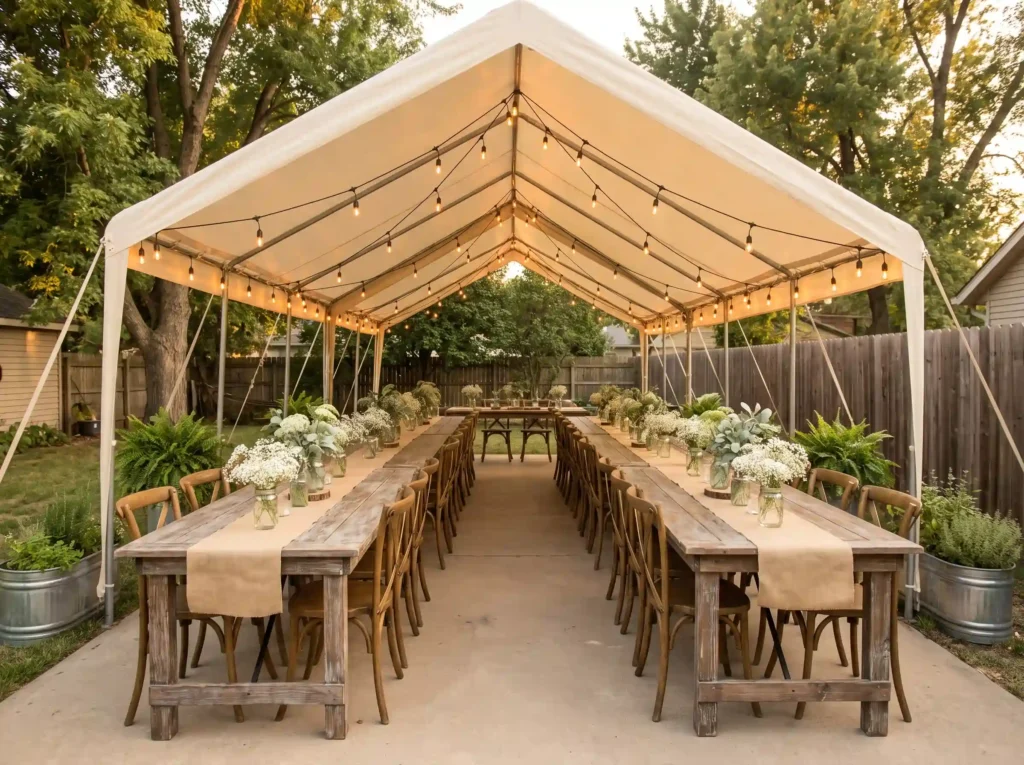
Nothing fussy here. Crossback chairs, humble and sturdy, line weathered wood tables running tent’s full length. Baby’s breath fills mason jars — repurposed kitchen glassware standing in for florist vessels, a farmhouse habit stretching back generations. Galvanized steel tubs, once feed troughs, now hold ferns along tent’s edges. Burlap runners add texture without cost. String lights crisscross overhead, standard rental-tent gable style, nothing exotic. Charm comes from restraint and repurposing, not spending. Narrow-yard logic applies too: single-file table run down center, chairs tucked close, leaves walking room either side. Rustic doesn’t mean careless.
15. Moon Garden Sheer Tent
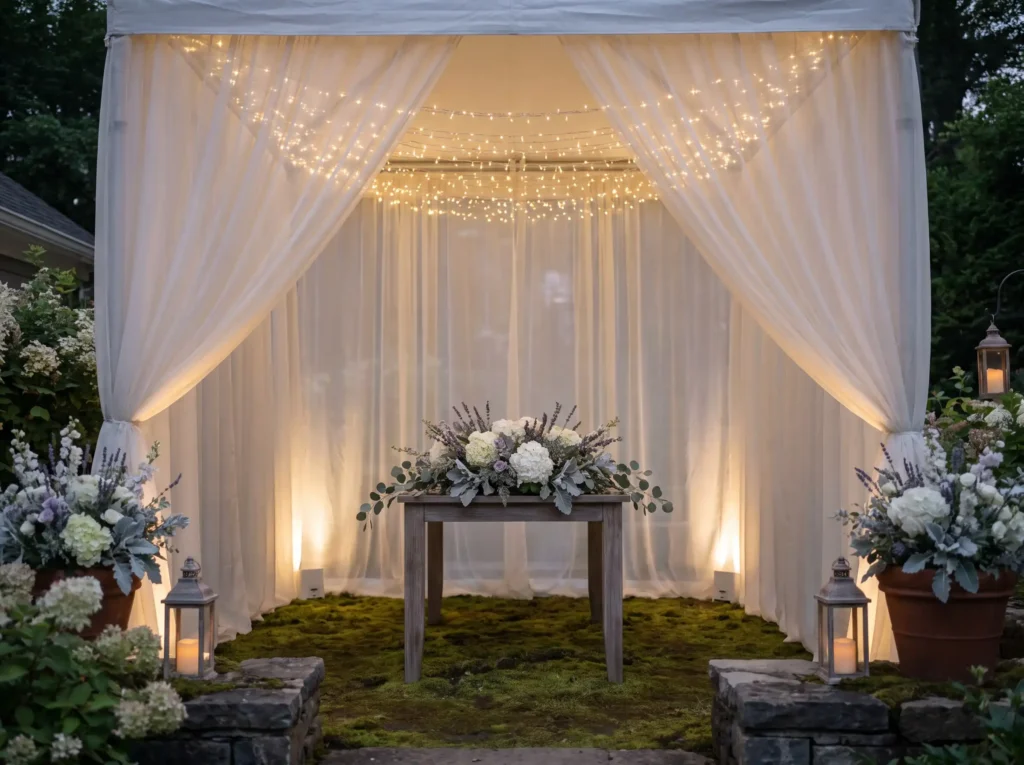
Victorian gardeners once planted moon gardens deliberately: white flowers only, chosen to glow under moonlight and release fragrance after sunset. Sheer curtains here recreate that pale, luminous logic entirely — fairy lights woven through fabric mimicking scattered stars rather than direct illumination. Small table serves as altar, not dinner spot, hydrangea and lavender arrangement centered, lanterns flanking either side. Moss underfoot replaces stone or grass, softening every footstep. Ceremony focus differs from dinner-tent images before it — this space exists for vows, not feasting. White-on-white palette isn’t accident; it’s centuries-old horticultural tradition, staged for twilight.
16. Terracotta Sunset Tent
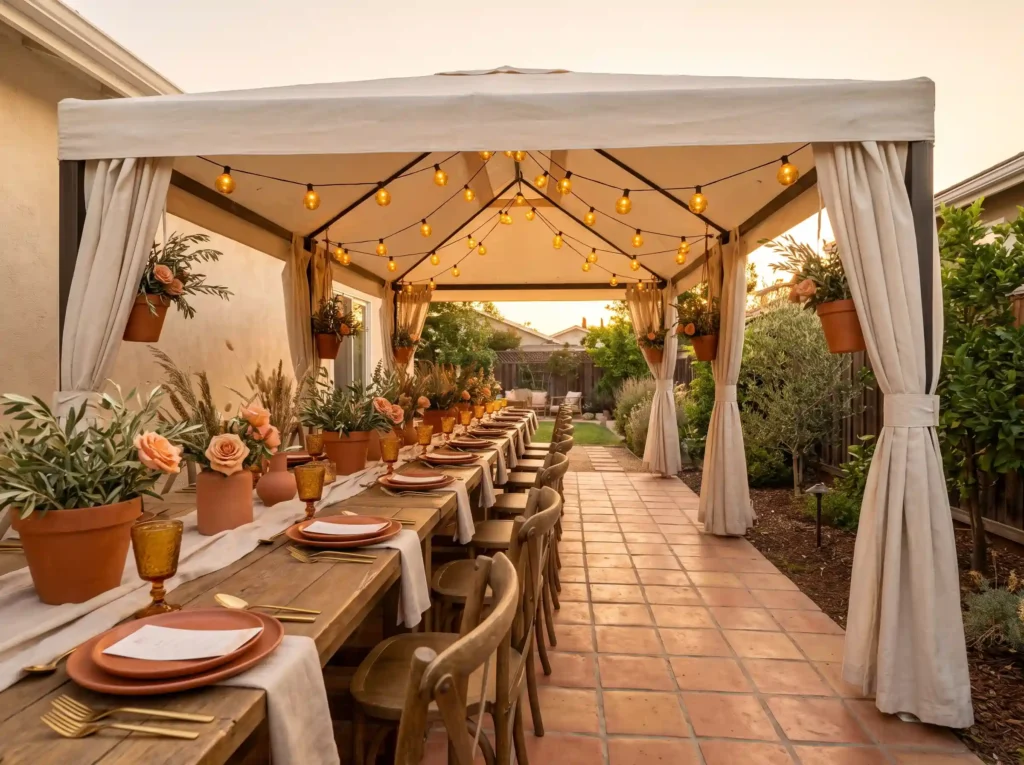
Color-matching, done thoroughly. Terracotta tile underfoot, amber glass goblets on table, peach roses in clay vessels — every element pulled from same warm register as sky overhead. Hanging pots suspend from tent frame itself, freeing floor space narrow yards can’t spare for standing planters. Olive branches mix with roses, softening formal florals with something looser, more Mediterranean. Linen runner, undyed, lets terracotta plates carry color instead. Gold flatware catches last light before dusk fully settles. Smart trick worth noting: match decor to actual sunset colors on wedding date, not generic palette — nature does styling work for free.
17. Vintage Tea Garden Tent

Nothing here comes from single set. Cream chairs beside blush ones, bentwood curves varying slightly table to table — collected-over-years look, deliberately assembled to feel inherited rather than rented. Crystal chandeliers hang incongruously outdoors, indoor grandeur transplanted onto grass, delightfully unexpected. Lace-edged cloths, floral teapots, roses spilling from pitchers — English garden-party vocabulary through and through. Climbing roses frame entire scene, real garden doing backdrop’s job for free. Several small tables scatter rather than one long spine, encouraging conversation clusters over formal seating charts. Whimsy reads intentional, not haphazard, precisely because every mismatch still shares one soft palette.
18. Coastal Linen Strip Tent
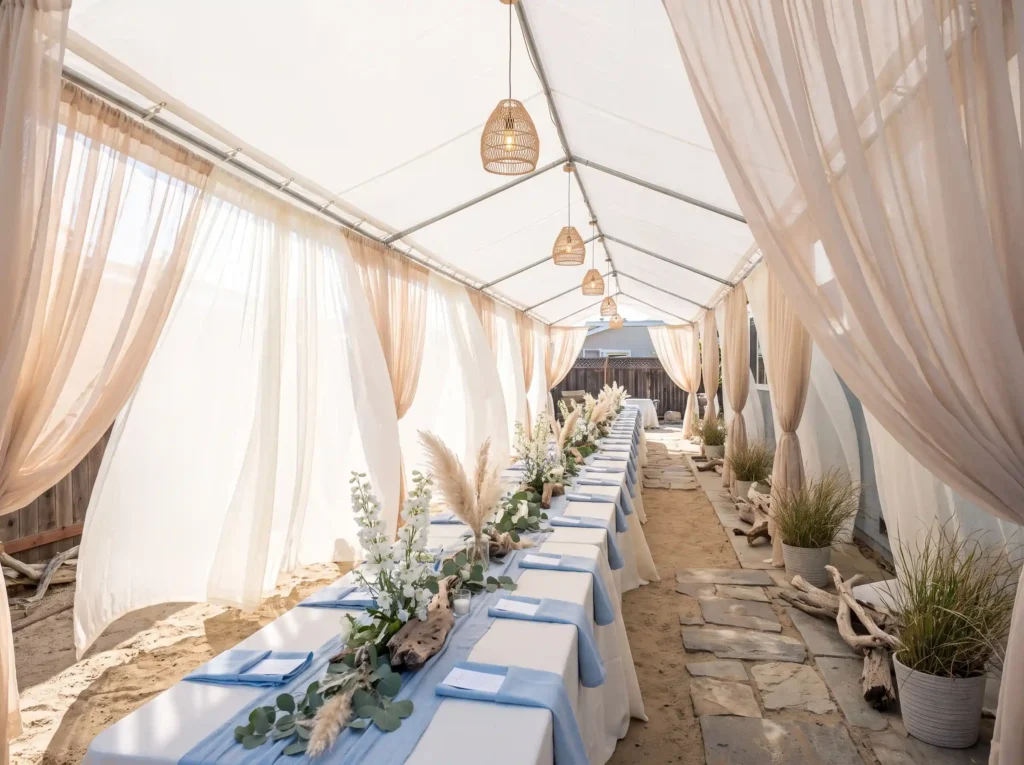
Sand floor, hauled in or existing, immediately signals beach without actual shoreline nearby. Driftwood pieces, gnarled and pale, anchor table runner alongside eucalyptus and white delphinium — foraged-beach aesthetic achievable inland too. Sheer sand-toned curtains billow loose, echoing dune grass movement outside tent walls. Rattan pendant lights drop low, woven texture nodding to coastal craft traditions. Blue linen napkins punctuate otherwise neutral table, single accent color standing in for ocean itself. Pampas grass, planted in pots along walkway, reinforces theme without needing real dunes. Proof narrow yards can borrow any landscape’s mood, sand and driftwood doing convincing work regardless of geography.
19. Greenhouse Herb Dinner
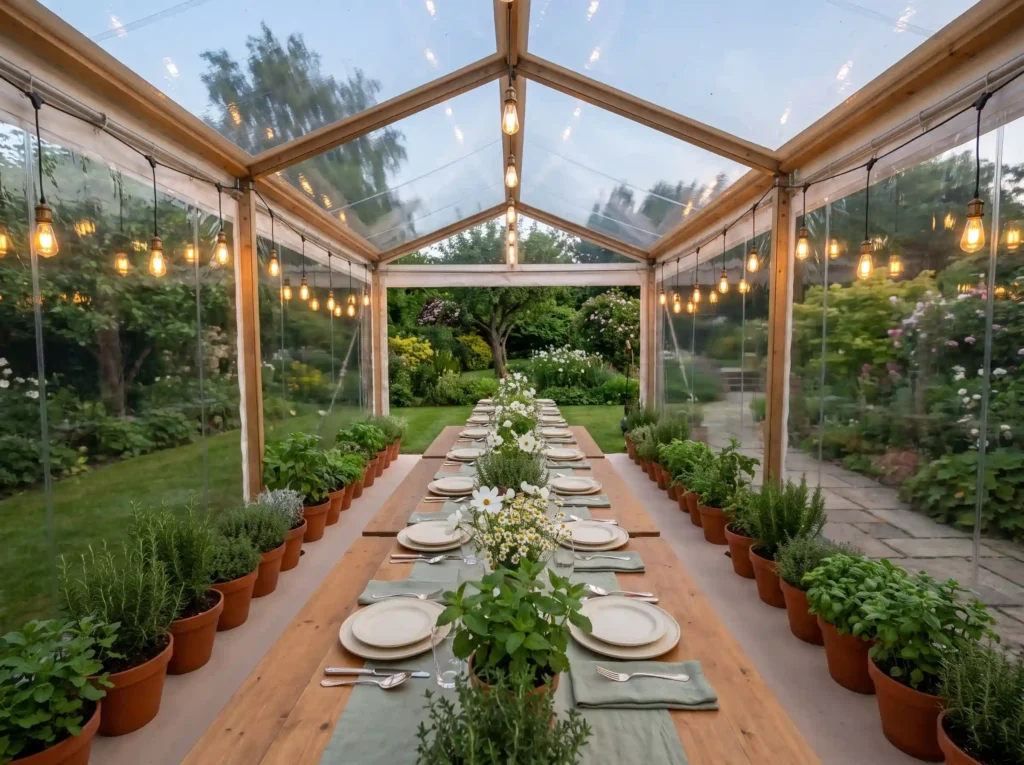
Clear roof lets daylight flood entire tent, greenhouse logic applied to wedding dining rather than seedling propagation. Rosemary, basil, mint line both sides in terracotta pots, dozens deep — living hedge guests brush past, releasing scent with every step. Cosmos and chamomile fill table centerpieces, echoing wildflower meadow rather than florist arrangement. Wood-plank flooring runs table’s length, grounding otherwise transparent structure. Edison bulbs hang bare, warm against cool glass overhead. Function meets decor here: herbs planted for scent and visual texture could, theoretically, season dinner too. Practical romance, essentially — garden and dining room merged into single fragrant space.
20. Black-and-White Garden Bistro
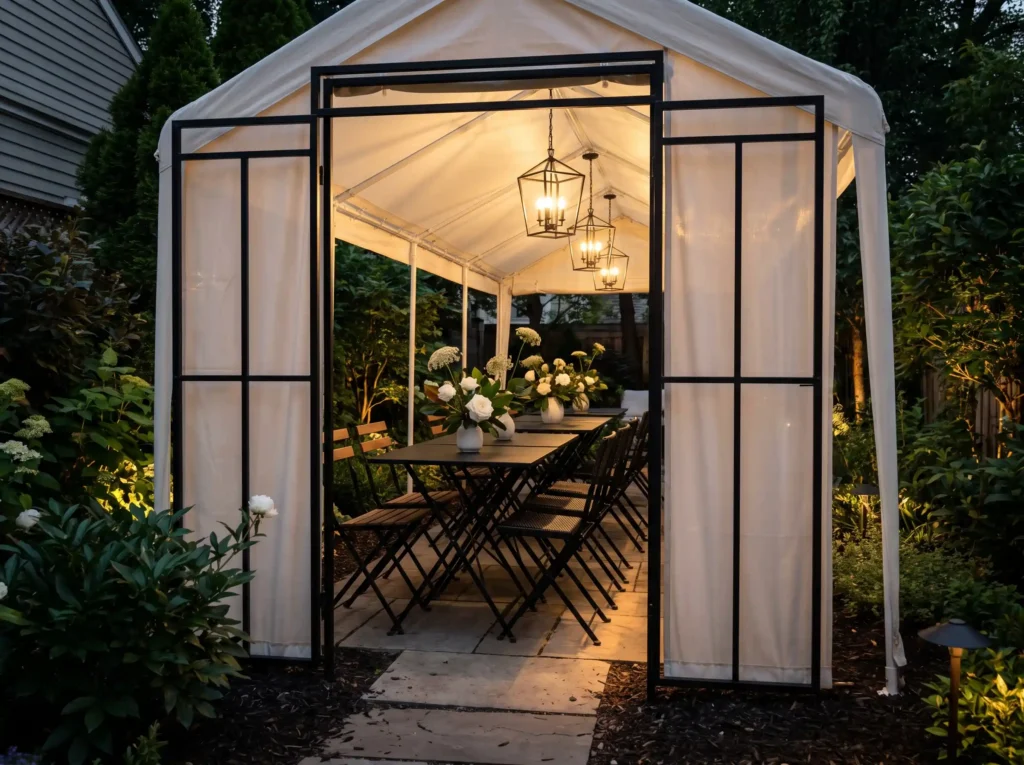
Sharp contrast rules composition. Black steel doorframe, almost gallery-like, frames canvas tent beyond — architectural threshold rather than simple tent flap. Black bistro chairs continue theme inside, lined against pale tablecloth and white floral arrangements. Lantern-style chandeliers, also black, hang geometric against soft canvas peak. Greenery outside, thick and unclipped, provides only color note against otherwise graphic palette. Modern-meets-garden juxtaposition works because restraint stays total — no third color sneaks in to muddy scheme. Landscape lighting glows low along path, guiding eye toward doorway itself. Narrow side-yard corridor becomes gallery entrance, framing dinner beyond like curated exhibit.
21. Potted Orchard Dinner Tent
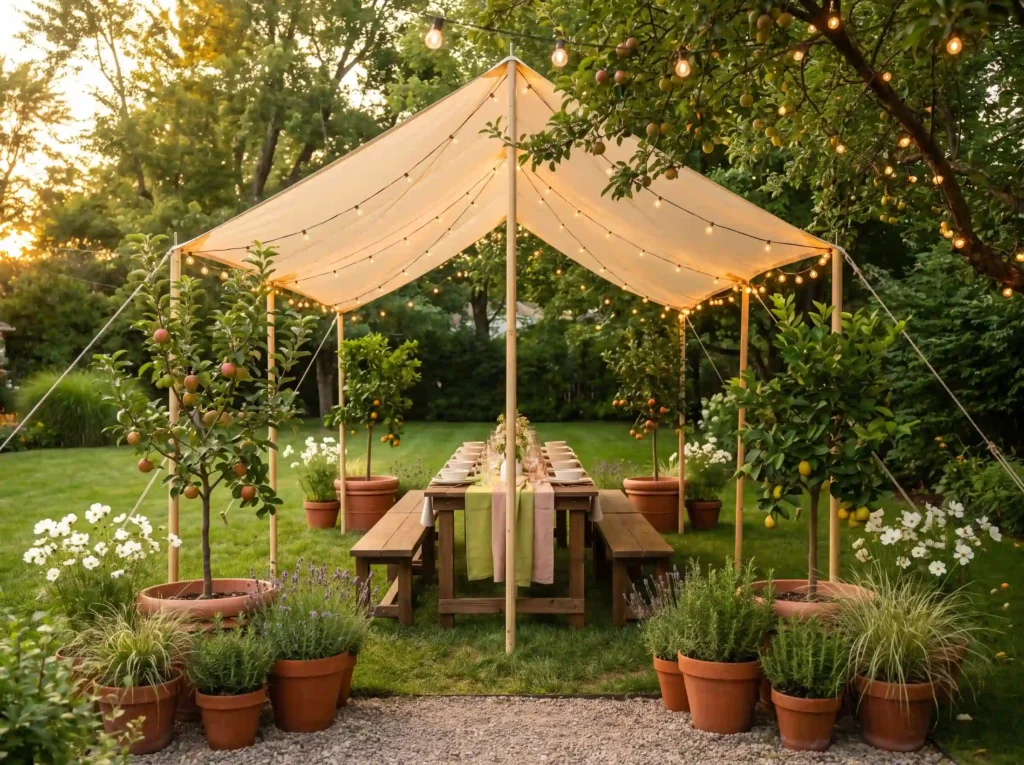
Apple and lemon trees, container-grown, ring picnic table heavy with actual fruit hanging low — living canopy narrow yards rarely offer naturally. String lights weave through real branches overhead, blurring line between tent structure and tree limbs themselves. Canvas roof, simple and cream, sits almost secondary to orchard illusion potted trees create. Lavender and cosmos fill gaps between pots, cottage-meets-orchard blend. Green and blush linens dress table below, echoing leaf and fruit tones above. Fruit historically symbolizes abundance, fertility, harvest blessing — apt metaphor for marriage beginnings. Portable orchard proves landscape can be rented, potted, arranged; roots optional entirely.
22. Starlit Pergola-Tent Retreat
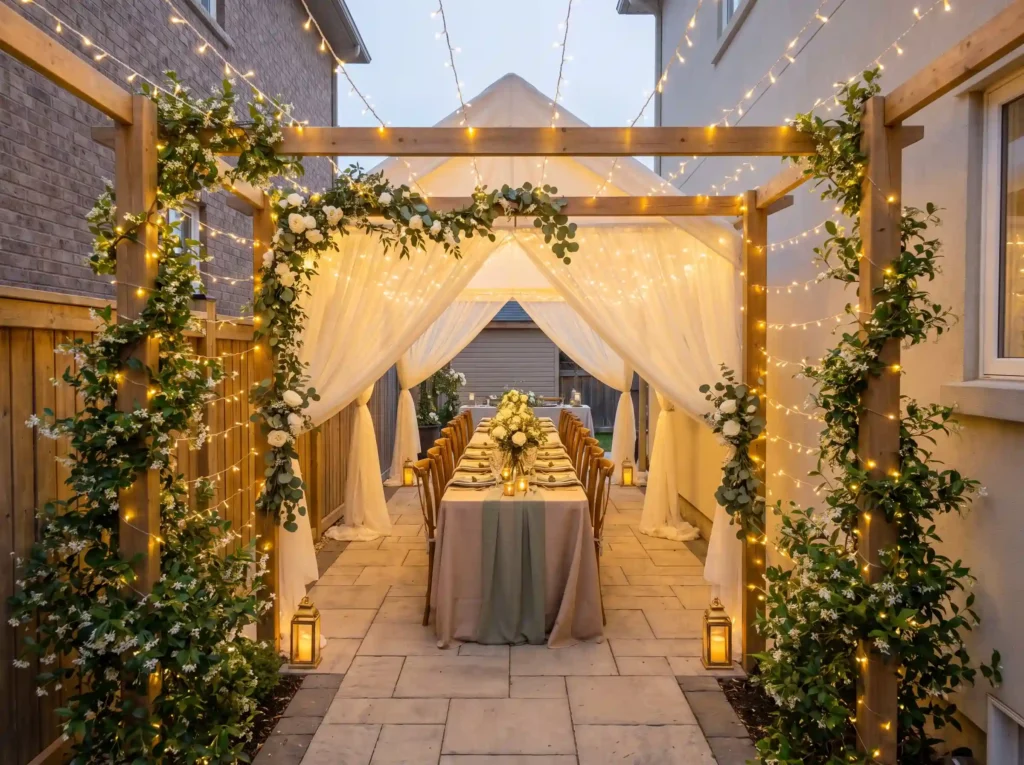
Entry matters as much as destination. Wooden pergola arch, garlanded thick with jasmine and string light, frames long view toward tented table glowing distant beyond. Lanterns mark path underfoot, guiding guests step by step rather than releasing them into open yard at once. Structure recalls classical garden pergolas — Italian Renaissance walkways built purely for shaded, scented procession between destinations. Flowers climb posts densely, fragrance thickening as guests pass through. Narrow side-yard corridor, ordinary and overlooked most days, becomes ceremonial approach instead. Sequence, not single scene, creates drama here — anticipation building through archway before tent itself even comes into view.
final thoughts
The most effective narrow-yard designs work with the space instead of fighting it. Sheer drapery, potted olive trees, hanging planters, and even a pergola-lined entrance create depth without filling the floor.