A tent can feel like far more than a covered reception space when every detail has a purpose. These 19 tent decorating ideas turn canvas into Tuscan candlelit dinners, moody midnight pavilions, desert lounges, French market gardens, and lush conservatories. From terracotta citrus trees and reclaimed timber to velvet drapery and glowing lanterns, each design creates a setting guests will remember long after the last dance.
1. Tuscan Candlelight Canopy
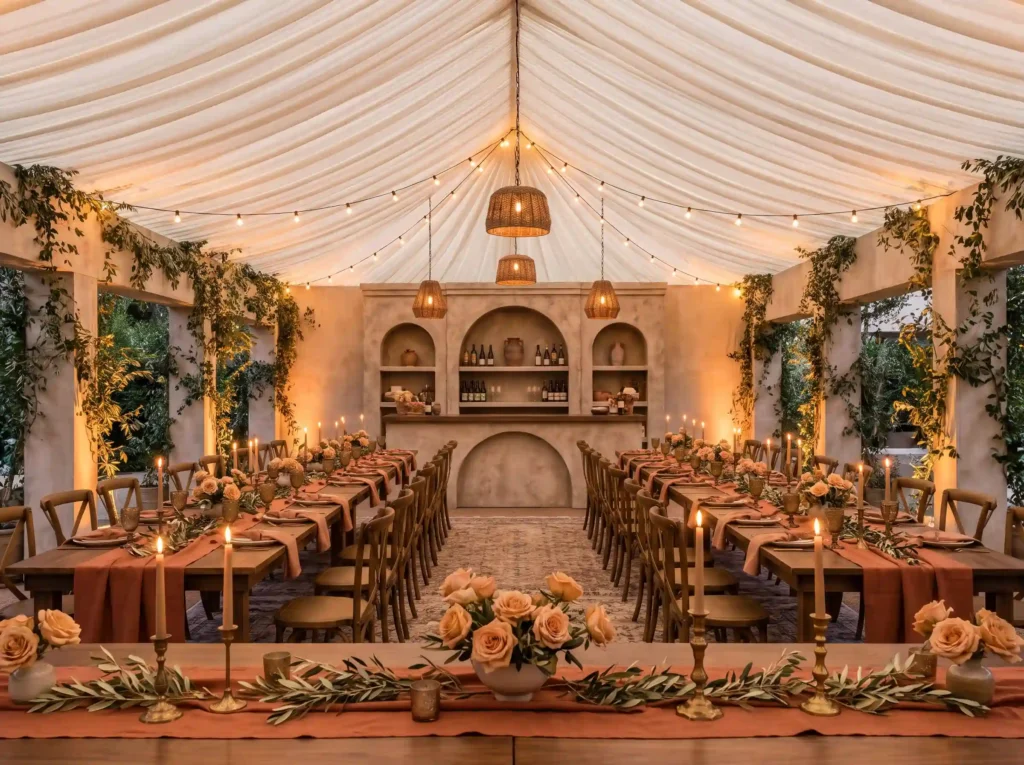
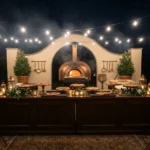
Stucco archways anchor space, mimicking Tuscan farmhouse bar carved into stone. Wine bottles line open shelves, hinting at vineyard heritage without shouting it. Rattan pendant lights swap chandelier drama for earthy simplicity—perfect for al fresco-inspired tents craving Mediterranean soul.
Terracotta runners snake across long communal tables, echoing sun-baked rooftops of Italian countryside. Peach roses and olive branches pair effortlessly, nodding toward ancient groves rather than modern florist trends. Brass candlesticks add flicker and shadow, essential for golden-hour ambiance guests remember.
Greenery cascading down support beams softens tent’s structural bones, blurring line between indoor comfort and garden romance. Rustic yet refined. Simple yet layered.
2. Midnight Blue Garden Pavilion
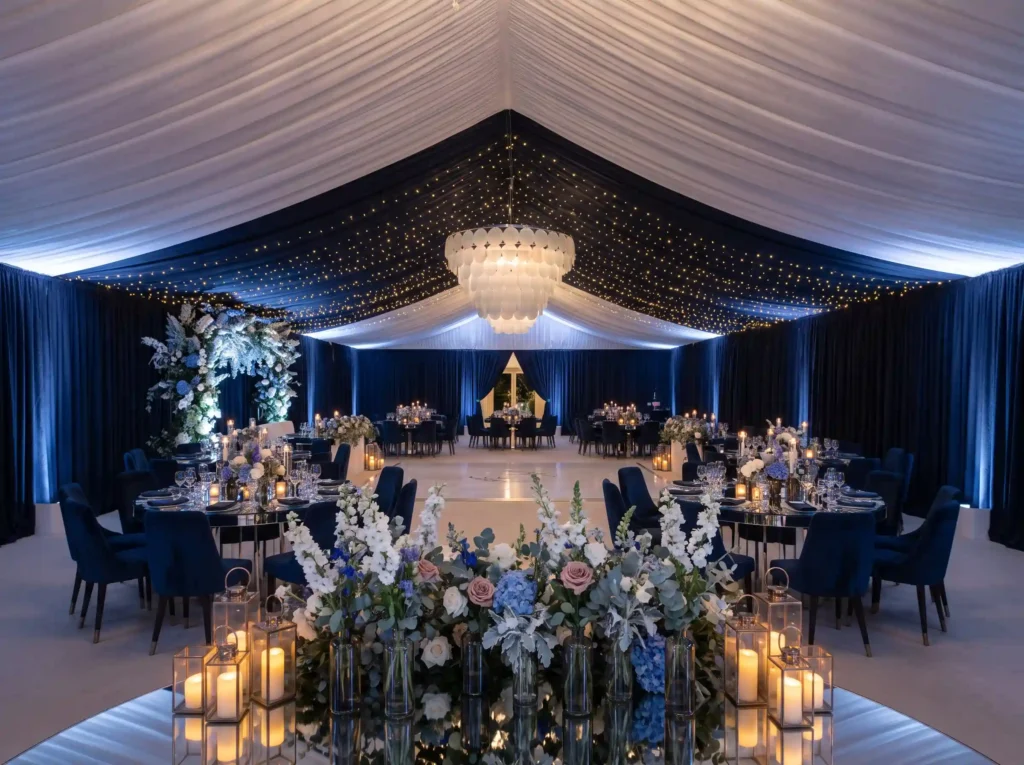
Navy velvet drapery wraps the room like nightfall itself. Above, a twinkling star-cloth ceiling shifts scale dramatically—cream pleats near entry give way to midnight blue dotted with hundreds of pinpricks, mimicking actual constellations. Ambitious engineering, subtle execution.
Capiz shell chandelier hangs centered, pale and luminous against that dark canvas—single bright anchor amid deep color. Mirrored round tables reflect candlelight upward, doubling every flame’s glow across navy velvet chairs.
Hydrangea, delphinium, and blush roses form a lush garland leading toward a floral archway, softening what could read as severe. Lantern clusters, glass-paned, line the runway’s edge at floor level. Dance floor sits empty, monogrammed, waiting center stage.
Palette stays disciplined: midnight, blush, cream, gold. Formality here comes from saturation and symmetry, not ornament count—luxury built through restraint within a bold, moody frame.
3. Desert Sunset Lounge Tent
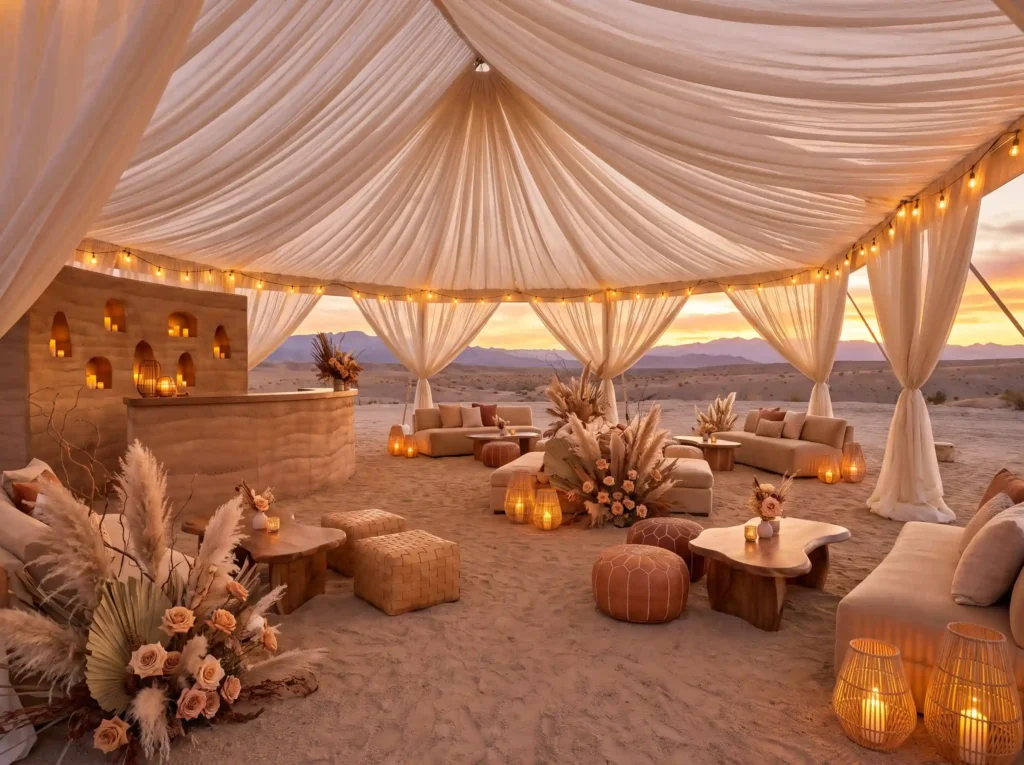
Sand underfoot. Silk overhead. Two textures, one story. Draped sheer fabric billows across the canopy, catching last light before mountains fade into dusk. That softness up top plays against rammed-earth bar walls below—carved with candlelit niches, echoing adobe architecture found across arid regions.
Rattan lanterns cluster like fireflies. Leather poufs in cognac tones sit low, made for lounging, not formality. Pampas grass and dried palms lean into desert-native styling—no imported blooms fighting the climate here.
Live-edge wood tables ground the scene organically. String lights trace the tent’s ridge, drawing eyes toward that glowing horizon. Warmth, texture, terrain. All working together.
4. French Market Garden Tent
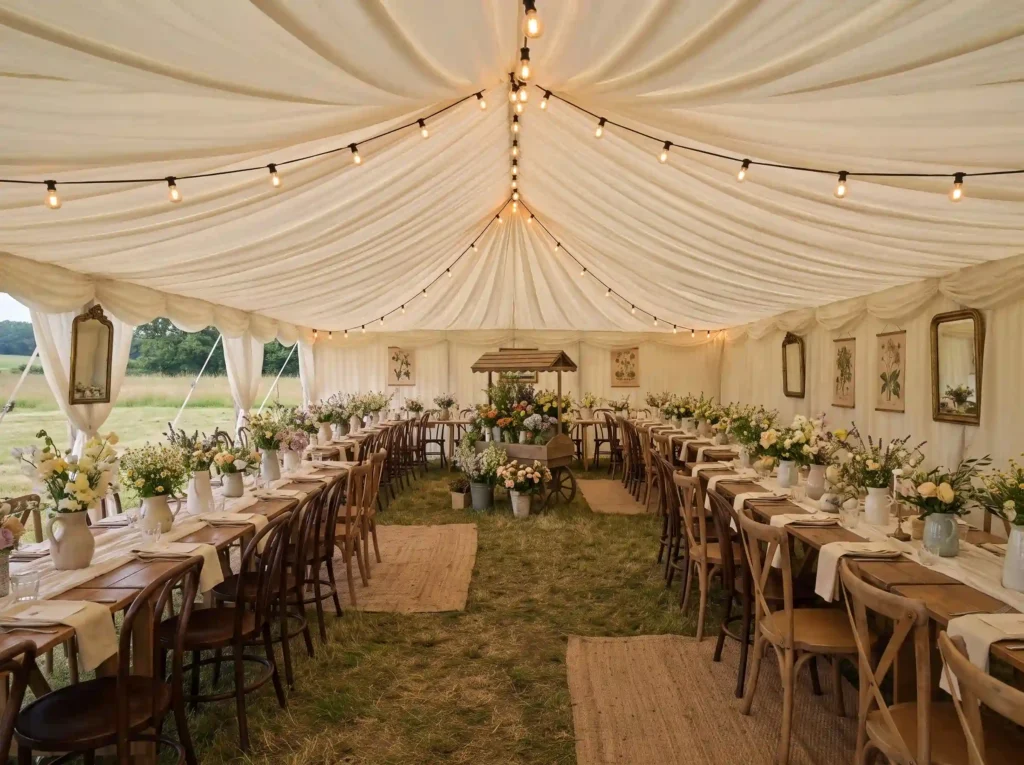
Gilt mirrors line canvas walls, catching light meant for a parlor, not a field. Botanical prints hang framed nearby, echoing old herbarium sheets—pressed specimens turned decorative art. Center stage: a wooden flower cart, overflowing, borrowed straight from French market-stall tradition. Clever move. It turns a functional prop into sculptural centerpiece.
Long communal tables run parallel, dressed simply—linen runners, ironstone jugs standing in for formal vases. Crossback chairs keep sightlines open across the room. Grass stays exposed underfoot rather than decked over, grounding guests in actual landscape.
String bulbs zigzag the ridge line, warm against cream drapery. Nothing shouts luxury here. Everything whispers gathered abundance, pastoral without slipping into costume.
5. Emerald Conservatory Tent
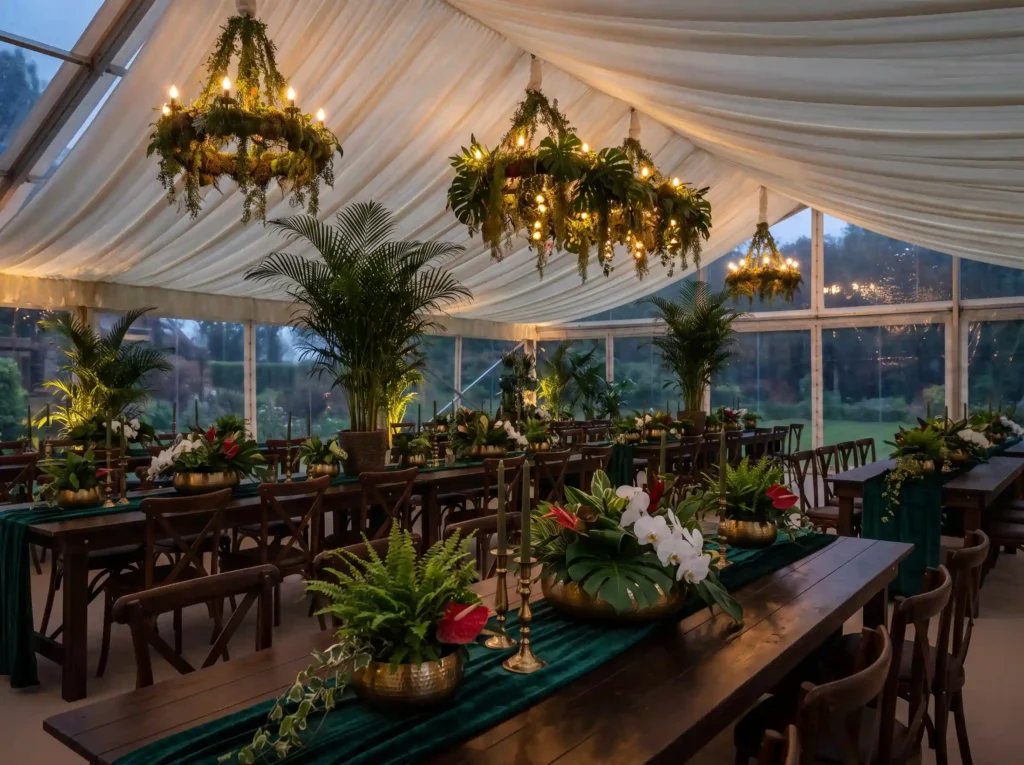
Chandeliers here skip crystal entirely. Monstera leaves, ferns, trailing vines replace glass drops, candles nestled among foliage like fireflies in canopy. Bold choice. It reframes a classic fixture as living sculpture, pulling jungle-lounge energy into formal dining.
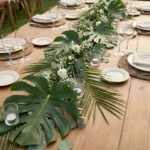
Below, emerald velvet runners anchor dark wood tables. Brass planters hold anthurium and orchid alongside potted areca palms—tropical botany doing heavy lifting where flowers alone might feel thin. Taper candles in brass sticks add old-world contrast against that saturated green.
Glass walls frame dusk-lit gardens outside, blurring where decor ends and landscape begins. Texture drives everything: leaf against velvet, brass against petal. Maximalist, yes, but rooted in botanical logic rather than excess for its own sake.
6. Coastal Pearl Dinner Tent
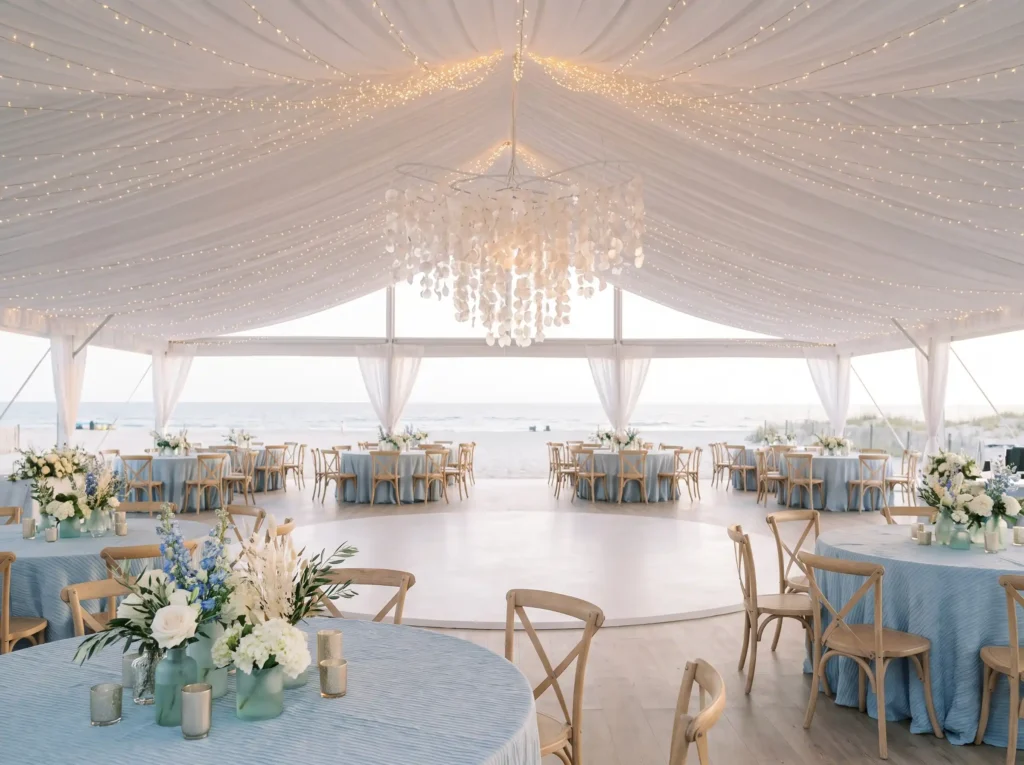
Capiz shell chandelier dominates the peak, hundreds of pale fragments catching light like sea foam frozen mid-motion. Beneath it: dusty-blue linens, wishbone chairs, bud vases scattered loose rather than clustered—a deliberately relaxed centerpiece style that reads effortless, not undone.
Fairy lights trace every roofline seam, dense enough to mimic stars against canvas. Open sides frame Atlantic horizon directly, tent functioning less as enclosure, more as picture frame. Smart.
Pampas grass mixes into white floral arrangements, adding coastal texture without leaning tropical. Dance floor sits center, empty now, waiting. Whole palette—sand, sea glass, pearl—stays disciplined. Restraint, here, becomes the luxury.
7. Burgundy Library Tent
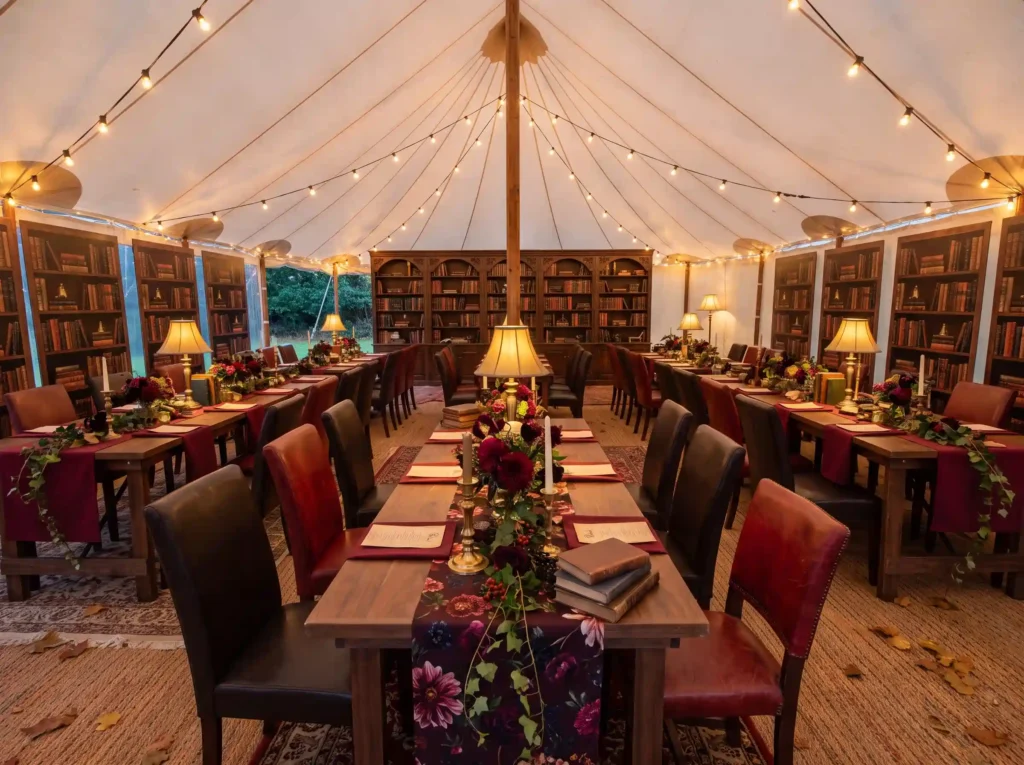
Floor-to-ceiling bookshelves wrap tent walls entirely, transforming canvas into study. Trompe-l’œil, likely, yet convincing enough to fool a glance. Leather chairs—oxblood and chocolate—replace typical banquet seating, adding weight and formality rare under a marquee.
Burgundy dahlias tumble across floral table runners printed with matching botanical patterns, a rare instance of textile echoing centerpiece directly. Brass candlesticks flank each arrangement. Stacked antique books sit as props, reinforcing theme without feeling forced.
Brass lamps replace string lights for once, casting pooled, warm light rather than scattered sparkle. Result: intimate, scholarly, faintly gothic. Autumn dinner party as literary salon, tent walls doing the storytelling.
8. Modern Black-and-White Pavilion
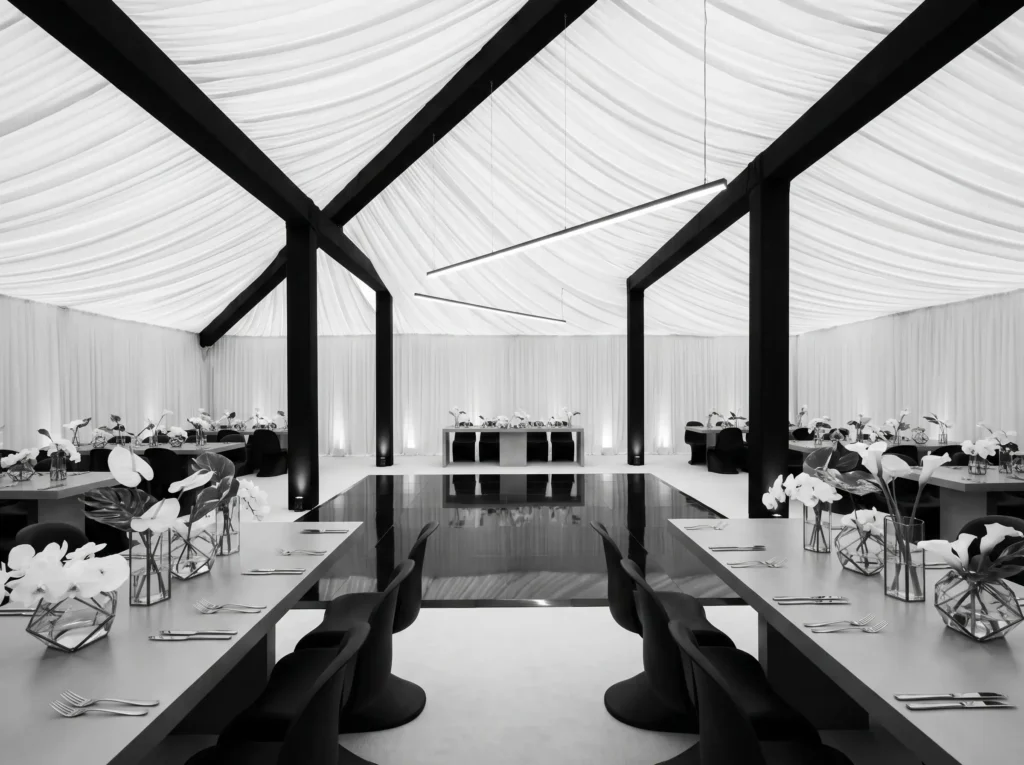
Black steel trusses cross overhead, stark against pleated white canvas—structure exposed rather than hidden, almost brutalist in effect. Unusual for tent design, where framework typically disappears behind drapery. Here it’s the whole point.
Panton-style chairs, molded and glossy black, surround glass-topped tables holding orchids in angular terrariums. No color anywhere except green stem and white petal. Monochrome discipline this strict takes nerve.
Linear pendant lighting, suspended at odd angles, mimics gallery installation more than wedding fixture. Space photographs like architecture magazine spread. Risky palette for a wedding, admittedly, but one that trades warmth for editorial precision—a tent reimagined as design object.
9. Lavender Meadow Supper Club
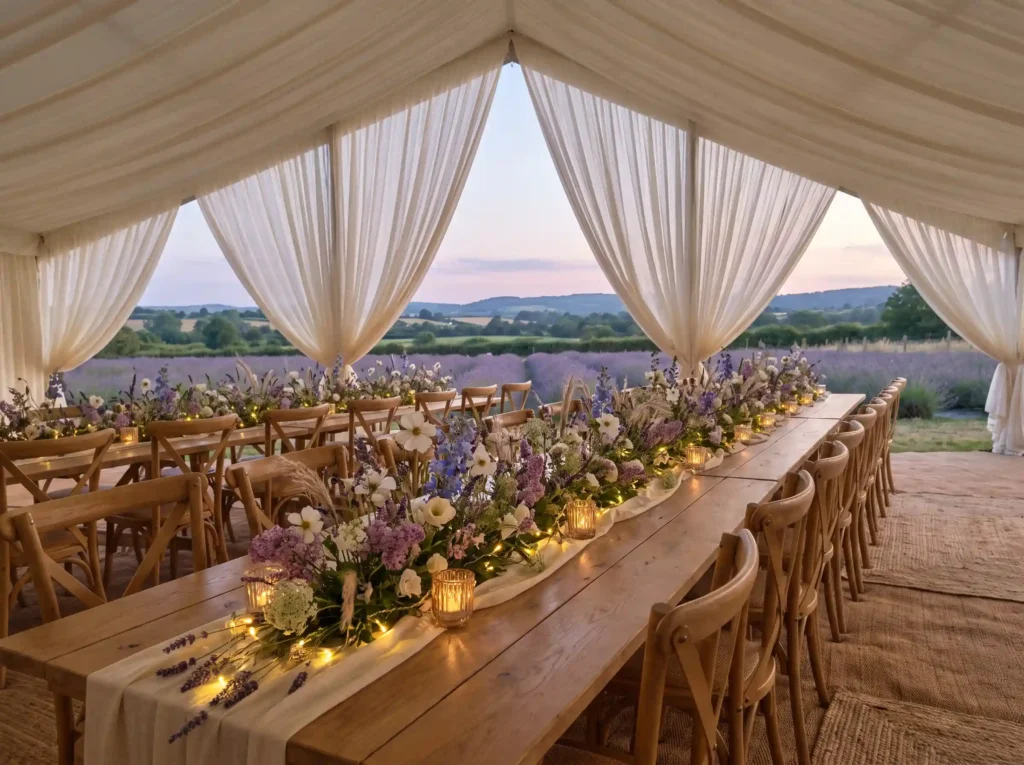
Real lavender rows stretch beyond canvas edges, visible through open sides framed by billowing drapery. Setting practically decorates itself. Florists lean into that gift: a continuous garland runs the table’s full length, delphinium and cosmos woven through actual lavender stems, fairy lights threaded beneath for glow after sunset.
Long farmhouse table, single run, keeps guests conversing across rather than clustered in pods. Crossback chairs, natural oak, match the tent’s honest timber tones.
Twilight sky, dusty violet, matches the florals almost too perfectly—planning around bloom season clearly paid off here. Nothing imported feels foreign. Field and tablescape share one continuous palette, indoors dissolving into outdoors.
10. Moroccan Jewel Tent
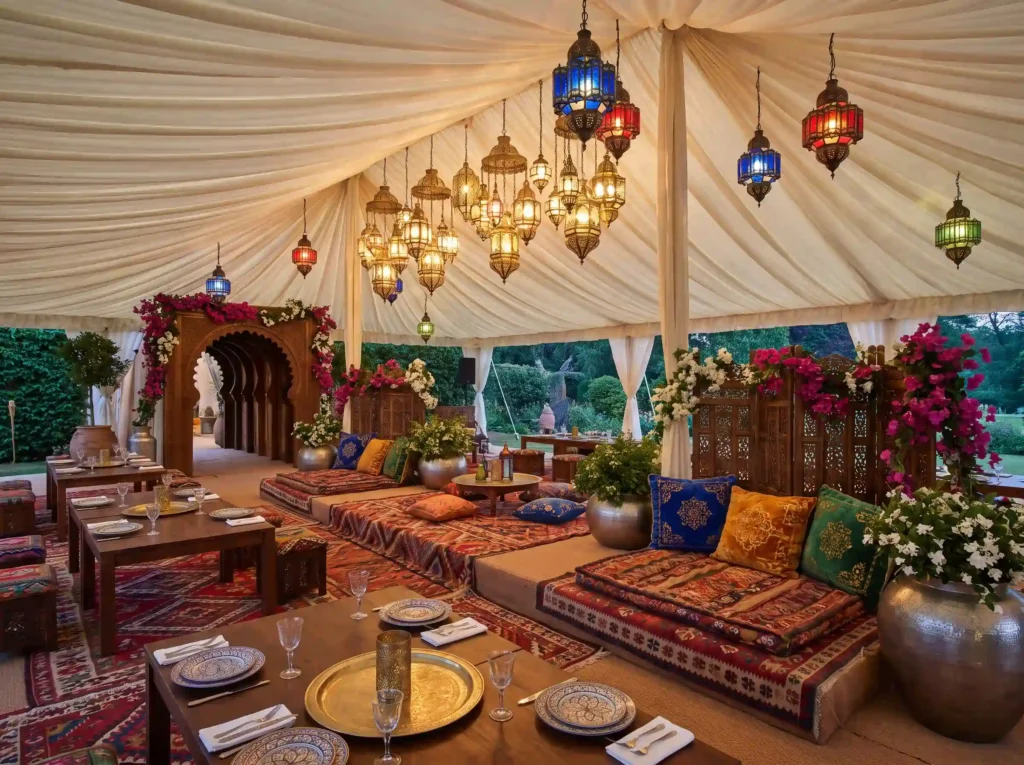
Dozens of pierced-metal lanterns hang clustered near the tent’s peak, amber, cobalt, ruby glass scattering colored light across cream canvas. Density matters here—single lanterns read decorative, but this many together builds atmosphere, referencing souk marketplaces where lanterns crowd every stall ceiling.
Carved wooden archway, floral-draped, marks a threshold into lounge seating: low kilim-covered daybeds, brass trays, embroidered cushions piled generously. Seating this low shifts posture entirely, encouraging lingering over quick exit.
Brass chargers and hand-painted ceramics complete table settings nearby. Bougainvillea climbs a carved screen, bridging garden and interior. Craft takes center stage throughout—textile, metalwork, woodcarving—each element sourced with intention rather than assembled as theme-park shorthand.
11. Champagne Glasshouse Tent
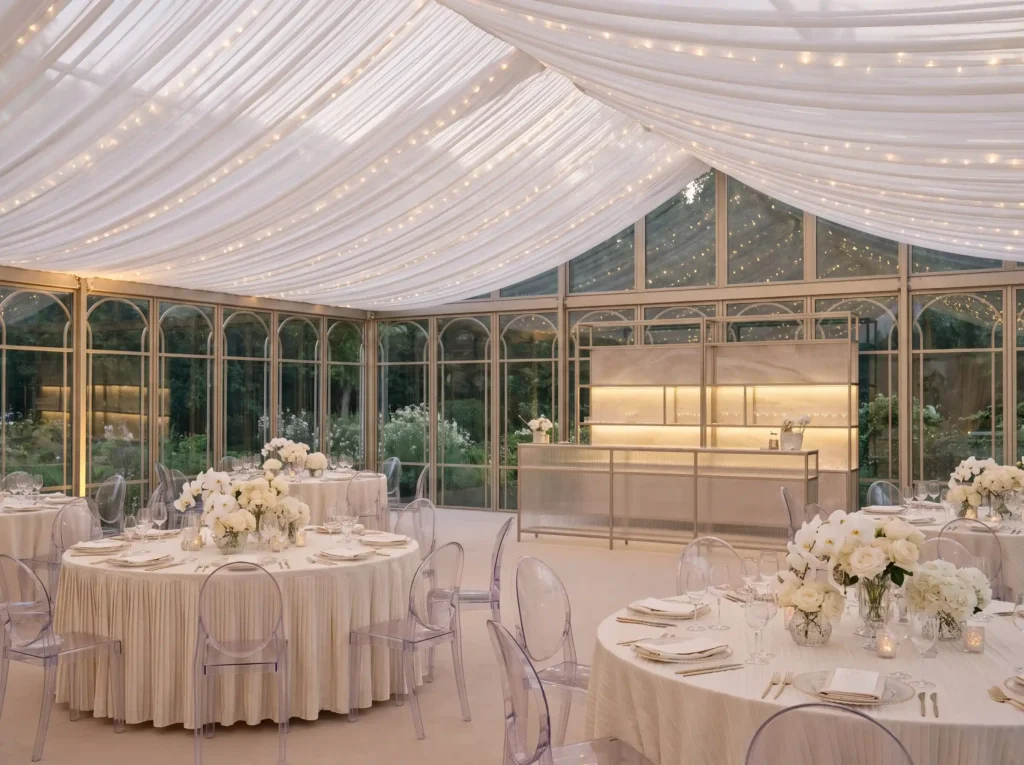
Floor-to-ceiling arched windows wrap this tent almost entirely, structure borrowed from Victorian conservatory design. Canvas above softens what glass below keeps crisp—two architectural languages working in tandem rather than competition.
Ghost chairs, transparent acrylic, disappear visually against ivory linens, letting white phalaenopsis and garden roses hold full attention. Backlit onyx-and-glass bar glows amber, functioning as focal point without stealing from tablescapes.
Fairy lights woven through draped fabric mimic starlight filtering through greenhouse glass panes. Every surface reflects: glass wall, glass chair, polished floor. Restraint again proves the strategy—cream on cream on cream, luxury communicated through material quality rather than color contrast.
12. Terracotta Citrus Courtyard
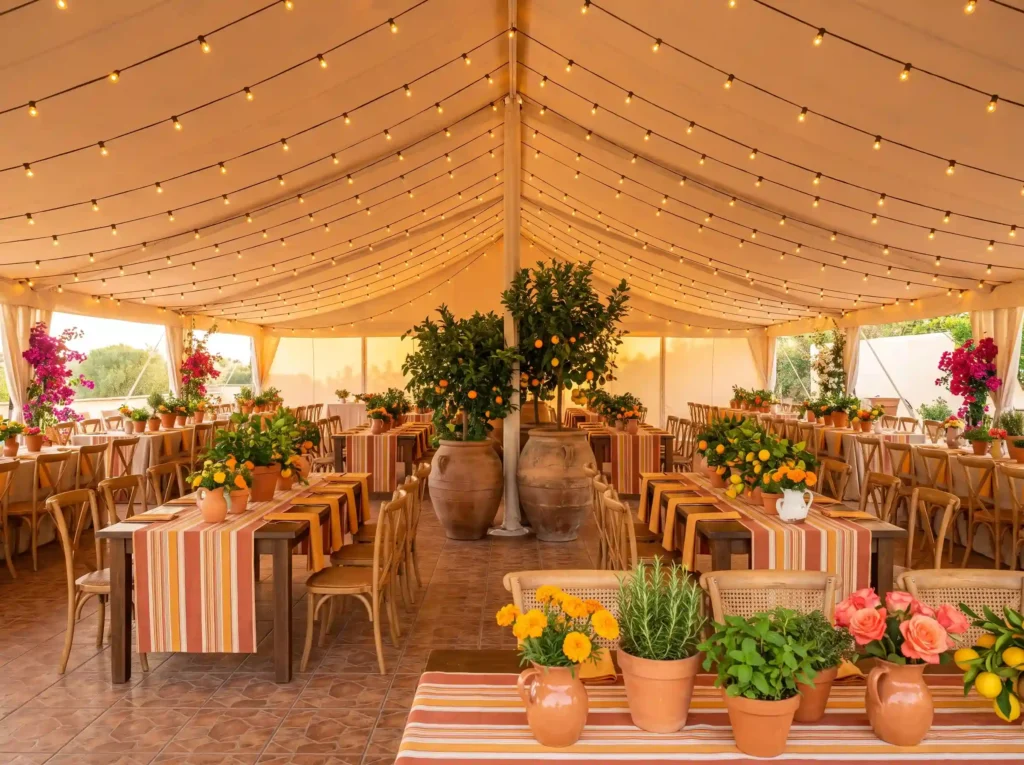
Terracotta urns, oversized, hold full citrus trees heavy with fruit right at the tent’s center pole—living centerpiece doing more work than any floral arrangement could. Striped table runners in rust, ochre, cream reference Provençal market linens directly.
Bougainvillea spills magenta against tent corners, loud color against warm neutral canvas. Terracotta tile floor, rather than grass or carpet, sells the Mediterranean terrace illusion completely.
Rosemary and mint sit potted alongside cut roses on a welcome table—edible and ornamental blurred together, kitchen garden aesthetic rather than florist’s cooler. String lights crisscross densely overhead. Whole space smells implied: citrus, herb, sun-warmed clay. Sensory design, not just visual.
13. Soft Sage Tea Garden
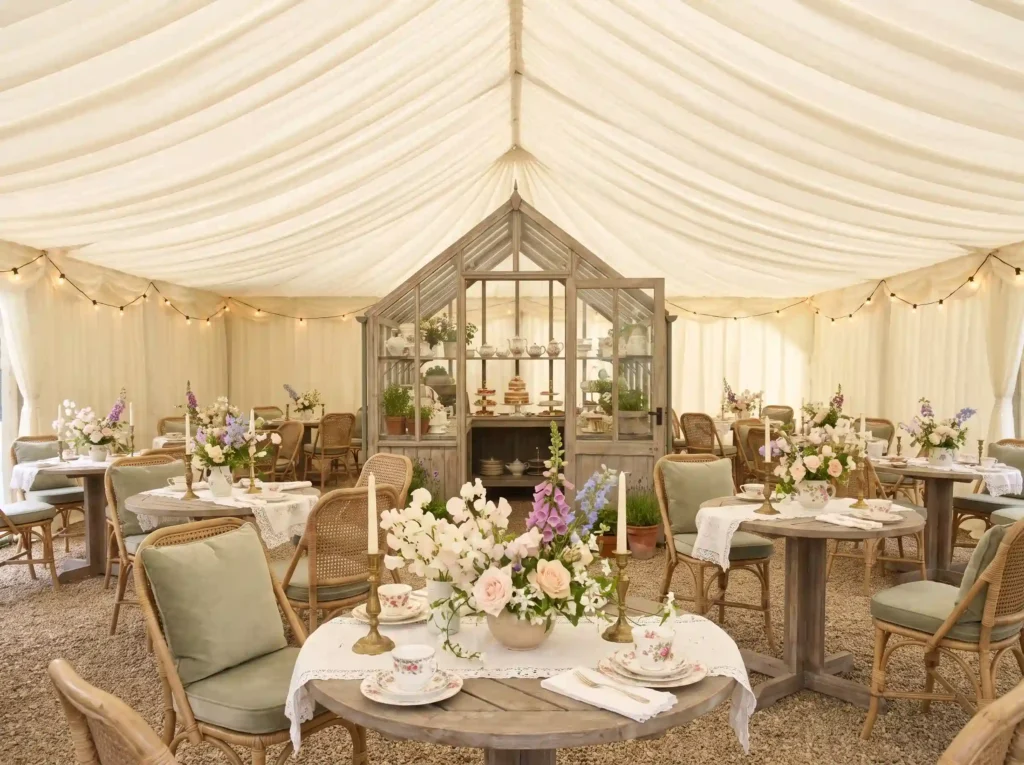
Weathered wooden greenhouse structure sits mid-tent, glass shelving inside stacked with mismatched china, tiered cake stands, teapots collected rather than matched. Charming imperfection, intentional. Nothing here looks rented from a catalog.
Round tables scatter loosely, rattan chairs cushioned in sage, lace tablecloths layered over linen. Sweet pea and foxglove arrangements lean cottage-garden rather than formal florist work, informal stems mixing heights freely.
Brass candlesticks add polish against otherwise rustic textures. Gravel floor, left natural, keeps garden-party informality intact. Whole scene reads less “wedding reception,” more “afternoon at a beloved aunt’s countryside cottage.” Nostalgia, curated carefully, becomes the design strategy.
14. Celestial Plum Ballroom Tent
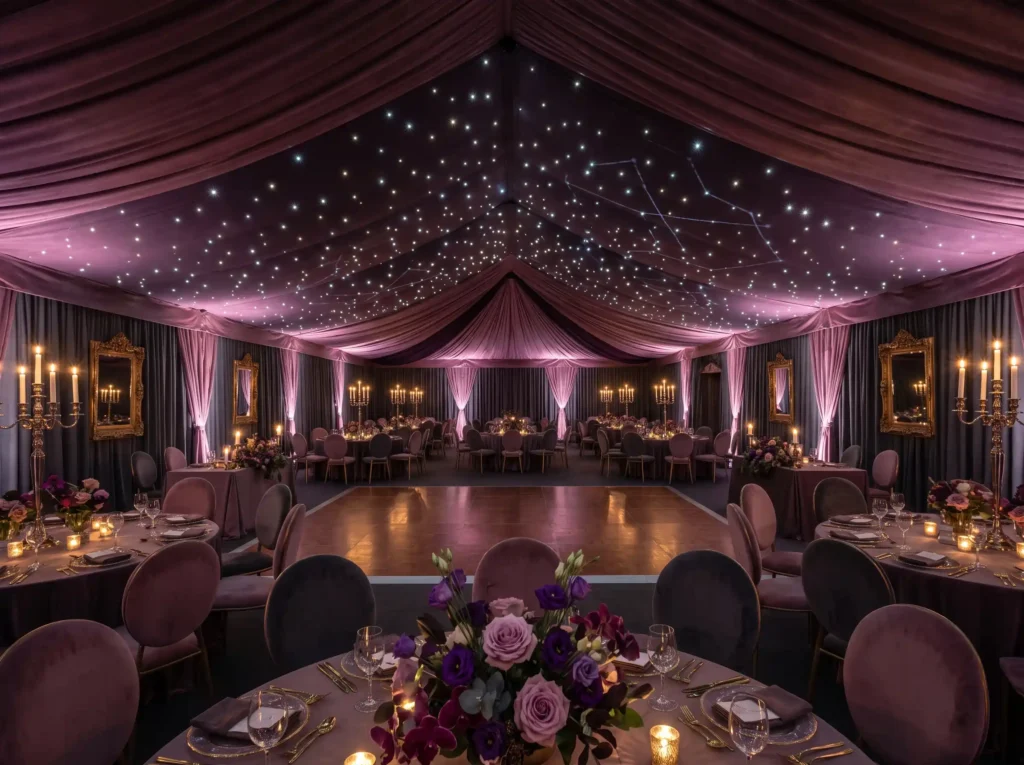
Ceiling glows with fiber-optic stars, constellation lines mapped faintly across draped plum fabric—planetarium technology repurposed for romance. Ambitious install, clearly engineered rather than decorative afterthought.
Charcoal drapery frames gilt mirrors spaced evenly along walls, multiplying candlelight from silver candelabras below. Purple and burgundy floral arrangements, dense with roses and orchids, sit low enough not to block sightlines across round tables.
Dance floor, polished wood, occupies center stage—this room built for movement, not just dinner. Velvet chair backs pick up ceiling’s plum tone precisely. Palette stays narrow: purple, gold, charcoal, candlelight. Drama comes from repetition and scale, not variety. A ballroom built entirely from canvas, convincingly.
15. Rustic Alpine Dinner Tent
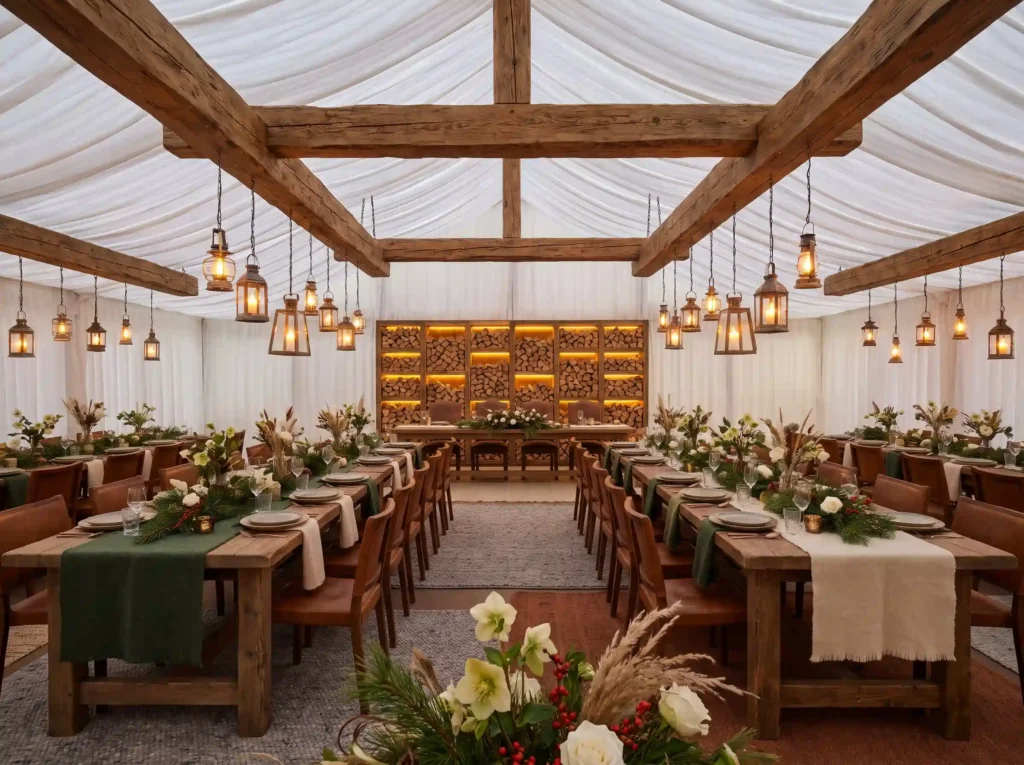
Reclaimed timber beams cross overhead, hung with iron lanterns spaced evenly—structural honesty rather than hidden framework. Centerpiece wall stacks split firewood behind backlit shelving, warm amber glow implying hearth without actual flame. Clever workaround for tented venues where open fire isn’t practical.
Long tables run parallel, forest-green and cream runners alternating. Hellebores, white roses, red winter berries keep florals seasonal and restrained. Leather-seated chairs add lodge weight against otherwise pale canvas.
Woven rugs layer over hard flooring, softening acoustics and footfall both. Whole effect borrows from Alpine ski-lodge dining—timber, lantern, wool—translated for celebration rather than aprés-ski. Texture carries the theme; color stays deliberately quiet.
16. Peach Fizz Garden Party
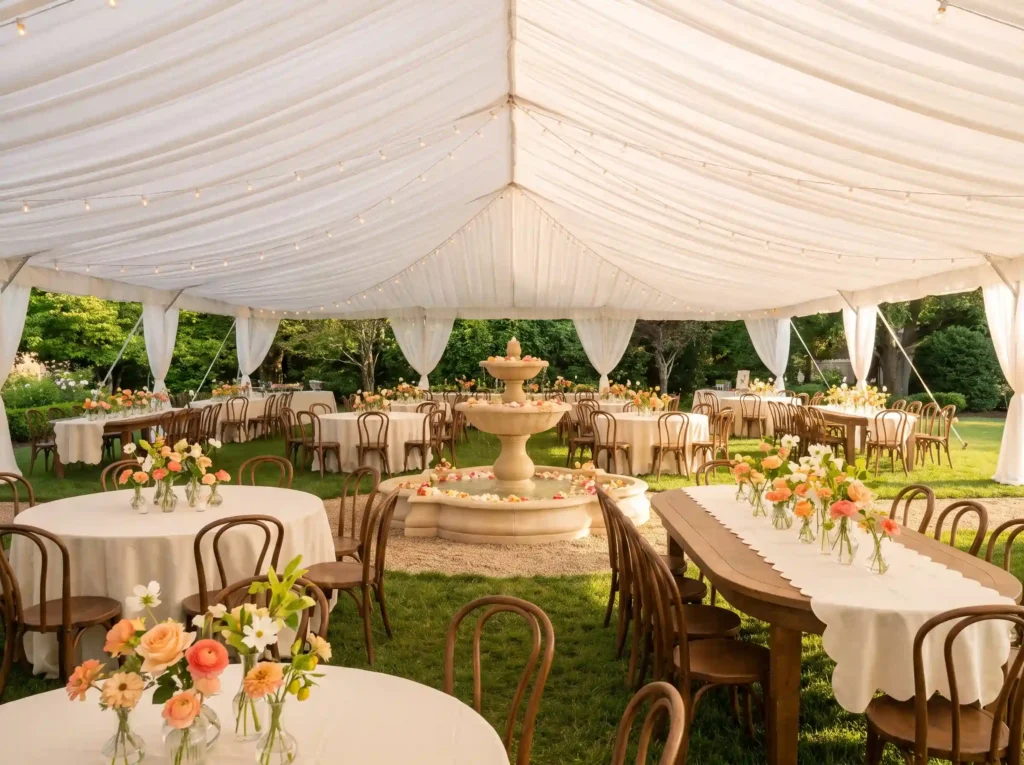
Tiered stone fountain sits dead center, rose petals floating across its basin—water feature doing double duty as both sculpture and scent diffuser once petals steep. Bold placement, structurally and visually anchoring the entire layout.
Round tables in ivory cluster around it symmetrically, bentwood chairs repeating in warm honey tones throughout. Peach and apricot ranunculus dominate florals, echoing golden-hour light pouring through open tent sides.
Grass floor stays natural, uncarpeted, letting fountain and lawn read as continuous garden rather than staged interior. String lights, sparse and understated, avoid competing with sunset itself. Classical formality—symmetry, fountain, statuary echo—softened by casual garden materials throughout.
17. Art Deco Champagne Club
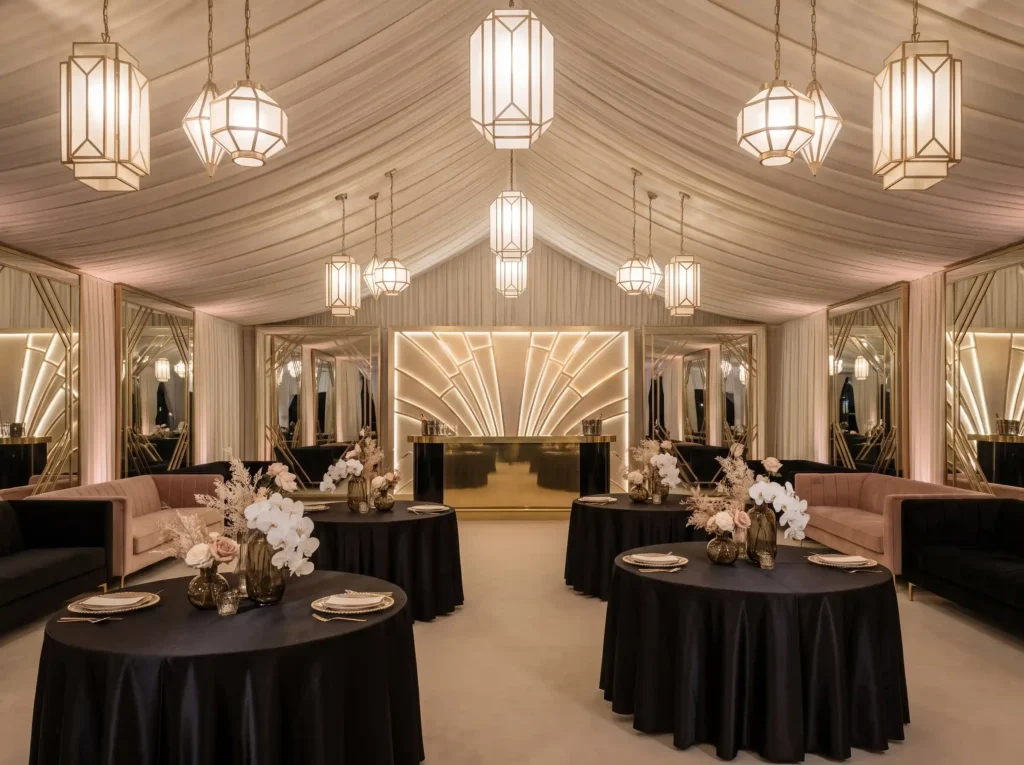
Brass-framed pendant lanterns, faceted like cut gems, hang in a precise grid—Gatsby-era geometry translated into lighting design. Backlit sunburst panel anchors the bar, fan motif pulling directly from 1920s architectural ornament.
Black tablecloths, unusual for weddings generally, ground the room in nightclub sophistication rather than garden softness. Mirrored walls multiply lantern reflections infinitely, a trick borrowed straight from era-appropriate ballroom design. Blush velvet sofas soften harder metallic edges nearby.
White orchids and dusty pink roses sit in smoked glass vessels, muted against black linen. Gold flatware picks up brass fixtures overhead. Palette—black, brass, blush—stays disciplined throughout, glamour built from restraint and repetition rather than ornament for ornament’s sake.
18. Wildflower Harvest Festival
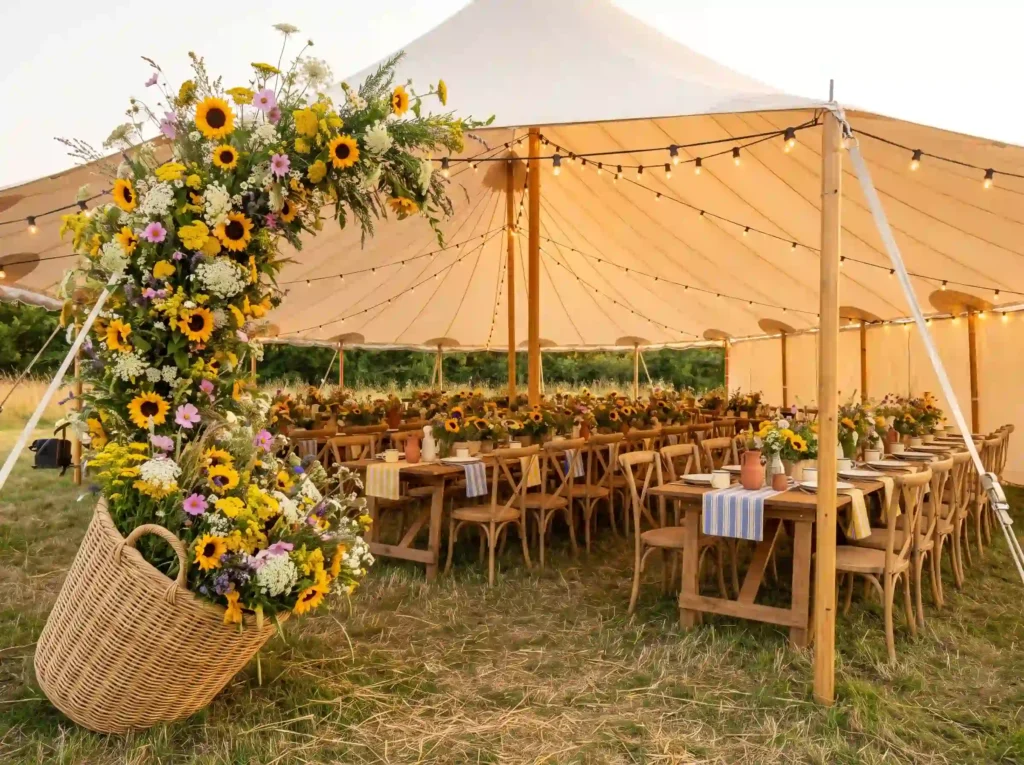
Woven basket, oversized, spills sunflowers, cosmos, and Queen Anne’s lace at the tent’s entrance—harvest imagery pulled straight from late-summer fields nearby. Height matters here; arrangement climbs well past eye level, forcing guests to walk beneath its canopy on entry.
Sailcloth tent, natural canvas rather than stark white, suits the palette better—warm cream against golden sunflower heads. Farmhouse tables run long, striped linen runners in butter and sky blue keeping things playful rather than formal.
Terracotta jugs hold matching wildflower bunches down the table’s spine. Wheat stubble field visible beyond tent edges confirms the harvest theme isn’t borrowed—it’s literally the setting. Abundance, unstyled and slightly wild, reads as the whole point.
19. Peacock Pavilion Celebration
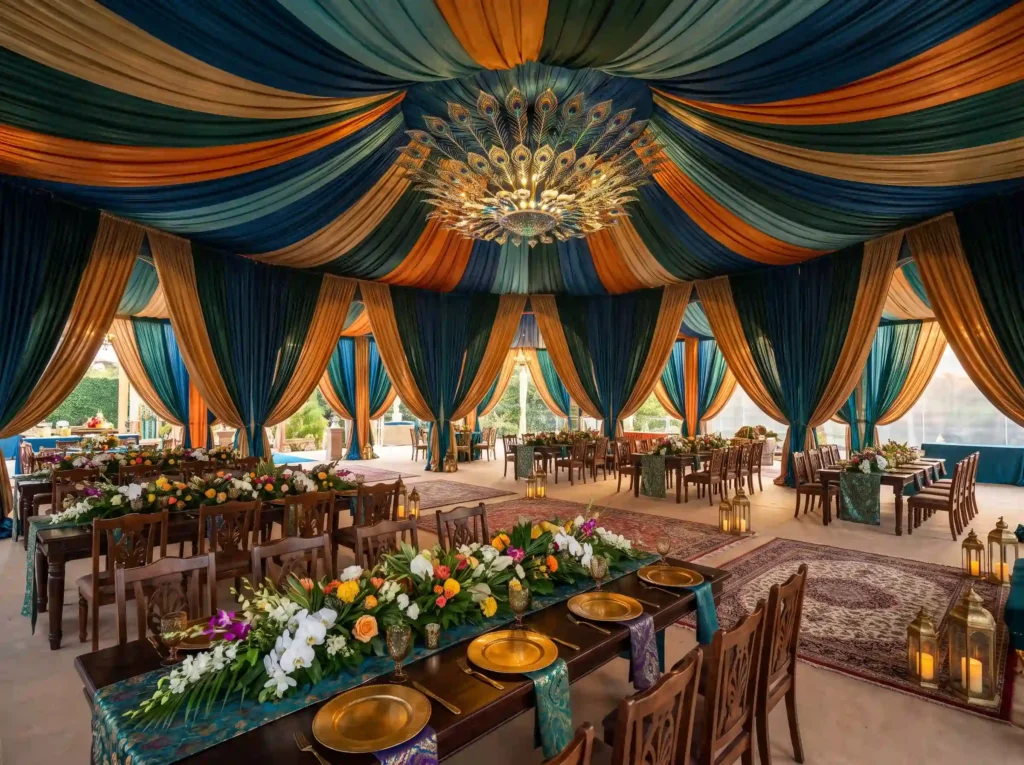
Draped ceiling fans out in teal, gold, and burnt orange—colors pulled straight from peacock plumage, confirmed by an actual feather chandelier crowning the tent’s peak, fanned dramatically overhead. Maximalist choice, committed fully rather than hinted at.
Carved wooden chairs, dark and ornate, surround tables layered in jewel-toned silk runners—emerald, sapphire, marigold overlapping rather than matching precisely. Brass chargers and goblets add metallic weight against saturated fabric.
Persian rugs layer across the floor, patterned busily against equally patterned drapery—a deliberate rejection of minimalism. Tropical florals in hot pink and white punctuate long tables. Lantern clusters glow low near seating, echoing regional craft traditions. Every surface carries color; nothing here whispers.
final thoughts
The strongest tent designs balance atmosphere with thoughtful details. A Moroccan lantern canopy encourages lingering, an Alpine setup uses timber and wool-like textures for warmth, while a harvest tent lets the surrounding field become part of the decor. Across all 19 ideas, texture, lighting, color, and setting work together to make the tent feel intentional.